Archive for February, 2011

h1

I’m not a Tree Hugger! Just a Sentimental Fool

February 9, 2011

My husband, Joe, and I own the private road alongside the easterly edge of our property and the trees growing beside it. There are several oaks and one old fig tree adjacent our driveway. For years, the fig tree has remained fruitful and last week tender shoots emerged for yet another season. Then, the neighbor’s ranch-hand chopped it down without our permission or knowledge. All that remains is a stump and a few suckers that he staked after Joe had chewed him out.
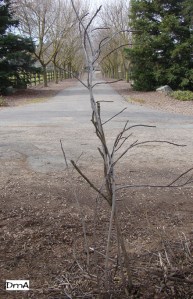
I had a deep affinity for the old fig tree. It provided habitat for wildlife and served as a reminder of earlier days when we moved here with our two young sons, J.J. and Jason, and Shelby their Labrador puppy. Now, all but a skinny stock is left of the fig.

Like a grieving widow, I’m concerned I’ll soon forget the physical details of the multiple-branched structure, rough hairy foliage, and the droop of ripe white figs. In time, gone too will be the deep sentiments that rushed to mind when I drove past the fig tree.

When I looked at it, I thought of Shelby and the fallen figs. Although Shelby is gone, memories of her returned each spring when the tropical looking leaves clothed naked branches and later when fruit formed.

I would walk with Shelby and my sons to the fig tree so Shelby could enjoy nature’s sweet treats. Labradors are known for their big appetites and Shelby was no exception. If I didn’t walk her to the tree, she’d head out on her own. During fruit-bearing season, I could always find Shelby beneath the wide-spreading leaves.

Standing there watching her scarf down the fruit, I’d think about picking enough to make jam. Now, I’m glad I didn’t. The taste and smell of fig jam would have added to the loss of an old fruit tree that provided shelter, food, and branches suited for songbirds, and raising young children and Shelby.

I thought my fig tree would live forever. Copyright © 2011 Dianne Marie Andre
 

h1

For the Love of Moss

February 7, 2011


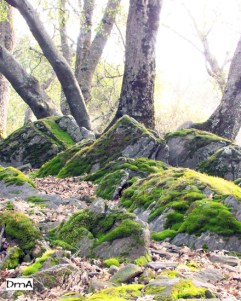
I love the age-old charm of moss. This winter there is plenty growing in and around my garden. While other vegetation remains dormant, moss has brought life and balance to the beds. The lush green hue has added color on rocks and logs, in crevices and corners, and as groundcover where shadows are heavy and the soil moist.

Valued for its tranquil mood, the Japanese have integrated moss into gardens for centuries. I can certainly see why. Not only do the clumpy mounds evoke a sense of history and peace, it draws one’s eyes down to observe the many subtle changes of nature.

Moss derives nutrients from the air, making it a good alternative for rock gardens, woodlands, shady to half sun areas. Additionally, moss is different from other plants in that it does not have leaves, stems, flowers, or roots. Without these functions, moss cannot move water within its structure. This is why moss grows mostly in moist conditions. Other contributing factors include:

  • Poor drainage
  • Compacted soil
  • Low soil fertility
  • Low pH, slightly acidic soil
  • Excessive shade to part sun

Although moss gardens need some care, it’s less upkeep than traditional plants. Moss Acres offers photo ideas, growing tips, and “Five reasons to keep moss in your yard.

Note:  On walkways, moss can be slippery. To avoid possible injury, use a power washer or follow Kitty Cruiser’s “Moss Removal from Sidewalk” instructions at www.ehow.com/how_7348076_moss-removal-sidewalk.html. 


h1

Soulful Plotting

February 4, 2011

Microclimate:

Climate within a given area that is different from the surrounding vicinity. A variety of conditions influencing microclimates include sun, shade, humidity, wind, drainage, hills, valleys, woodlands, hollows, structures, water proximity, and other factors.

h1

Hurrah for Sunny California! We’re Sowing Seeds!

February 2, 2011

Yesterday, I worked with three other master gardeners at the Amador Food Bank Demo Garden. The sun was bright and warm and the soil alive and ready to nurture whatever Barbara, Jackie, Kathy, and I put down.

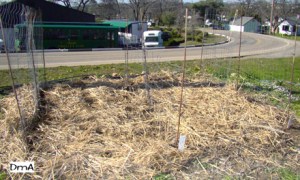
We started with a 10×10-foot area and constructed three trellises out of rebar and wire then direct sowed snow and sugar snap peas.
Then we moved on to one of the raised beds and broadcasted a blend of white bunching onions and lettuce varieties of Romaine, Buttercrunch, Rougette de Montpellier, Spicy Mesclum Mix. Sowing lettuce and onions together is a new concept for me and so is broadcasting. While some vegetables aren’t compatible and broadcasting isn’t suitable for all varieties, seeds that can be sowed this way will produce more vegetables per square foot than the traditional rows and furrows. I loved this method. This is what I call an EQF task—easy, quick, and fun.

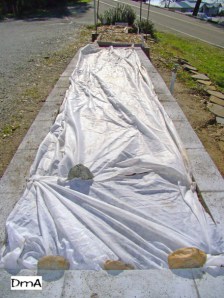
In another raised bed, we sprinkled in radish watermelon, purple top white globe radishes, salad rose radishes, plus spinach and mustard in different sections of the bed. We ended our planting session by covering two beds with straw and one with frost cloth. This will keep the soil and seeds warm. Soon, the seeds will germinate and tiny heads will emerge from beneath the soil.

Now that’s what I call a perfect day . . . warm sunlight and the promise of future garden births.

Here’s a little information on some of the seeds we planted.

Romaine lettuce is fast growing, forms a loose head that is easy to harvest, and takes up little space in the garden. Sweet and delicious, Romaine lettuce is the basics for Caesar salad.

Buttercrunch Head Lettuce is compact rosette heads and is productive, heat tolerant and slow to bolt. It has mildly flavored leaves.

Rougette de Montpellier Lettuce is a very old French variety with smallish crispy lettuce with glossy green-red leaves. Give some protection over winter for the best pickings.

Organic Mesclun Mix is a popular blend of baby lettuce and spicy greens with a variety of shapes. The word “Mesclun” comes from the French word for “mix.”

Bunching Onions form perennial evergreen clumps up to 1 ft. (0.3 m) in diameter. 

Watermelon Radish is a large round root vegetable related to the turnip and horseradish family, with a crisp texture and a mild to sweet peppery flavor.

Purple Top White Globe Radish is an excellent globe-shaped radish and America’s favorite turnip!

Russia Salad Rose Radish is an amazing gorgeous rosy pink radish eight inches long. A great salad or beer radish.

h1

Year-Round Garden Tasks

February 1, 2011

Hurray! No more waiting or wondering what to do next in the garden. You can access ‘Monthly Tasks’ on the sidebar any time of the year at your convenience.

h1

Blogging Anniversary! Thank You!

February 1, 2011

February is

“In and Around the Garden’s”

first anniversary and I would like to extend

a big THANK YOU to:

all my followers,

those who placed a link on his or her website,

and

to my many new fans a WARM WELCOME.

It’s nice to have so many faithful friends subscribing to inandaroundthegarden.net.


If anyone has specific interests or gardens you would like featured, please leave me a comment or send an email.

Don’t forget to share with each other what you are doing in and around your garden, whether it’s a new way to weed, a ride in the country, or an upcoming event.

Thank you everyone, for making this a banner year!

From my garden to yours,

 ♥ Dianne ♥