Archive for June, 2011

h1

A Great Day for the Whole Family

June 10, 2011

Jun 17-18: Sierra Earthfest. If you’re willing to drive a little bit, there’s an interesting selection of garden/nature workshops mixed in with general fun next weekend in Tuolumne County at the Mountain Sage Nursery in Groveland, CA. Contact: http://www.sierraearthfest.org for more information.

The 17th is Pre-EarthFest Event Seminar: 7 pm – 9:30 pm Seminar: “Turning Drains into Sponges, and Water Scarcity into Water Abundance” by Brad Lancaster, author of “Rainwater Harvesting for Drylands.” $15 suggested donation.

On the 18th, starting at 9am, the day includes Yoga by Balanced Rock Yoga, California Native Flower Essence Craft by Diane Swanson of Wahela Healing, Hands-on Rainwater Workshop, History of Salmon in the Tuolumne River, Green Building Techniques for Good Fire Ecology, Grow Soil to Grow Plants, Easy Worm Composting, The Littlest Bird string band stroll, Yellow Star Thistle Control, Rainwater: Putting Water Back Into Streams for Salmon, New Research on Great Grey Owls, Installing Rainwater and Infiltration Gardens Wrap-up by Brad Lancaster, author of “Rainwater Harvesting for Drylands.”

Plus, Ongoing Activities at booths: Rieki Seminars, Solar seminars, Cob oven seminars, Greywater toolkit and ecological waterfeature hands-on booth and Kids Activites: Booth crafts, interactive learning booths, storytelling.

h1

Soulful Plotting

June 10, 2011

Pip:

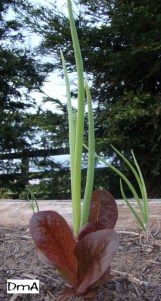
1.  The small seed of a fruit like that of a strawberry, orange or an apple;

2.   An individual rootstock of Lily-of-the-Valley or similar plant.

h1

Pullets

June 8, 2011

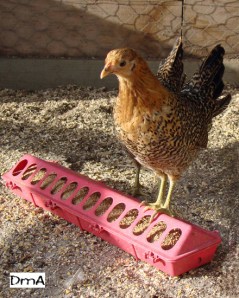
A couple of weeks ago, I moved the pullets* from the cow trough (in the garage) to the chicken coop. The pullets are growing rapidly but they’re not large or old enough to defend themselves against the hens. Without a shielding mother, hens will peck at a younger flock. For now, segregation is necessary. Therefore, each morning we play musical chairs. Both flocks sing (not all that well) while I rotate them. Until sundown, when rotation takes place in reverse, the hens free range with access to the coop for egg lying while the pullets play in the running pen. Twice daily, the music stops and everybody’s happy in their prospective stations.

Soon the pullets will know the coop and running pen as home base. There they will find a small supply of organic feed, water, and little nesting boxes to lay eggs next spring. As the pullets familiarize themselves with the new surroundings, routine patterns will fall into place. When the hens are nearby, free ranging, the pullets can observe scavenger skills and dust-bowl baths. Although these behaviors come naturally, like humans, even pullets can learn from peers.

Soon, when I open the hatch at twilight, the pullets will learn to go into the coop. Right now, I have to chase them. I’m glad there’s no hidden camera. Scurrying after seven pullets, dodging poop, bumping my head on the perching bar, and nearly landing on my face as I reach out to grasp one is a shoe-in for America’s Funniest Home Videos.

This flock is different from the breeds I’ve had before. The Buttercups are nervous around humans and are the first to take flight if I get near them. They’re small, active and quick, white egg layers that don’t do well in confinement.

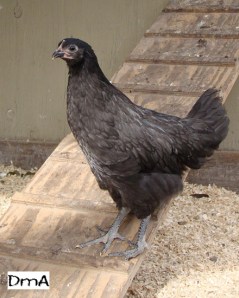
The Australorp is from Australia. Known for their high brown-egg production and sweet temperament, they’re also good meat birds. I have yet to hear a peep out of these quite, black beauties which make them suitable for town folk concerned about annoying their neighbors.

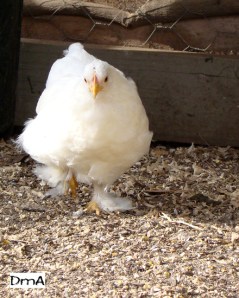
The Silkie bantams are from Japan. They’re so cute, calm and friendly you want to cuddle them. They’re feathers are fur-like, slick and fluffy. Silkies stay small and produce mini, ornamental eggs. With their motherly instincts, they make great brooders** and loving mothers. Children adore them.

*Pullet:  A female chicken less than one year old.

**Brooders or broody:  The desire of a hen to sit and hatch eggs.

h1

Learn How to Grow Blueberries

June 7, 2011

This workshop just came through my inbox and I thought I would share it with you. Sounds like a good class to attend.

Saturday June 18: FREE! Learn How to Grow Blueberries in the Valley. 11:00am. Join Roger from Rancho Azul to learn all about soil and water requirements, best varieties and more! Plus, enter to win a Blueberry Starter Pack! Scenic Nursery, 1313 Scenic Dr. Modesto, CA 95355 Contact: ads@scenicnursery.com | 209-523-7978

h1

The Quickest Fast Food in America

June 6, 2011

You can’t get a ready-made salad faster than from your own backyard.

h1

The Weekend: What I did, discovered, and sat on

June 5, 2011

Fair time

Throughout the countryside, fairground employees are gearing up for community showmanship, amusement rides, entertainment, and food.  For months, entrants—adults and youth—have been working hard at their particular craft, from wine making to hog rearing, constructing bottle rockets to canning pickles, and much more. Hundreds of people convey his or her skill in one form or another at the fair.  I am one of those people.

Friday, with my exhibits in the backseat, I drove to the fairgrounds with a smile on my face and hope in my heart. This is my fourth year entering amateur photography exhibits, and first year venturing into the craft arena.

Every year, I have blue-ribbon dreams and even though I’ve only won a couple, I still walk away pleased for having tried. Sharing one’s craft isn’t just about blue ribbons. It’s about creative thinking, goal setting, and staying up all night to finish what you started. I may not walk away a champion but I will have expanded my inventive juices and had fun along the way. I’ll let you know, when I know, if I won a blue ribbon.

Amy Stewart
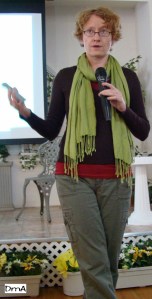
If you didn’t make it through the rain to Amy Stewart’s presentation, you missed an enjoyable, educational afternoon. I’ve heard her speak twice now and Stewart is an excellent presenter.

While conducting research for her books, Stewart looks for little, or unknown, facts. As a speaker, she brings her research to life in a friendly, educational, but humorous way. One shocking fact that Stewart shared from her latest book, Wicked Bugs, is that the world contains 10 quintillion insects. That’s 200-million bugs per person. They out number us, and unfortunately, we can’t exist without them. After telling the crowd this shocking fact, Stewart went on the say that the good news is, most bugs can’t hurt us. Bugs are not physically able to penetrate the skin even if they wanted to. However, “There is a dark side of the bug world,” Stewart said, “but not much.”

You’ll have to read her book to learn more on wicked bugs.

Karma

Before Amy Stewart’s presentation began, I noticed a familiar-looking love seat at the back of the room. Upon closer examination, and after plopping on the cushion, I floated down memory lane. At one time, I was its first owner. I also had a matching sofa with throw pillows, and coordinating window valances. Country blue was the trend back then and I went all out.

Somehow, the love seat made its way from my garage sale (where I sold the set to a Lodi couple) to Concord, past Clements to Sutter Creek. You never know what, when, where, or how karma will surface. In this case, in the form of a love seat still wearing well despite a split up with its partner, the blue sofa.

h1

Soulful Plotting

June 3, 2011

Legume

A plant of the leguminosae family that bears a pod, splits along its two seams and releases the enclosed seeds upon maturity. Legumes are nitrogen fixers reducing the need for nitrogen and soil improvement fertilizer. Legume examples:  pea, bean, clover and alfalfa

h1

Meet Amy Stewart

June 2, 2011

Spend the afternoon with New York Times’ best-selling author Amy Stewart. She will give a presentation based on her latest book, “Wicked Bugs.”

All five of Stewart’s books will be available for purchase at this FREE event. After the presentation, Stewart will be available to sign copies of her current and earlier books.

The event is FREE! But seating is limited so please reserve your spot soon. Contact: Master Gardener Jerry Trottier at 209-223-9133 or visit the web at http://ceamador.ucdavis.edu/Master_Gardener/Master_Gardeners_Presentations.htm

When: June 4th, 2011, 2:00 pm
Where: United Methodist Social Hall, Main Street, Sutter Creek, CA.

Event sponsored by Amador County Master Gardeners.

See you there!

h1

Preparing to Defend my Flock

June 1, 2011

MyFreeCopyright.com Registered & Protected

A predator crept onto the property then quietly left with a hen in its mouth. I didn’t witness the scene but that evening when I stepped into the running pen to gather eggs, a large clump of feathers and hide was lying beside the feeder. The headcount was one less.

I had spent most of that day outside spreading wood chips. I didn’t hear a peep. No loud squawks. No rush of flapping wings. No warning honks from my pet turkey, Miss Boo Boo. On the rare occasion that the chickens have fled for safety, I’d hear their shrieks from inside my house. This time, I didn’t even hear them while I was working outdoors. Whatever species the predator, it was sneaky, rapid, inaudible as a silent movie, and as deadly as a bear trap.

The next evening, a sick hen that I had nursed died. For several days, I had carried her to the water bowl then the feeder.  She seemed happy to be eating and drinking. Still she was fading. Afterwards, I’d put her into a nesting box to protect her from the other hens. A flock will peck at a sick or injured hen to establish hierarchy status or to remove a weak member.  It’s a terrible scene to encounter so I do everything possible to stop muggings in the running pen.

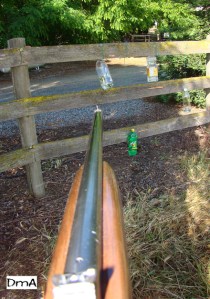
When I discovered the hen’s body in the nesting box, it was late and nearly dark so I laid her in the tall weeds outside the coop. Early the next morning I returned to bury her but the mysterious predator had come back. (The details are too horrible to share.) Angry with myself, and the beast that robbed a hard-working chicken of a dignified, humane burial, I decided it was time to learn how to handle a gun. Later, I called my son, Jason, and the following weekend he came over with his 22. He set up water bottles then gave me safety instructions and shooting lessons.

The distance between the stock and the barrel was a little long for my short arms and my eyes kept seeing double. Still, I managed to hit the bottles. I also hit the nearby silver maple leaves and the foxtails. When Jason went home, he left his gun so I could practice. Having done so several days now, I realize that by the time I get to the gun, unzip the case, take out the 22, get to the bullets, load, and go outside, the predator will have eaten the whole flock. I suppose I’ll have to set up camp in the running pen. I too can be a sneaky, inaudible predator. Copyright © Dianne Marie Andre