Archive for August, 2011

h1

Summer Crop 2011: Part III

August 10, 2011

While a vole invaded my vegetable garden, mild weather and expanding shade hopped aboard the bothersome season. And why not, trouble always comes in threes. But I’m not alone.

Commercial growers throughout California’s Central Valley, where I live, are facing weather-related challenges, writes Steve Adler, associate editor of Ag Alert. Lingering spring rains pushed planting back by two weeks. In addition, it has been a cool summer. Yield is down. Fruits and vegetables are ripening later than usual. Temperatures can boost or inhibit crops. It’s one of the downsides of horticulture. Whether one is a weekend gardener, farmer, or consumer, Mother Nature’s mood—whatever it may be—is unavoidable.

Choosing the right garden location is just as important as the weather. I’ve had three vegetable plots, each at different sites. Two of the gardens soaked up the sun’s rays from sunup to sundown. My current garden is two years old. It sits a few feet from a row of redwoods (This also provides protection for voles to access the garden.) Sunlight doesn’t come through until 10 or 10:30 a.m. with filtered shade here and there throughout the day. I knew the nearby redwoods would eventually tower over the garden. But it was the only site available at the time, and I didn’t think the shade would expand so quickly.

Vegetable plants need six to eight hours of full sun to produce a substantial crop. In extreme hot climates, filtered, late afternoon shade is helpful in protecting foliage from burning or wilting and crops like peppers and tomatoes from sunscald. But too much shade decreases yield, prolongs leaf moisture which increases the chances of disease, mold, rot or mildew.

Microclimates, due to elements such as elevations and structures, can vary from spot to spot. To take the guesswork out of existing or new garden sites (including ornamental beds) accurate readings can be acquired from products like A Sun Stick Sunlight Meter for less than $10.00.

To Sum It All Up:

Problem #1:  Voles

Solution: Choose a garden site with a 15-foot wide open space around the perimeter. (Voles don’t usually go into the open.)

Problem #2:  Cool weather

Solution:  Be prepared. Plant more than needed, just in case the weather is mild and yield is down. If this doesn’t happen, what you can’t consume or preserve, donate to a local food bank.

Problem #3:  Expanding Shade

Solution:  Before choosing a garden site, note sun and shade exposure at different times of the day, and any immature trees or shrubs that will create too much shade in the near future. Choose a site that gets six to eight hours of full sun.

h1

Summer Crop 2011: Part II

August 8, 2011

MyFreeCopyright.com Registered & Protected

The most recent and urgent problem in my garden is an uninvited, vegetable-eating vole. This doesn’t have anything to do with the poor yield previously mentioned in Part I, but it impacts how many veggies reach my dinner table versus the mouth of rodents.
I first noticed runways in the main raised bed beneath cucumber and squash plants. Flipping over the cucumbers some had been partly munched on. I decided to flush the varmints out, so I jammed the end of the water hose into one of the openings and turned on the faucet full force. A title wave flushed through the burrows. Then out came one vole. He hid on the edge of the raised bed between trailing squash vines. I had a perfect shot. But I couldn’t commit murder with a shovel and not destroy the squash plant.

That evening, I loaded the .22, jammed the hose in a hole, turned on the water, and shouldered the .22. As if the fat-bellied rodent knew I was armed with a gun, he ran for shelter beneath the tomato plants. He was so fast it was as if brown lightening had passed before my eyes. Then I became concerned he would move into the melon bed—the only crop that has produced well this summer. Sure enough, the next day when I flooded the burrows in the squash and cucumber bed, he never surfaced. Checking out the melon bed I discovered openings and runways so I flushed the burrows. Out he ran, in the open, straight for his old eating ground. I chased after him with a shovel. Of course, he won the race. I could have shoot him with the .22 .

I absolutely hate these pests. They’re smart! Quick! Hide-and-seek experts! They can eat enough food for an elephant. What little crops I do have this summer, much of it is being devoured by one measly vole.

Vole (meadow mice) Facts:

  • Voles usually live 3-6 months, rarely beyond one year.
  • There are six species in California. They weigh ½ ounce to 3 ounces, and are very prolific breeders fluctuating in numbers from a few to thousands per acre.
  • Voles can carry disease that can be transferred to humans through food cross-contamination or direct contact.
  • Voles do not hibernate. In colder climates, voles are more active during the afternoons when it’s warmer. In warmer climates, they scurry about early mornings and late afternoon when summer heat is lowest.
  • One can determine voles from gophers and moles by their aboveground runways between multiple openings located closely together.
  • Voles eat seeds, tubers, bark, tree needles, vegetables, various green vegetation such as grass and clover, and insects.
  • Voles are intelligent. Once they witness a family member caught in a trap, they know to avoid the same fate. They are very hard to trap.

Helpful (but not foolproof) Solutions:

  • Remove food and protection from predators by cleaning away weeds, heavy mulch, and dense vegetative cover.
  • Keep a weed-free strip around garden areas. Voles don’t usually go into the open. A minimum width of 15 feet is recommended by Integrated Pest Management at http://www.ipm.ucdavis.edu/PMG/PESTNOTES/pn7439.html
h1

Soulful Plotting

August 5, 2011

Asexual:

A propagation technique reproducing plants by using cuttings or division.

h1

Summer Crop 2011: Part I

August 3, 2011

This year, my veggie garden is nothing to be proud of. Here’s what I’ve harvested so far.:

  1. Three small zucchini.
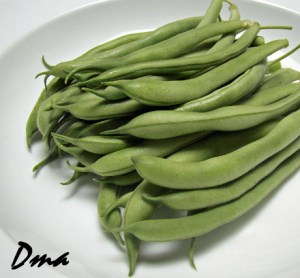
  2. Green beans for only two evening meals.
  3. Barely enough tomatoes for two adults.
  4. Plenty of lettuce and crook neck squash– ah, success here.
  5. Seven undersized orange sugar pumpkins.
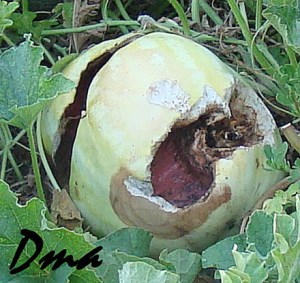
  6. Lemon cucumbers and melons being consumed by something other than humans. (I harvest one watermelon. It was 18 pounds! There are at least a dozen smaller ones–success here–but some have been eaten into.)

Every day, since planting the summer garden, I nudge Ralphie into the early morning light. He does his business while I head for the chicken pen and open the hatch door so the hens can free range. I replenish the feed and clean out the coop and water dishes then meet up with Ralphie on the front lawn to walk the gardens.

Much of this summer has been cool. Before 7 a.m., when we venture outdoors, the air is crisp. By the time we stroll through the perennial garden then approach the vegetable grounds, my eyelids have opened wide. Ralphie wanders past the raised beds to stand at the pasture’s edge and twitch his nose for unusual scents. Unless a jacket rabbit or low flying bird lures him to break loose, he opts to stay out of the foxtail infested pasture. On occasion he’ll lose all common sense and bolt into the field crazed with fire and vigor. Eventually he returns decorated with irritating foxtails from head to foot. So this time of year, Ralphie imagines most of his doggie adventures on the sidelines.

While he dreams of a wild chase, I look over the veggie plants and vines. I imagine my own possibilities, those of daily harvests full and abundant. I am visualizing instead of harvesting because the garden is a flop. This is my second year cultivating from raised beds and the first of many gardens to produce so little.

A wimpy garden doesn’t sit right with me. It’s not my style, but it happens.

There are several reasons for the poor crop production. Some problems can be adjusted before next summer and others are out of my control. Next week I will explore the causes, share my mistakes, and nature’s influence so that, hopefully, we will learn together how to produce a sizable yield.

Stayed tuned for Part II of Summer Crop 2011.

h1

Garden Spiders: One of the Good Bugs

August 1, 2011

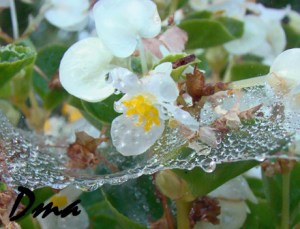
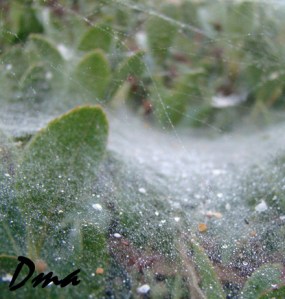
This summer, garden spiders are weaving cobwebs like cotton candy machines. Unsightly webs and victims trapped within the plaited threads make gardens and structures look old and unkempt. Frustrated, a reader recently asked the question, “What types of plants eliminate spiders?”

Although one can avoid plants that spiders favor, like hedges, boxwoods, topiaries, vines, and begonias, there aren’t any spider-eliminating plants. Even smelly plants like society garlic don’t ward off spiders.

Hiring a professional exterminator won’t eliminate spiders either. Chemicals work only when sprayed directly onto the spider, and most spiders hide while waiting for their prey. What people forget, or may not know, is that garden spiders are essential components to the biological control in and around the garden.

The garden spiders’ web weaving tactics used to trap the next meal abolishes bad bugs such as wasps, aphids, flies, and disease carrying mosquitoes, making them beneficial to humans and pets. In the article Spinning and Weaving Spiders, the author goes so far as to encourage gardeners to plant a variety of flowers to attract food for spiders. A naturalist or a gardener who delights in maintaining a raw habitat in his or her yard may knowingly grow spider-attracting plants. But most gardeners aren’t going to invite more bad bugs into their yard, which seems a little counterproductive.

Spiders can be scary, especially to those who suffer from arachnophobia. Even if you don’t have a fear of spiders their cobwebs are downright hideous. But we can, at least, appreciate the role of garden spiders as natural predators—allies of the ecosystem. Although garden spiders come packaged as the ugly and the scary—sorry, spider-eliminating plants not included—they are one of the good bugs. © 2011 Dianne Marie Andre