
Basal:
The lowest part of a plant or stem.

In recent weeks, I took a day off from the demands of everyday life and hopped into my friend’s car for a garden tour. It was over an hour’s drive to Tuolumne County, a mountains community of red soil and narrow, roller coaster roads. Because the outing was my idea I hoped it would be worth my friend’s time. Most garden tours are $25 and up. This one was only $10. I was a little apprehensive.
The first garden was ah-la-natural with laidback qualities. The premium attraction was the complimentary snacks and cold lemonade on a table covered in white linen. While I wandered about, my friend, who had fallen under the spell of sweet chocolate, ate six yummy cookies! When she caught up me, we quickly scanned the mayhem grounds then politely exited to the car where I was told about the cookie disgrace. At this point the tour didn’t look promising. I was glad to hear pleasure was reaped.
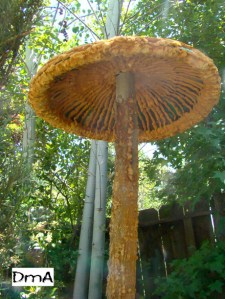
At the next stop the garden was delightful. I had been redeemed. Tucked behind a white picket fence was a well-tended fairyland. Gnomes, fairies, small, medium and giant mushrooms, ponds, and gazebos adorned the large front, side and back yards. Although the garden was a little eccentric, it had the appearance of a charming village where mystical characters lived among 100 plant and tree species. My favorite was a beautiful Eastern Redbud tree.

From there we drove to a hillside garden with native and deer resistant plants. Barberry, beard tongue, lily turf, maiden grass and more grew under oaks, Japanese maples, dogwood, and ginkgo trees.
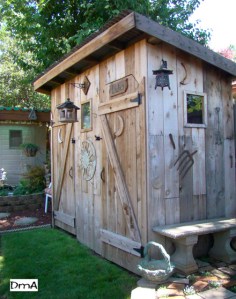
Another garden showcased a shed that resembles an outhouse, and recycled artifacts tucked here and there as landscape art or plant containers. Some of the 85 species included dahlias, calla lilies, aster, foxglove, and evening primrose.
The last garden on the tour was designed for wildlife and is certified as a Wildlife Garden by the National Wildlife Federation. The homeowners’ goal was to attract birds, bees, bats, butterflies and insects that crawl inside flowers. This was accomplished with 14 sage varieties, coneflowers, several milkweed varieties, rosebushes, flowering maple, coral bells plus 90 other flowering plants and trees.
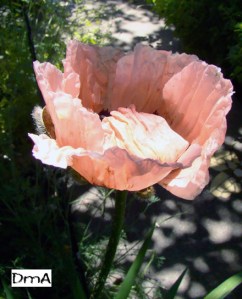
Iceland Poppy
At day’s end, we had walked through mayhem pathways, entered a fairyland, trekked hillsides, and roamed a certified wildlife garden. The long drive to a little mountainous community with red soil and narrow, roller coaster roads, and a mere ten dollars was well worth our time. Any apprehension I felt beforehand had vanished.
Garden Touring Tips:

Vascular:
Vessels that conduct water or nutrients in plants.
Have a wonderful, fun, and safe weekend everybody!
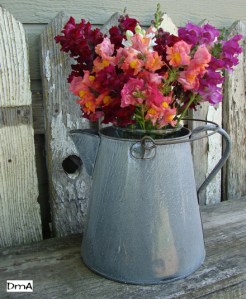
Because of all the late spring rains and last week’s summer downfall, my snapdragons developed milddew. I neglected to keep an eye out for early signs and I had to pull them out. But first, I salvaged the blooms by stripping the leaves before snipping the stems near the base. Then I placing them in a bucket of water sitting next to me. Cut flowers will last longer when put immediately into water. This boutique will give me about ten days of pleasure.
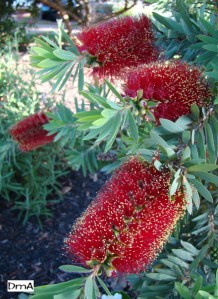
Three years after planting two dwarf bottlebrush plants, blooms have finally emerged.
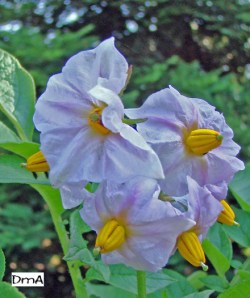
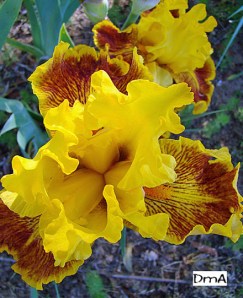
Other flowering plants in and around my garden are lavender, society garlic, vinca, begonia, hydrangea, Santa Barbara daisy, potato vine, butterfly bush, pomegranate, columbine, calendula, Victoria blue salvia, black-eyed Susan, and the one pictured below. Can you guess what plant produces the flowers in the photo below?
A couple of days ago, I finally had time to spruce up the perennial garden which was in dire need of my attention. There are other outdoor projects still to tackle. But today, on our country’s Independence Day, I’m claiming liberty and staying indoors. Taking our nation’s celebration to heart, I plan to rest, chow down on chilled watermelon, strawberry shortcake, read and maybe do some writing.
Thanks to our soldiers and their families, past and present, I have the freedom to choose how I spend my day. Liberty is a wonderful gift.

Happy Independence Day everybody!

Renewal Pruning:
Removing one- to two-year old growth to the ground to promote younger, vigorous growth. This is usually done on shrubs that bloom on present year’s growth.
Splitting wood isn’t my idea of a fun weekend, but it had to be done or at least started. So I threw on my lumberjack attire and set my mind to karate chop wood bigger and heavier than a cast iron potbelly stove. Although I tried to help my husband maneuver 3-foot diameter logs in line with the wood splitter, grunting was the only action I had to show for my effort. Joe, of course, was the one who moved the hefty, brown stumps.

Ralphie snoozed on the tractor seat while we worked. He looked up now and then, curious about a slow screech that put a chill up our spines or a loud pop as the hydraulic wedge forced open a log.

We still have a lot more karate chopping to do. We’re not even halfway done. The chronicle of Considering Tree Rights seems endless. There are so many steps involved in cutting down a tree.
The only benefit to all this hard work is eliminating a monthly four- to six-hundred dollar utility bill during winter, and maybe, just maybe, loosing a pound or two.
That’s right, vomit! The unsightly growth, known as ‘dog vomit slime mold’ or Fuligo Septica, is popping up everywhere. Other than removing it with a shovel, you can’t get rid of it. Some professionals suggest that you keep the infected area dry and in full sun.
The mold usually appears in late spring or early summer after heavy rains, and grows on wood chips or mulch, but has been known to grow on plants.
Moments before the last rainstorm, my husband and I had finished spreading a thick layer of chipped wood around the garden beds. The chips are from our red wood and oak trees that PG&E had cut down. My plan was to control weeds. Instead, I have mold spewing from the neat and tidy paths. It’s even in my raised bed. Could it be revenge?
This unsightly blob seems to appear overnight. During the first stage the mold is yellow or bright orange with a bubbly texture that is slippery if stepped on.
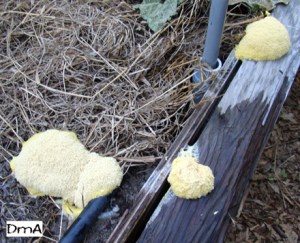
As it grows larger (sometimes to the size of a 12-inch pizza), the surface hardens, turns crusty and takes on the look of dog vomit.
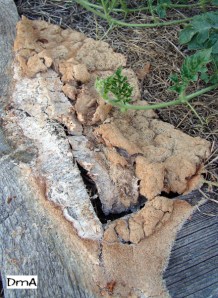
I researched the dangers and found that scientist and medical professionals claim ‘dog vomit slime mold’ is harmless to humans, pets, and plants. The only thing it seems to hurt is a gardener’s pride.

Bed Out:
A horticultural specification for planting an entire bed with one species.
You are currently browsing the archives for the Dianne's Blog category.


 | Aimee E on Slanted Light |
 | Anonymous on A Lesson in Forced Blub F… |
 | Corinne W on I have Argyranthemum Frut… |
 | Dianne Marie Andre on How to Deadhead Snapdrago… |
| Anonymous on How to Deadhead Snapdrago… |

 In and Around the Garden