
Damping-off:
Rotting of seedlings and cuttings caused by any of several fungi; a fungal attack near the soil line that cases cuttings or emerged seedlings to fall over and die.

Damping-off:
Rotting of seedlings and cuttings caused by any of several fungi; a fungal attack near the soil line that cases cuttings or emerged seedlings to fall over and die.

I love the age-old charm of moss. This winter there is plenty growing in and around my garden. While other vegetation remains dormant, moss has brought life and balance to the beds. The lush green hue has added color on rocks and logs, in crevices and corners, and as groundcover where shadows are heavy and the soil moist.
Valued for its tranquil mood, the Japanese have integrated moss into gardens for centuries. I can certainly see why. Not only do the clumpy mounds evoke a sense of history and peace, it draws one’s eyes down to observe the many subtle changes of nature.
Moss derives nutrients from the air, making it a good alternative for rock gardens, woodlands, shady to half sun areas. Additionally, moss is different from other plants in that it does not have leaves, stems, flowers, or roots. Without these functions, moss cannot move water within its structure. This is why moss grows mostly in moist conditions. Other contributing factors include:
Although moss gardens need some care, it’s less upkeep than traditional plants. Moss Acres offers photo ideas, growing tips, and “Five reasons to keep moss in your yard.”
Note: On walkways, moss can be slippery. To avoid possible injury, use a power washer or follow Kitty Cruiser’s “Moss Removal from Sidewalk” instructions at www.ehow.com/how_7348076_moss-removal-sidewalk.html.

Microclimate:
Climate within a given area that is different from the surrounding vicinity. A variety of conditions influencing microclimates include sun, shade, humidity, wind, drainage, hills, valleys, woodlands, hollows, structures, water proximity, and other factors.
Yesterday, I worked with three other master gardeners at the Amador Food Bank Demo Garden. The sun was bright and warm and the soil alive and ready to nurture whatever Barbara, Jackie, Kathy, and I put down.
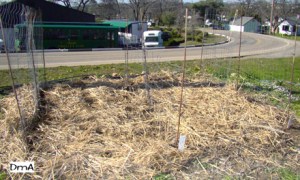 We started with a 10×10-foot area and constructed three trellises out of rebar and wire then direct sowed snow and sugar snap peas.
Then we moved on to one of the raised beds and broadcasted a blend of white bunching onions and lettuce varieties of Romaine, Buttercrunch, Rougette de Montpellier, Spicy Mesclum Mix. Sowing lettuce and onions together is a new concept for me and so is broadcasting. While some vegetables aren’t compatible and broadcasting isn’t suitable for all varieties, seeds that can be sowed this way will produce more vegetables per square foot than the traditional rows and furrows. I loved this method. This is what I call an EQF task—easy, quick, and fun.
In another raised bed, we sprinkled in radish watermelon, purple top white globe radishes, salad rose radishes, plus spinach and mustard in different sections of the bed. We ended our planting session by covering two beds with straw and one with frost cloth. This will keep the soil and seeds warm. Soon, the seeds will germinate and tiny heads will emerge from beneath the soil.
Now that’s what I call a perfect day . . . warm sunlight and the promise of future garden births.

Here’s a little information on some of the seeds we planted.
Romaine lettuce is fast growing, forms a loose head that is easy to harvest, and takes up little space in the garden. Sweet and delicious, Romaine lettuce is the basics for Caesar salad.
Buttercrunch Head Lettuce is compact rosette heads and is productive, heat tolerant and slow to bolt. It has mildly flavored leaves.
Rougette de Montpellier Lettuce is a very old French variety with smallish crispy lettuce with glossy green-red leaves. Give some protection over winter for the best pickings.
Organic Mesclun Mix is a popular blend of baby lettuce and spicy greens with a variety of shapes. The word “Mesclun” comes from the French word for “mix.”
Bunching Onions form perennial evergreen clumps up to 1 ft. (0.3 m) in diameter.
Watermelon Radish is a large round root vegetable related to the turnip and horseradish family, with a crisp texture and a mild to sweet peppery flavor.
Purple Top White Globe Radish is an excellent globe-shaped radish and America’s favorite turnip!
Russia Salad Rose Radish is an amazing gorgeous rosy pink radish eight inches long. A great salad or beer radish.

Mulch:
A thick, organic matter (leaves, straw, bark, wood chips, and more) placed over soil to suppress weeds, prevent moisture evaporation, maintain soil temperature, and keep roots from freezing.
Compost:
A blend of decayed, organic material such as manure and vegetation used to fertilize or improve the soil’s structure with rich nutrients.

The primer for beautiful plants is beautiful soil.
Copyright © 2011 Dianne Marie Andre
Whether you’re a novice, passionate or occasional gardener, by following a few steps you can keep your plants looking their best. These simple effective steps introduce you to the basics of maintaining healthy plants that will reward you for years to come.
Nitrogen (N) promotes vigorous leaf growth. Phosphorus (P) encourages good development of roots, flowers, and fruit. Potassium (K) promotes cell division and strong stems.
Follow the above tips and your plants will give you satisfying results year after year. Remember, small regular maintenance is easier than a field of copious tasks. Copyright © 2011 Dianne Marie Andre

Deciduous:
Trees or shrubs (usually evergreens) that lose their leaves in the fall.
Evergreen:
Plants that keep their leaves or needles year round, but lose some.
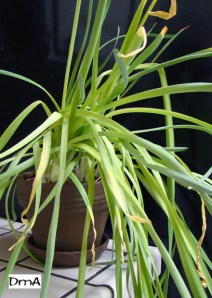
Indoor blooms don’t just happen. As you can see in the photo, my Narcissus Paperwhites are flowerless. This was my first experience with indoor bulb forcing, which I shared with my readers in November. You can review my original posts by clicking on these three links:
Day 8 of forcing Narcissus Paperwhites Indoors
At first, my Paperwhites flourished. Two buds burst into tiny white flowers and bloomed for nearly three weeks. I was ecstatic. Everyday I watched for more blossoms with eager anticipation. Buds continued to form. As the foliage grew, my excitement heightened because I looked forward to a happy plant covered in florets. Then the flowers as well as the buds died. I was devastated and couldn’t understand what happened because the bulbs were healthy and firm. It was obvious I had failed them, and I wanted to know why.
Since I couldn’t find the answer online, I called a local nursery for some practical advice. The owner answered the phone and said, “I don’t know, but come in and buy ours. Our bulbs would never do that.”
Frustrated, I sought help elsewhere. Here’s what had I learned:
“Narcissus bloom when it is cold out. They like it cold and wet. They usually yellow when the air is too dry, and soil too dry.” –Julie Morehouse, Horticultural Advisor/Garden Coach, Stockton, CA | 209-598-4707
“You under-watered, once the bulbs flower the water evaporates quickly. They need more water to keep blooming.” –Bill Renfro, owner of Plants and Produce Retail Nursery, Lodi, CA | 209-727-0323
BINGO! I finally knew what I did wrong and how to avoid failure next time. My potted Narcissus sat in a warm, dry room. I was so concerned about over watering, the soil was barely moist, and with too many holiday festivities, I probably let it dehydrate more than once. Although my oversight wasn’t costly, I was disappointed with the results of my neglect.
If you are thinking of forcing indoor flowers, whatever variety bulb you choose, benefit from my mistakes—research environment, water needs and other growing requirements for successful indoor bulb flowering. Copyright © 2011 Dianne Marie Andre
You are currently browsing the archives for the Dianne's Blog category.


 | Aimee E on Slanted Light |
 | Anonymous on A Lesson in Forced Blub F… |
 | Corinne W on I have Argyranthemum Frut… |
 | Dianne Marie Andre on How to Deadhead Snapdrago… |
| Anonymous on How to Deadhead Snapdrago… |

 In and Around the Garden
Blogging Anniversary! Thank You!
February 1, 2011February is
“In and Around the Garden’s”
first anniversary and I would like to extend
a big THANK YOU to:
all my followers,
those who placed a link on his or her website,
and
to my many new fans a WARM WELCOME.
It’s nice to have so many faithful friends subscribing to inandaroundthegarden.net.
If anyone has specific interests or gardens you would like featured, please leave me a comment or send an email.
Don’t forget to share with each other what you are doing in and around your garden, whether it’s a new way to weed, a ride in the country, or an upcoming event.
Thank you everyone, for making this a banner year!
From my garden to yours,
♥ Dianne ♥
Share this:
Posted in Dianne's Blog | Tagged blogging, feature stories, first anniversary, links, one year anniversary, sharing comments, what are you doing in your garden | 5 Comments »