
“Growing veggies,
dealing with pests
and nature
teaches patience.”
Copyright © 2010 Dianne Marie Andre

“Growing veggies,
dealing with pests
and nature
teaches patience.”
Copyright © 2010 Dianne Marie Andre
Yesterday, I went to the county fair to see if I had won any ribbons for amateur photography. This is my third year competing. (Fair ribbons make me feel like a kid again.) The mushroom photo, below, that I cherished like a proud Mama, took first! My remaining photos followed with a second and honorable mentions. Two friends (Georgia Owens and Kathi Morrison) placed as well. They are pros who create beautiful, inspiring art, and go home with top awards every year.
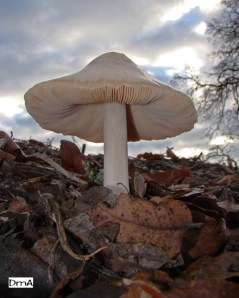
Winning is fun. Confidence swells and you think that perhaps you can do better next time. To be ready for fair entry deadlines, I need to start preparing mid-May, when spring gardening is still at its fullest. Torn between gardening and writing, I get overwhelmed with the amount of work and energy both require. Extra activities, like fair entries, are squeezed somewhere between. I fall behind on household chores, and begin to question, “Why am I doing all this?” This year I wasn’t going to compete. Then, at the last minute, a change of heart set in.
I’m glad it did. The entries of other participates fascinate me. There are so many talented individuals, rightful winners, whose crafts deliver inspiration to others. Heck, even your own winnings validate your time and effort. Best of all, you feel like a school kid again. As least I do. Copyright © 2010 Dianne Marie Andre
“Step out of the box.
Extend the palate
outside your front door.”
Copyright © 2010 Dianne Marie Andre
Finally, I found my mother-in-law’s recipe mentioned in the last post, A Mother’s Day Memoria, under Country Buzz. I cooked a batch yesterday. It was good; great flavor but as they say, “it’s nothing like mom used to make.”
I hope you try it. If so, let me know if you like it.
Maria’s Rice Pudding
Serves 4 – 6 people
Ingredients:
1-cup white long-grain rice
Ground cinnamon
2 cups water
1 cups milk
1 cup sugar
2 eggs
Cooking Instructions:
Step 1: In medium-sized saucepan bring 2 cups water to a boil; add rice, cover, and cook on medium-low heat 20 minutes.
Step 2: Remove lid, add milk and sugar. Bring to a boil over medium heat, stirring constantly until thickened.
Step 3: Remove from heat and let cool 5 minutes.
Step 4: Stir in beaten eggs, pour into glass dish, and top with cinnamon according to taste.
Step 5: Let cool and serve with a meal or as dessert.
Best if stored at room temperature.
“To garden
with friends
is to rid your
life of weeds. “
Copyright © 2010 Dianne Marie Andre
Supplies for the Job:
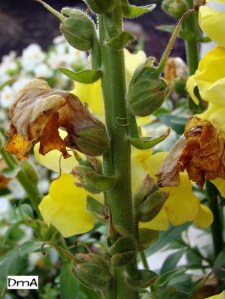
FIRST, a few Tips for Snapdragon (Antirrhinum majus):
Follow these simple deadheading steps.
Deadheading snapdragons will encourage new side branches and new blossoms. But don’t expect them to look like their spring flourish. The new blossoms are usually smaller and fewer. As the new blossoms dry, continue with the above deadheading steps. Remove any dry and unsightly leaves at the bottom. Copyright © 2010 Dianne Marie Andre
Happy snipping!
As promised, here are the tips and facts on potatoes.
Potato Harvest Tips:
“Boiling” Potato Facts:
Boiling potatoes include Round White, Round Red, Yellow Potato, Red Potato, Salad Potato, La Soda, Red La Rouge, Red Pontiac, Red Nordland, Red Bliss, Yellow Finnish, Ruby Crescent, and Australian Crescent
Copyright © 2010 Dianne Marie Andre

I’m so excited to tell you that I harvested my first crop this year. Potatoes! These are from the volunteer starters left in the “give and take” soil given to me awhile back for my raised bed. It wasn’t quite time to hand-dig the potatoes, but the foliage was crowding the zucchini and other vegetable plants. Imagine my surprise when I pulled up nine potatoes. Nine beauties that range in size, from that of a ruby marble to a baseball.
Removing potatoes from the earth was so much fun. I had no idea what type I was going to dig up, Yukon Gold, Russet Burbank, or some other variety. My little earthlings were Red Skinned. They smelled of birth, bearing the scents of sun and earth and air. I was so pleased with my treasures that I held them against the racing blue sky like a newborn, dedicated to God. (I know. I got carried away.)
I left six plants so there will be more potatoes toward the end of June. For sure, I want another raised bed. One that will farm more potatoes. This is just too much fun.
I haven’t decided how I’m going to prepare my first harvest yet. Red Skinned potatoes are best boiled, roasted, or barbecued. Nine is enough for one meal for two. Whichever way I cook them, each tender piece will bear a delicious bouquet. I can taste them now. Yum!
Tomorrow I’ll bring you some potato harvesting tips.
Copyright © 2010 Dianne Marie Andre
“Visit the sea
for a day of play
in swirling waves.”
Copyright © 2010 Dianne Marie Andre
In case you are considering hose-bibb timers and/or drip systems, here’s a few basic tips. I hope this makes the decision-making process easier.
Benefits of hose-bibb timers:
How to choose hose-bibb timers:
Benefits of drip systems:
Note: Weeping soaker hoses don’t last. The last time I tried one, it worked for only six water cycles! Many master gardeners recommend drip tape, available on-line or at your local irrigation supplier. Copyright © 2010 Dianne Marie Andre
You are currently browsing the archives for the Dianne's Blog category.


 | Aimee E on Slanted Light |
 | Anonymous on A Lesson in Forced Blub F… |
 | Corinne W on I have Argyranthemum Frut… |
 | Dianne Marie Andre on How to Deadhead Snapdrago… |
| Anonymous on How to Deadhead Snapdrago… |

 In and Around the Garden