Archive for the ‘Guest Writer’ Category

h1

Pilgrim Corn Salad – So Easy and So Tasty!

November 22, 2011

MyFreeCopyright.com Registered & Protected

Folks, keep up the good work adding to the ”Thanksgiving Humor Week’ post. Meanwhile, here’s a wonderful side dish (and a little pilgrim history) for your feast. Thanks Bernadine for guest writing. Happy Thanksgiving to everyone. May you be safe, smile much, and laugh even more.–Dianne Marie Andre

By Bernadine Chapman-Cruz

At Thanksgiving, thoughts turn to the pilgrims landing on Plymouth Rock. Seeking religious freedom in an unfamiliar place, early life was filled with hardships, from battling the elements, to rampant disease, dwindling population and the unknown dangers associated with living in an unfamiliar land. Nonetheless, a God fearing people, the pilgrims were thankful.

During colonization, the pilgrims came to rely on the Indians, who were native to the area. The red man taught the white man how to live off the land, trap game and grow corn. After a successful harvest, the pilgrims decided to celebrate the wealth the land had to offer in a communal feast. Not only did the new settlers provide for their families and community, but extended an invitation to the Indian Chiefs with whom they had formed friendships.

When it came time for the celebration, food preparation was in full flurry and the pilgrim’s tables were laden with the rich abundance of the land. Wild duck, goose and deer, along with corn, other vegetables, cranberries and assorted fruits and nuts made for a hearty and tasty fare. It is interesting to note that the turkey, ubiquitous with a traditional Thanksgiving dinner, may not have adorned the pilgrim’s table.

When it came time for the guests to arrive, the pilgrims expected the Indian Chiefs with whom they had become trusted friends, but were dismayed when entire villages accompanied their leaders to the feast. Even though astonished by the number of unexpected guests, the pilgrims welcomed all who came to their table and the traditional Thanksgiving dinner was born.

Thanksgiving is a time to welcome family and friends; to share a meal prepared with love; and to be thankful for our blessings, just like the pilgrims did so long ago. A delightful way to carry on this tradition is to include Pilgrim Corn Salad as part of your holiday menu. Happy Thanksgiving. Copyright 2011 Bernadine Chapman-Cruz

Pilgrim Corn Salad

In a medium size bowl combine:

2 cans kernel corn

¾ cup dried cranberries

¼ cup chopped pecans.

Marinate with dressing consisting of:

2 Tablespoons each:  olive oil and balsamic vinegar

1 Tablespoon apricot jam

1 teaspoon each:  Dijon mustard and Worcestershire sauce

Refrigerate for 30 minutes.  Yield 8 – ½ cup servings
h1

The Halloween Apple

October 31, 2011

MyFreeCopyright.com Registered & Protected

By Bernadine Chapman-Cruz

 A Halloween tradition turns into a lifelong joy – cherishing the sweet natural flavor of a juicy apple. As a child, on Halloween I anxiously awaited nightfall. As soon as porch lights glowed, armed with a large grocery sack, I ventured out to trick or treat. Customary Halloween treats included a variety of candies, gums and sticky popcorn balls wrapped in waxed paper. Sometimes I was even lucky enough to discover a wheat head penny or a buffalo nickel in the bottom of my sack.

My first stop was Mrs. Campbell’s. Every year I lined up with other kids in our neighbor’s front room where she sat in a wheelchair. She held a large crystal bowl on her lap filled with big five-cent candy bars. I remember as many as a dozen masked trick or treaters standing in a semi-circle while Mrs. Campbell tried to guess our names. After several unsuccessful attempts, Mrs. Campbell threw her hands up in the air, laughed and said, “I give up.” Then we filed out selecting our candy bar on the way out. If we lingered too long , she helped us make a decision.  “Take two!”

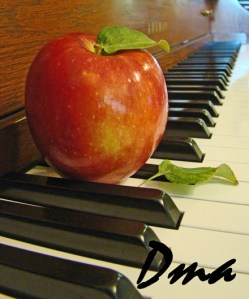
My piano teacher lived in the next house and he too invited us in. Sometimes we had to wait for the next bunch of kids to come so there would be enough to encircle his grand piano. If you had been to the piano teacher’s house before, you knew that when he sat down at the piano bench and touched the keys, it was our cue to start singing. After three or four songs including Row, Row, Row Your Boat and Twinkle, Twinkle Little Star, the piano teacher, stood up and dropped a shiny red apple into each bag.

After running up and down the block, ringing doorbells and chanting “trick or treat,” I grew increasingly thirsty and tired. It was time to head for home. Once inside, I flopped down on the living room rug, where I dumped my loot onto an open piece of newspaper.

Now it was time to separate the wheat from chaff. As my apple rolled across the floor, I quickly picked it up and put it in the discard pile, where the less favored treats met a fateful end. Along with the apple were pieces of taffy, Black Jack Gum, red hots and jaw breakers, while the chocolate ‘keep pile’ grew with Three Musketeers, Mounds, Almond Joys and Hershey Bars. For the next couple of weeks, every night before bed, my mother gave me a coveted piece of my Halloween spoils.

The signal that my Halloween treats were depleted, was the night I got the apple my piano teacher dropped into my sack. I must admit, it was a welcome relief from my recent Halloween candy sugar high. The cool, refreshing, natural sweetness of a simple apple, never tasted so good. To this day, apples remain my favorite fruit. Copyright 2011 Bernadine Chapman-Cruz

h1

Labor Days of Love in the Garden

September 5, 2011

MyFreeCopyright.com Registered & Protected

By Bernadine Chapman-Cruz

Labor Day signals both happy endings and new beginnings. A final picnic or day at the beach, one last camping trip and skipping stones across the lake mark the end of summertime fun. As warm summer days wane, outdoor activities spur a farewell rally. Last, but not least, the labor put into tending a garden also takes a different path.

Come September, gardens look toward a new season. Say goodbye to vine ripened tomatoes, berry picking, fresh peaches and pears. Asparagus and corn have seen their glory. Pumpkins will soon be peeking out from under twisted sticky vines and a nip is in the air.

In the flowerbed, colorful hydrangeas, verbena, calendula and sweet alyssum have given up all their splendor. Gone, but not forgotten, are the red, white, blue, purple and pink blossoms. The beginning of fall paves the way for the winter greens adorning fields and hillsides.

Labor Day is celebrated on the first Monday in September. The working man’s holiday is designed to kick back, relax and take a well-earned day off. The same is true for the gardener. Put down your hoe, let the watering can sit, take off your gloves and enjoy a day of rest. You have spent all spring and summer working the soil, sowing seed, watering and weeding. The effort put in to tending a flower garden or a vegetable patch is complete. Feast in the rewards of the harvest. Relish in the joys derived from your labor of love. Delight in the array of homegrown vegetables that found their way to your table. Recall the refreshing taste of salad, made with lettuce picked with the morning dew. Savor the memories of juicy tomatoes, green onions and cucumbers kissed with a drizzle of dressing.

The joy of getting one’s hands dirty and smelling the fresh earth are labors of love that enhance the bounty Mother Nature provides. Enjoy a day of rest, tomorrow fall planting begins.   Copyright 2011 Bernadine Chapman-Cruz  

h1

Corn on the Cob – A Summertime Treat Hard to Beat!

August 15, 2011

MyFreeCopyright.com Registered & Protected

By Bernadine Chapman-Cruz

When thoughts of enjoying fresh produce come to mind, corn on the cob is an all-time favorite. Corn is the fruit of the Zea mays plant. Although technically classified as a grain, corn is more commonly associated with the vegetable family. Maize, another term for corn, has been cultivated in Mexico, North, Central and South America for over 8000 years. Corn is grown worldwide with the exception of Antarctica.

There are over 100 varieties of corn. Colors range from white and yellow to pink, red, blue, purple and black. Sweet white and yellow corn are the most common types sold for human consumption. Dent or field corn is used as animal feed. Dried multi-colored corn, known as Flint, is a popular addition to autumn holiday décor.

Generally, corn contains 18 rows and approximately 800 kernels. Calorie count ranges from 85 to 125 per ear, depending on size. Corn is high in antioxidants, vitamin C, fiber and sugar as well as other nutrients. Scientific studies have found corn a beneficial food in treating high blood pressure, certain types of cancer and helpful in regulating blood sugar levels associated with diabetes.

When selecting corn on the cob, look for plump ears with healthy, tight, fresh green husks hosting kernels in close fitting rows. Silk should be moist and free flowing. Corn can be prepared in a variety of ways. Methods include boiling, steaming, roasting, grilling and microwaving.

When using a wet cooking process like boiling or steaming, shuck corn by removing the husk and silk. Rinse corn and boil or steam in unsalted water for 5 to 7 minutes or until tender. The addition of salt tends to harden kernels and lessen flavor. For dry cooking methods including roasting, grilling, broiling or microwaving, corn can be cooked with or without the husk. Cooking time varies between five to ten minutes, with frequent turning. Soak ears for a few minutes prior to cooking to retain moisture, for both shucked and in-husk preparation. For optimal flavor cook and serve corn on the day of purchase. With the addition of a little butter, salt and pepper, corn on the cob is a delicious summertime treat. Copyright 2011 ©Bernadine Chapman-Cruz

No-Cook Corn Salad

(serves 4)

4 ears corn (uncooked)

1 large tomato (diced)

1 medium red or white onion (diced)

1 red or green bell pepper (diced)

1 cucumber (peeled and diced)

1 medium zucchini (unpeeled and diced)

1/4 – 1/2 cup Italian Dressing

Salt and pepper to taste

Method:

  1. Shuck and wash corn
  2. Cut kernels off cob and set aside in large bowl
  3. Dice tomato, onion, bell pepper, cucumber and zucchini and mix with corn
  4. Toss with salad dressing
  5. Season to taste
  6. Chill prior to serving
  7. Enjoy!
h1

The Rope Swing

July 25, 2011


The Rope Swing

By Julia Andre, 11 years old

Dangling from an oak, I spied a rope.

Perfect for swinging, I climbed up high.

Flowers of violet and white,

pink and yellow in the garden below

danced around like butterflies.

The sky above was as blue as could be.

The garden possessed colors of a rainbow.

I didn’t want to let go.

2011 © Julia Andre

h1

Let’s Make Bruschetta!

July 13, 2011

MyFreeCopyright.com Registered & Protected

By Bernadine Chapman-Cruz

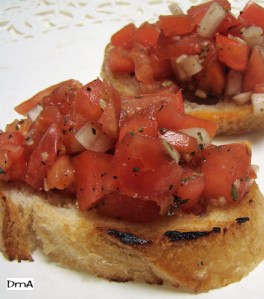
If you have tomatoes ripening on the vine, oil and vinegar, garlic, seasonings and a French bread baguette, you have the makings for a wonderful snack or light summertime meal – bruschetta.
Contrary to common belief, bruschetta is not the delicious tomato garnish that adorns grilled French bread. The Italian term bruschetta, means ‘to roast over coals’ referring to the bread as opposed to the tomato topping.

Bruschetta, a roasting process, was implemented by old-world Italian olive growers, as a method for testing olive oil flavors drizzled on toasted bread. Over time, the combination of bread and tomato garnish became known as one in the same.

Bruschetta is inexpensive and easy to make. Try this refreshing tomato mixture, coupled with French bread for a delicious summertime appetizer or light snack. Enjoy!

Method:

• Slice French bread baguette into ¼ inch slices.

• Drizzle with olive oil.

• Panfry or bake bread slices on both sides.

• Set bread aside.

• Dice 6-7 medium tomatoes into pea size pieces.

• Add one medium size finely chopped onion.

• Stir in 1 Tablespoon minced garlic.

• Toss with 1 Tablespoon each, olive oil and balsamic vinegar.

• Add 1 heaping teaspoon Italian seasoning.

• Salt and pepper to taste.

Variations:

Include olives, crumbled crisp bacon, basil, blue, parmesan or mozzarella cheese.

Other favorite ingredients may also be substituted.

Spoon diced tomato mixture on roasted French bread baguette slices – Yummy!

Copyright 2011 Bernadine Chapman-Cruz  

h1

Snapdragons Remind Me of My Father

June 15, 2011

MyFreeCopyright.com Registered & Protected

By Bernadine Chapman-Cruz

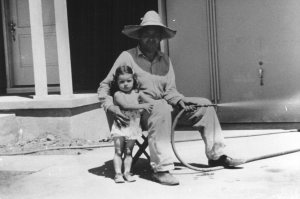
Right from the start, anyone could see that I was the apple of my father’s eye.  A big man, he was somewhat awkward handling a tiny squirming bundle, but his heart lacked the clumsiness of his hands because it was filled with love.

I don’t know where he learned his parenting skills being the last of 12 children whose father died when my father was barely two years old, but without benefit of a paternal role model, he did a wonderful job in filling a father’s shoes.  He loved me with all his heart because I was his baby daughter.

Over the years my father gave me some good advice. He told me “never lick a knife, because you might cut your my tongue, and be careful with pocket knives because you might cut your finger.” I guess my father knew the consequences of these acts from experience because he always carried a pocket knife that he used to sharpen pencils, cut string and slice fruit.

When I was two, we moved to a brand new home in the suburbs. My father took pride in his property, watering the lawn and caring for the yard, always with his precious daughter by his side.  My father’s favorite flower, the snapdragon, filled our flowerbed. He showed me how to pinch open the colorful blooms, exposing the yellow pistils.  “Don’t you be like these flowers,” he said.  “They don’t brush their teeth and they are all yellow.” Then we laughed like a father and daughter should.  Every time I see snapdragons, they remind me of my father.

  • Snapdragons are easy to grow
  • Come in a variety of colors: white, yellow, purple, crimson, bronze and pink
  • Excellent in flowerbeds
  • Attractive as edging and borders
  • Cut snapdragons make nice arrangements either single stems or when combined with other flowers
h1

White Carnation is Synonymous with Mother’s Day

May 7, 2011

MyFreeCopyright.com Registered & Protected

By Bernadine Chapman-Cruz

The white carnation is synonymous with the virtues of motherhood. A mother’s unconditional love for her child is recognized around the world on Mother’s Day. More than a century has passed since Anna Jarvis organized the first mother’s day acknowledgement, a religious remembrance in honor her deceased mother.

Today, this heartwarming tradition has evolved into Mother’s Day, celebrated on the second Sunday in May.  The first mother’s day festivities were held in a West Virginia church. Sunday services included liturgy highlighting all mothers’ esteemed role in raising their families. As part of the services, every woman in the congregation received a white carnation, Mrs. Jarvis’ favorite flower, to commemorate this heartwarming sentiment.

Cherished around the globe, the carnation is one of the oldest cultivated flowers. In addition to its heartiness and beauty, the carnation is a floral artist’s favorite. When creating a corsage, boutonniere, bouquet or other floral décor, even after cutting, the carnation retains its freshness longer than other flowers commonly used in floral design.

The carnation is easily adaptable to a variety of floral arrangements from welcoming newborns to expressing condolences in a sympathy remembrance.  These ruffled flowers are easy to work with, inexpensive and delightful as a ‘single stem’ or when incorporated with other flowers in any floral arrangement.

Through history, the carnation has come to represent a variety of feelings, emotions and sentiments specific to carnation color. The most common carnation color associations include:

White – innocence, pure love, sweetness, luck

Dark Red – love, passion, affection, respect

Light Red – admiration

Pink – gratitude, remembrance, thoughtfulness, thankfulness

Yellow – distain, rejection, disappointment

On Mother’s Day, remember your mother with a bouquet of white carnations. This thoughtful gift will be cherished and carnations just might become a family tradition.  Copyright ©2011 Bernadine Chapman-Cruz

h1

Floral Photography – Create Art with Your Camera this Spring

April 13, 2011

MyFreeCopyright.com Registered & Protected

Guest Post by Dianne Poinski

Painters have been inspired by the graceful beauty of flowers for centuries. I find them to be one of the most satisfying subjects to photograph as well. The colors and designs that only nature can create invite me to slow down and focus intently on capturing their essence.

Spring is the perfect time to set out and look for simple but stunning compositions. While it’s not difficult to use your camera to record the splendor that is before you, here are a few tips you can use to increase your chances for the best shot:

  • Get close and create simple compositions.
  • If you have a DSLR camera and are familiar with manual settings, set your aperture at F5.6 or F4 if you have it. This will throw your background out of focus and keep your main subject sharp.
  • If you don’t have a camera with manual settings, look for flowers against simple backgrounds such as wood fences or buildings. Experiment shooting from different angles.
  • Shoot with a fast shutter speed. This will help prevent blur if the wind is blowing.
  • If you have a point and shoot camera, use the “Sports” setting if you have one. This setting is designed to stop action which will keep your flowers sharp and in focus.
  • Lighting: When shooting flowers in an outdoor setting, try to avoid direct sunlight. Harsh light will cast shadows and create too much contrast. Early morning, late afternoon and cloudy days provide the best lighting conditions. If strong sunlight is a problem, try to find flowers in the shade to photograph. If you have a helper, you can create a diffuser by using a sheer piece of fabric and positioning it between the sun and the subject.

Floral photography is a great way to express your creativity. Bring your camera everywhere and start paying attention to your surroundings. “Kodak” moments will be everywhere this spring. Copyright © 2011 Dianne Poinski


Dianne Poinski has been photographing flowers for over 15 years. Her free e-book “Introduction to Hand Coloring Black and White Photographs” is available on her website – www.diannepoinski.com or on her blog: www.diannepoinskiblog.com.

In addition to the live workshops, she offers in the Sacramento area, she has just launched “Photo Artistry Workshop” an online site with video instruction and tutorials. More details can be found at www.diannepoinski.com/onlineworkshop

All photographs were taken in the Butchart Gardens, Victoria BC. ©2011 All rights Reserved


Thank you Dianne, for sharing these tips. They’re certainly going to help me!

h1

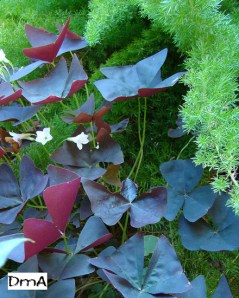
The Shamrock

March 16, 2011

MyFreeCopyright.com Registered & Protected

By Bernadine Chapman-Cruz

For centuries, the shamrock has been surrounded by Irish legend and lore. Often the green three-leaf plant is confused with the lucky four-leaf clover. Other traditional Irish icons are closely associated with the shamrock. The Emerald Isle’s mischievous leprechauns, pots of gold, and rainbows have a place in Ireland’s history, but the shamrock has a fascinating legacy all its own.

Early pre-Christian Irish history depicts the shamrock connected with pagan ceremonies, fire rites and spring festivals honoring the gods and goddesses of plant life. During this time, ashes from burned branches and other green foliage, including moss, grass and shamrocks were spread across pastures and fields.  Farmers hoped this treatment would make soil more fertile for grazing livestock and the coming season’s crops.

Later accounts claim St. Patrick, the Patron Saint of Ireland, used the shamrock to represent the Holy Trinity, because of its three leaves on a single stem. Over time, the Irish embraced the plant, holding it dear in their hearts.

Today, shamrocks are regarded as the national plant of Ireland for their simple, fresh beauty displayed amid a natural background of castles, rugged mountain terrains, the grey stone of old walls, and rustic peat cottages, where they reign supreme as the most identifiable symbol of the country.  

However, on March 17, St. Patrick’s Day, no matter what race, nationality or creed, we all become Irish for a day. Enjoy this whimsical transformation by wearing green clothing, drinking green beer and eating corned beef and cabbage or giving a shamrock plant to a friend. Or, even better, plant a perky patch of bright green shamrocks. Your garden will reflect the groundcover of Ireland’s misty valleys, mossy vales, and serene meadowlands throughout the year. Copyright © 2011 Bernadine Chapman-Cruz