h1

Change: It’s happens, but I don’t have to like it.

August 24, 2011

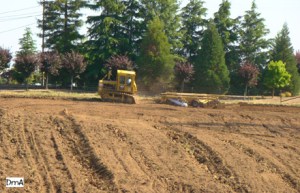
This year, spring through summer, many changes have occurred throughout the seasons. One major, uninvited, alternation on our country property where we live was the removal of four beautiful trees. Now, at the threshold of autumn, the open rolling hills along our northern pasture are about to transform. The neighbors are putting in a vineyard.

In the following days and weeks, huge equipment will rip through the land. Dust will hover like low, lingering fog. Field workers will come and go. Parked cars will sit on the shoulders of our PRIVATE dead-end road. Voices and perhaps a little singing or whistling will drift over the foothills and into the valleys. After the plantings and later when the vines have grown, chemicals will contaminate the air, the land, and most likely on the volunteer oats where our beef cattle graze.

I know what to expect. Clements Vineyard is a few feet east of our property. During harvest season picking machines HOWL in the middle of the night. We don’t sleep. Yellow slow-moving headlights glow like dinosaur eyes and spook Ralphie. He runs from window to window barking repeatedly. I tell him, “It’s only headlights, Ralphie. Go to sleep.” Like a comedy portraying poor communication between characters, he doesn’t listen.

Staged for change at autumn’s oncoming approach, man is capsulizing my world into metamorphosis. I’m beginning to feel small, sandwiched in . . . overrun via alterations. Sooner or later I will adjust. So will Ralphie. Like my husband said, “It wouldn’t bother us if we were putting in the vineyard.” © 2011 Dianne Marie Andre
h1

Benefits of Vegetable Gardening

August 22, 2011

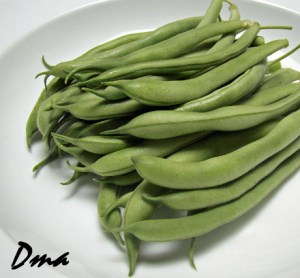
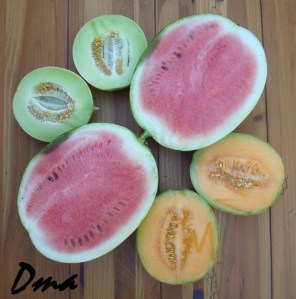
My family has consumed the last of the homegrown, sweet melons and tender potatoes. Also gone from my garden are the green beans, crookneck squash, lettuce, and cucumber plants. The zucchini and tomatoes linger on and so is the self-satisfaction that comes from  cultivating vegetables.

There are many benefits to growing your own food, from goal setting to putting an extra buck in your pocketbook—something we all need these days—from bragging rights of flavorful, chemical-free meals to educating children.

Growing your own produce gives one something to look forward during difficult times. For sure, this winter I’ll miss the savings at the grocery store’s checkout counter, an estimated $50 per week. Like so many families, it hasn’t been easy stretching a budget on part-time work, wage and benefit cuts, increasing medical costs and raising food prices. Because of high-prices, many families are understandably making unhealthy choices. Let’s face it, healthy cuisine (especially organic) can cost more than cheaper processed food. However, when life gets tough it’s even more important to stay fit, physically and mentally.

Dani Federico, M.P.H. Masters of Public Health, UC Berkeley, personal trainer, nutritional counselor, and health blogger says, “Gardening can be a great stress reliever (even if you feel like some gardening flops have caused you some stress!). Spending time outside improves health by allowing us to breathe fresh air while the sun provides you with Vitamin D. Being responsible for another living thing gives us a sense of purpose which improves our overall happiness. While gardening is not vigorous enough to count as your exercise for the day, it is a great way to lead an active lifestyle.”

The tastes of homegrown flavors alone are enough to improve one’s health and habits. “I grow many vegetables because you can’t buy the flavor and freshness in any store,” says Master Gardener Glen Johnson. “As a result, we eat far more vegetables in our meals.”

Mike Spinetta, Staff Writer for The Gold Country Times, says he grows vegetables to “teach his daughter about how life works.” “Even this year, we planted tomatoes for some silly reason, and she sees how the plants are bearing no fruit. Aside from teaching her, it’s great to trade what fruit, veggies, and herbs I get for my neighbors’ various home crops.”

For those who garden, the reasons are as vast as vegetable varieties. Regardless of any “garden flops,” cultivating one’s own food brings a great deal of satisfaction to the soul. Vegetable gardening is a rich and varied experience that grows deeper than tomato roots while producing a healthier body and mind. © 2011 Dianne Marie Andre

PS:  If you’ve been thinking about growing your own vegetables, autumn is the perfect time to begin. Whether you’re a novice, you want to switch to raised beds, or you’ve relocated, I can help you get started. For consultation information, please contact Dianne at inthegarden@softcom.net.

h1

Soulful Plotting

August 19, 2011

Canker:

A bacterial or fungal disease on woody plants. Gradual death will occur in the cambium layer leaving sunken bark lesions.

h1

Jumping Galls

August 17, 2011

I squatted down to look at what I thought were baby spiders jumping on the ground. Leaning in closer, I realized they didn’t have legs but instead appeared to be teeny seeds, a much smaller version of Mexican Jumping Beans. There were so many it sounded as if dew was drizzling all around me.

Afraid to touch them, I stood up and hollered at my husband, Joe, to come see. We squatted together, shoulder-to-shoulder, and watched dozens of them jumping in the perennial beds and on the slate steps where we hunkered down.

Joe touched a few and decided they were indeed seeds. I felt one with my index finger. It was as hard as a rock.

“I think it’s the heat that’s making them jump,” Joe said.

“It’s not that hot,” I replied as we both felt the slate step.”

I looked up into the oak tree above us. They couldn’t possibly be falling from the oak. Oak trees germinate from acorns, not seeds. But where are they coming from? Later that evening, sitting in front of my computer I typed in the only phrase I could think to Google:  Tiny jumping seeds. Surprisingly, there were several informational websites.

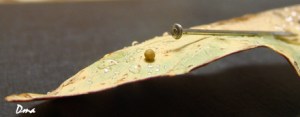
The seeds are actually Jumping Oak Galls also known as California Jumping Galls. Cynipid, non-stinging wasps (Neuroterus spp.) lay their eggs on the underside of leaves. Plant tissues develop, creating a protective gall around the lava. The jumping galls are only 1/25th of an inch in diameter, the head size of an old-fashioned straight pin. The larva moving within the gall causes the jumping.

California Jumping Galls usually drop by late summer to early fall and are considered harmless to trees. Metamorphosis changes the larva into a pupa which overwinters within the gall until spring. The emerging wasps are tiny, shiny black females, so small it’s unlikely anybody would see them. They lay eggs on oak shoots without male fertilization. The following generation is bisexual, winged males and females. Amazing! The reproductive cycle mysteriously continues. But who knows which generation of wasps will hatch in my garden, all females or bisexuals.

Nature never ceases to astound or entertain me. Teeny, jumping galls beneath the oak, making music that simulates drizzling dew, is one of many fascinating treasures. © 2011 Dianne Marie Andre


h1

Corn on the Cob – A Summertime Treat Hard to Beat!

August 15, 2011

MyFreeCopyright.com Registered & Protected

By Bernadine Chapman-Cruz

When thoughts of enjoying fresh produce come to mind, corn on the cob is an all-time favorite. Corn is the fruit of the Zea mays plant. Although technically classified as a grain, corn is more commonly associated with the vegetable family. Maize, another term for corn, has been cultivated in Mexico, North, Central and South America for over 8000 years. Corn is grown worldwide with the exception of Antarctica.

There are over 100 varieties of corn. Colors range from white and yellow to pink, red, blue, purple and black. Sweet white and yellow corn are the most common types sold for human consumption. Dent or field corn is used as animal feed. Dried multi-colored corn, known as Flint, is a popular addition to autumn holiday décor.

Generally, corn contains 18 rows and approximately 800 kernels. Calorie count ranges from 85 to 125 per ear, depending on size. Corn is high in antioxidants, vitamin C, fiber and sugar as well as other nutrients. Scientific studies have found corn a beneficial food in treating high blood pressure, certain types of cancer and helpful in regulating blood sugar levels associated with diabetes.

When selecting corn on the cob, look for plump ears with healthy, tight, fresh green husks hosting kernels in close fitting rows. Silk should be moist and free flowing. Corn can be prepared in a variety of ways. Methods include boiling, steaming, roasting, grilling and microwaving.

When using a wet cooking process like boiling or steaming, shuck corn by removing the husk and silk. Rinse corn and boil or steam in unsalted water for 5 to 7 minutes or until tender. The addition of salt tends to harden kernels and lessen flavor. For dry cooking methods including roasting, grilling, broiling or microwaving, corn can be cooked with or without the husk. Cooking time varies between five to ten minutes, with frequent turning. Soak ears for a few minutes prior to cooking to retain moisture, for both shucked and in-husk preparation. For optimal flavor cook and serve corn on the day of purchase. With the addition of a little butter, salt and pepper, corn on the cob is a delicious summertime treat. Copyright 2011 ©Bernadine Chapman-Cruz

No-Cook Corn Salad

(serves 4)

4 ears corn (uncooked)

1 large tomato (diced)

1 medium red or white onion (diced)

1 red or green bell pepper (diced)

1 cucumber (peeled and diced)

1 medium zucchini (unpeeled and diced)

1/4 – 1/2 cup Italian Dressing

Salt and pepper to taste

Method:

  1. Shuck and wash corn
  2. Cut kernels off cob and set aside in large bowl
  3. Dice tomato, onion, bell pepper, cucumber and zucchini and mix with corn
  4. Toss with salad dressing
  5. Season to taste
  6. Chill prior to serving
  7. Enjoy!
h1

Soulful Plotting

August 12, 2011

Alternate:

Leaves, buds or shoots that occur singly at different heights on the stem, alternating between one side of the stem and the other.

h1

Summer Crop 2011: Part III

August 10, 2011

While a vole invaded my vegetable garden, mild weather and expanding shade hopped aboard the bothersome season. And why not, trouble always comes in threes. But I’m not alone.

Commercial growers throughout California’s Central Valley, where I live, are facing weather-related challenges, writes Steve Adler, associate editor of Ag Alert. Lingering spring rains pushed planting back by two weeks. In addition, it has been a cool summer. Yield is down. Fruits and vegetables are ripening later than usual. Temperatures can boost or inhibit crops. It’s one of the downsides of horticulture. Whether one is a weekend gardener, farmer, or consumer, Mother Nature’s mood—whatever it may be—is unavoidable.

Choosing the right garden location is just as important as the weather. I’ve had three vegetable plots, each at different sites. Two of the gardens soaked up the sun’s rays from sunup to sundown. My current garden is two years old. It sits a few feet from a row of redwoods (This also provides protection for voles to access the garden.) Sunlight doesn’t come through until 10 or 10:30 a.m. with filtered shade here and there throughout the day. I knew the nearby redwoods would eventually tower over the garden. But it was the only site available at the time, and I didn’t think the shade would expand so quickly.

Vegetable plants need six to eight hours of full sun to produce a substantial crop. In extreme hot climates, filtered, late afternoon shade is helpful in protecting foliage from burning or wilting and crops like peppers and tomatoes from sunscald. But too much shade decreases yield, prolongs leaf moisture which increases the chances of disease, mold, rot or mildew.

Microclimates, due to elements such as elevations and structures, can vary from spot to spot. To take the guesswork out of existing or new garden sites (including ornamental beds) accurate readings can be acquired from products like A Sun Stick Sunlight Meter for less than $10.00.

To Sum It All Up:

Problem #1:  Voles

Solution: Choose a garden site with a 15-foot wide open space around the perimeter. (Voles don’t usually go into the open.)

Problem #2:  Cool weather

Solution:  Be prepared. Plant more than needed, just in case the weather is mild and yield is down. If this doesn’t happen, what you can’t consume or preserve, donate to a local food bank.

Problem #3:  Expanding Shade

Solution:  Before choosing a garden site, note sun and shade exposure at different times of the day, and any immature trees or shrubs that will create too much shade in the near future. Choose a site that gets six to eight hours of full sun.

h1

Summer Crop 2011: Part II

August 8, 2011

MyFreeCopyright.com Registered & Protected

The most recent and urgent problem in my garden is an uninvited, vegetable-eating vole. This doesn’t have anything to do with the poor yield previously mentioned in Part I, but it impacts how many veggies reach my dinner table versus the mouth of rodents.
I first noticed runways in the main raised bed beneath cucumber and squash plants. Flipping over the cucumbers some had been partly munched on. I decided to flush the varmints out, so I jammed the end of the water hose into one of the openings and turned on the faucet full force. A title wave flushed through the burrows. Then out came one vole. He hid on the edge of the raised bed between trailing squash vines. I had a perfect shot. But I couldn’t commit murder with a shovel and not destroy the squash plant.

That evening, I loaded the .22, jammed the hose in a hole, turned on the water, and shouldered the .22. As if the fat-bellied rodent knew I was armed with a gun, he ran for shelter beneath the tomato plants. He was so fast it was as if brown lightening had passed before my eyes. Then I became concerned he would move into the melon bed—the only crop that has produced well this summer. Sure enough, the next day when I flooded the burrows in the squash and cucumber bed, he never surfaced. Checking out the melon bed I discovered openings and runways so I flushed the burrows. Out he ran, in the open, straight for his old eating ground. I chased after him with a shovel. Of course, he won the race. I could have shoot him with the .22 .

I absolutely hate these pests. They’re smart! Quick! Hide-and-seek experts! They can eat enough food for an elephant. What little crops I do have this summer, much of it is being devoured by one measly vole.

Vole (meadow mice) Facts:

  • Voles usually live 3-6 months, rarely beyond one year.
  • There are six species in California. They weigh ½ ounce to 3 ounces, and are very prolific breeders fluctuating in numbers from a few to thousands per acre.
  • Voles can carry disease that can be transferred to humans through food cross-contamination or direct contact.
  • Voles do not hibernate. In colder climates, voles are more active during the afternoons when it’s warmer. In warmer climates, they scurry about early mornings and late afternoon when summer heat is lowest.
  • One can determine voles from gophers and moles by their aboveground runways between multiple openings located closely together.
  • Voles eat seeds, tubers, bark, tree needles, vegetables, various green vegetation such as grass and clover, and insects.
  • Voles are intelligent. Once they witness a family member caught in a trap, they know to avoid the same fate. They are very hard to trap.

Helpful (but not foolproof) Solutions:

  • Remove food and protection from predators by cleaning away weeds, heavy mulch, and dense vegetative cover.
  • Keep a weed-free strip around garden areas. Voles don’t usually go into the open. A minimum width of 15 feet is recommended by Integrated Pest Management at http://www.ipm.ucdavis.edu/PMG/PESTNOTES/pn7439.html
h1

Soulful Plotting

August 5, 2011

Asexual:

A propagation technique reproducing plants by using cuttings or division.

h1

Summer Crop 2011: Part I

August 3, 2011

This year, my veggie garden is nothing to be proud of. Here’s what I’ve harvested so far.:

  1. Three small zucchini.
  2. Green beans for only two evening meals.
  3. Barely enough tomatoes for two adults.
  4. Plenty of lettuce and crook neck squash– ah, success here.
  5. Seven undersized orange sugar pumpkins.
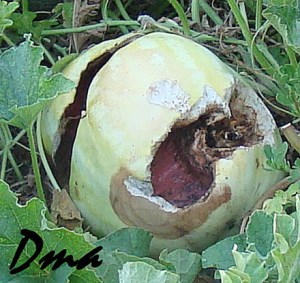
  6. Lemon cucumbers and melons being consumed by something other than humans. (I harvest one watermelon. It was 18 pounds! There are at least a dozen smaller ones–success here–but some have been eaten into.)

Every day, since planting the summer garden, I nudge Ralphie into the early morning light. He does his business while I head for the chicken pen and open the hatch door so the hens can free range. I replenish the feed and clean out the coop and water dishes then meet up with Ralphie on the front lawn to walk the gardens.

Much of this summer has been cool. Before 7 a.m., when we venture outdoors, the air is crisp. By the time we stroll through the perennial garden then approach the vegetable grounds, my eyelids have opened wide. Ralphie wanders past the raised beds to stand at the pasture’s edge and twitch his nose for unusual scents. Unless a jacket rabbit or low flying bird lures him to break loose, he opts to stay out of the foxtail infested pasture. On occasion he’ll lose all common sense and bolt into the field crazed with fire and vigor. Eventually he returns decorated with irritating foxtails from head to foot. So this time of year, Ralphie imagines most of his doggie adventures on the sidelines.

While he dreams of a wild chase, I look over the veggie plants and vines. I imagine my own possibilities, those of daily harvests full and abundant. I am visualizing instead of harvesting because the garden is a flop. This is my second year cultivating from raised beds and the first of many gardens to produce so little.

A wimpy garden doesn’t sit right with me. It’s not my style, but it happens.

There are several reasons for the poor crop production. Some problems can be adjusted before next summer and others are out of my control. Next week I will explore the causes, share my mistakes, and nature’s influence so that, hopefully, we will learn together how to produce a sizable yield.

Stayed tuned for Part II of Summer Crop 2011.