h1

Container Gardening Part I: Available Choices

May 18, 2011

MyFreeCopyright.com Registered & Protected

Container gardening gives one the opportunity to be creative with dazzling plant choices and seasonal themes. Potted annuals and perennials offer solutions to landscape problems such as bad soil, softening hardscape areas, adding color to drab walls, creating focal points, and bringing captivating scents and calm to boring town balconies. Containers give you the ability to move your plants around creating a fresh look. They can go in a sheltered area during winter months, and if you relocate, you can take your potted garden with you.

The choices for containers are many. Here are a few.

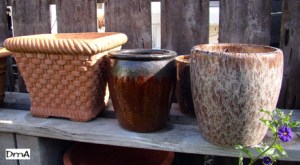
Glazed ceramic planters:  These add color and are made of stoneware. Ceramic planters come in several finishes, including crackled, drip, or multi-colored glaze patterns. Make sure it’s for outdoor, not indoor, use. The indoor glazed ceramic planters won’t hold up outside.

Resin and fiberglass:  These are available in a variety of colors and styles. They’re great for balconies and rooftops where weight is an important consideration.

Metal:  This includes zinc, stainless steel, copper, and wrought iron. If you like the patina look, copper is a good choice. Some metal pots are extremely heavy. If placing them on a wooden deck, porch, or steps make sure the surface can support the weight.

Plastic:  Although okay in a pinch, the cheap plastic pots look cheap and don’t last long. They tend to crack and break in harsh weather. Choose the longer-lasting thick plastic.

Terra Cotta:  Choose the handmade ones that are ½-inch to 1-inch thick for fewer chances of cracking and breakage. Terra cotta is porous, absorbs heat and dries the soil out faster requiring frequent watering.

Fiberglass:  More durable than plastic because fiberglass planters usually don’t crack or break. Another benefit is the light weight making them easy to move.

Concrete:  Although heavy in weight, concrete planters blend in well with existing concrete surfaces. Depending on the style, they can add elegance, old world character, or formality. The cheap concrete planters tend to crack. The higher-priced ones are worth the extra cost, especially if you’re going for the large sizes.

Wood:  These include cedar, redwood, teak, cypress, and pressure-treated wood. Redwood last the longest, stains well but doesn’t take paint, and turns silvery gray if not maintained. Cedar can be painted or stained and will last a long time if preserved. For a rustic look, choose pressure-treated wood. To help prevent rotting of any wooden planter, brush on a wood preservative inside and out, line with heavy plastic or set potted plants inside.

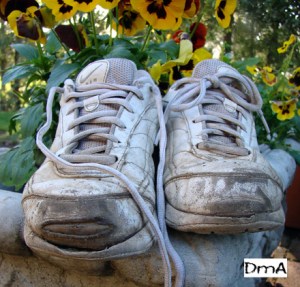
Recycled Items:  Antiques, collectables, and quirky objects make wonderful containers and great conversation pieces. Take care to protect them from rotting or rusting out. The best way to do this is to line the inside with heavy plastic and set potted plants inside. You can even recycle any accumulated water in the bottom to water the plant. © Copyright Dianne Marie Andre
h1

Considering Tree Rights

May 16, 2011

In the 1800s, Professor W.H. Jackson so loved his white oak that he deeded the surrounding eight-foot diameter ground to the oak. Strong winds forced the 400-year-old oak over in 1946 (some articles say 1952). Local residents planted a descendant acorn and then protected it with granite posts linked together with chains. Jackson’s land deed inscribed on a stone slab reads:

For and in consideration of the great love I bear this tree and the great desire I have for its protection for all time, I convey entire possession of itself and all land within eight feet of the tree on all sides. — William H. Jackson

To this day, nobody owns the descendant but the oak itself.

˜ ˜ ˜ ˜ ˜

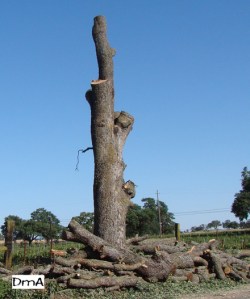
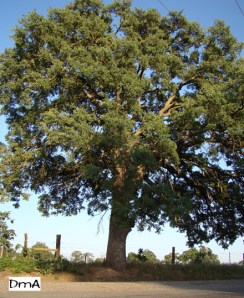
Although my husband and I own the private road and the oaks on the opposite side of the utility lines, it’s unlikely that we could have legally won a case against PG&E to save our trees. Perhaps a land deed would protect the rest of them from this:


BEFORE:

h1

Soulful Plotting

May 13, 2011

Woody:

Plants with hard, tough tissues (stems), oftentimes unsightly, as part of the structural support. Often the main stems and large roots are woody and the other stems are softer tissue. Most woody plants are perennials and include deciduous trees and shrubs, evergreen trees and shrubs, woody vines and ground cover.

h1

News from Friends of the UC Davis Arboretum

May 12, 2011

Below are some additional May events:

May 14, 9 a.m. – 1 p.m.:  End-of-Season Clearance  

It’s not too late to get some beautiful plants and find some great bargains at the Friends of the UC Davis Arboretum end-of-season clearance plant sale! Best prices of the season on great plants, including Arboretum All-Stars. Click here for a plant list showing which plants have been discounted.

The Botanical Conservatory will have a variety of exotic and indoor plants for sale, and the Environmental Horticulture Club will be there selling annuals and starts for summer vegetable gardens.

Anyone can join the Friends of the UC Davis Arboretum at the door and receive a 10% discount on purchases and a free plant. Davis Botanical Society members also get the discount. Arboretum Teaching Nursery

May 12-15 and May 19-22:  The Complete Works of William Shakespeare, Abridged Davis Shakespeare Ensemble 

Thursday-Sunday, 8 p.m. and Sunday, 2 p.m.

Arboretum Gazebo, Garrod Drive, UC Davis

$12/Students $8/Children $5/12 and under

Enjoy an irreverent, fast-paced romp through the Bard’s 37 plays performed by the Davis Shakespeare Ensemble. This hilarious lampoon of Shakespeare’s comedies, histories, and tragedies will leave you breathless with laughter! To reserve tickets, e-mail davis.shakespeare@gmail.com or visit www.shakespearedavis.com.

May 15, 2-4 p.m.:  Storytime Through the Seasons

Los Colores de la Primavera/The Colors of Spring

Wyatt Deck, Old Davis Road 

Discover Latin American culture and the colors of spring in a free outdoor reading event for children and families. Join us for traditional stories, games, crafts, and more. All ages are welcome. Sponsored by the Arboretum Ambassadors with a grant from Target.

h1

How to Marry the Right Tree to the Right Site

May 11, 2011

Monday, I shared a difficult and sad lesson about poor tree placement. The wrong site and tree choice can be costly and disfiguring to landscapes. I want to help you avoid these blunders. Below are some basic questions to consider. Take this list with you when shopping at your local nursery. Most nursery workers won’t question your choice or bring up these crucial considerations once you’re at the checkout counter. So take the time to ask a lot of questions.

  • What species or variety is suited for your zone and microclimate(s)?
  • What type of soil does the planting site have? Does it need amending? Does it have good drainage?
  • How much horizontal and vertical space is available in the planting site? In 30 to 40 years, that little sapling will be a mature tree. Will it still fit the space?
  • Will the tree encroach on the neighbor’s property, your roof, sheds, vehicles, or other pertinent structures?
  • Is the species or variety susceptible to particular diseases or pests?
  • Is it messy? Will it drop fruit, seedpods, bark, broken branches, or blossoms?
  • Will the tree interfere with overhead or underground utility wires as it matures?
  • Does it have a vigorous root system known to uplift hardscape or interfere with underground plumbing and septic systems?
h1

The Deadly Tattoo

May 9, 2011

Last Friday I mentioned a distant roar that woke me from a ten-minute snooze on Tuesday. I promised to share what aroused me, so here’s the postponed segment of I’m Back.

Continued from Tuesday, May 06:  When Ralphie started barking I knew what was happening and avoided looking out the window for a long time. I could hear the sounds of the horrid execution, the reverberation of jagged jaws coming from the driveway’s entrance, 600 feet from my house.

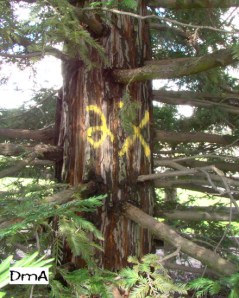
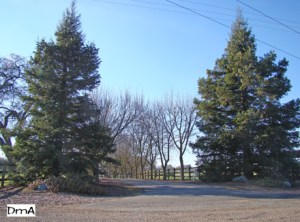
Since February, two healthy, sixty-foot redwoods (and two oaks), have worn the mark of death. After a massive blackout last year due to a felled tree on a transmission line, PG&E put out a contract on trees tall enough to repeat the same damages should they fall.

I don’t know where the blackout took place, but our earth’s ecology will be unbalanced without these remarkable organisms. At least, my little twenty-acre patch will be.

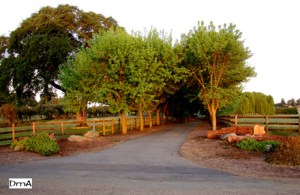
Joe had planted the redwoods from five-gallon pots and nurtured them into adulthood. Each stood proud on either side of the driveway as welcome symbols to our home. The dark evergreen branches provided ornamental beauty against summer’s dry pastures and winter’s bare silver maples lining the driveway. The redwoods increased our property’s real estate value. They added a sense of serenity to anyone who embraced the details of their majestic wholesomeness.

It’s our fault for planting them under utility lines. At the time, we were uneducated, amateur, DIY landscapers. Looking at the redwoods’ huge statue, it makes one wonder how we couldn’t foresee the future and possible damages. Buying the wrong tree is a common mistake. It’s like roasting your first turkey without knowing to look in the cavity for giblets.

The two oak trees hold a different story. Planted by a squirrel, human, or a fallen acorn the oaks were here long before we arrived. They’re still standing, one directly across the driveway entrance and the other a few feet north, both on the opposite side of the transmission lines. With the mark of death painted on each trunk, it won’t be long before they’re executed too.

h1

White Carnation is Synonymous with Mother’s Day

May 7, 2011

MyFreeCopyright.com Registered & Protected

By Bernadine Chapman-Cruz

The white carnation is synonymous with the virtues of motherhood. A mother’s unconditional love for her child is recognized around the world on Mother’s Day. More than a century has passed since Anna Jarvis organized the first mother’s day acknowledgement, a religious remembrance in honor her deceased mother.

Today, this heartwarming tradition has evolved into Mother’s Day, celebrated on the second Sunday in May.  The first mother’s day festivities were held in a West Virginia church. Sunday services included liturgy highlighting all mothers’ esteemed role in raising their families. As part of the services, every woman in the congregation received a white carnation, Mrs. Jarvis’ favorite flower, to commemorate this heartwarming sentiment.

Cherished around the globe, the carnation is one of the oldest cultivated flowers. In addition to its heartiness and beauty, the carnation is a floral artist’s favorite. When creating a corsage, boutonniere, bouquet or other floral décor, even after cutting, the carnation retains its freshness longer than other flowers commonly used in floral design.

The carnation is easily adaptable to a variety of floral arrangements from welcoming newborns to expressing condolences in a sympathy remembrance.  These ruffled flowers are easy to work with, inexpensive and delightful as a ‘single stem’ or when incorporated with other flowers in any floral arrangement.

Through history, the carnation has come to represent a variety of feelings, emotions and sentiments specific to carnation color. The most common carnation color associations include:

White – innocence, pure love, sweetness, luck

Dark Red – love, passion, affection, respect

Light Red – admiration

Pink – gratitude, remembrance, thoughtfulness, thankfulness

Yellow – distain, rejection, disappointment

On Mother’s Day, remember your mother with a bouquet of white carnations. This thoughtful gift will be cherished and carnations just might become a family tradition.  Copyright ©2011 Bernadine Chapman-Cruz

h1

Soulful Plotting

May 6, 2011

Rhizome:

A thickened stem (storage organ, capable of storing food), with roots growing from it, which grows horizontally below or on the soil surface. New growth then emerges from different points of the rhizome. Examples Bearded Irises, Calla Lily and some lawn grasses are rhizome plants.

h1

I’m Back!

May 6, 2011

In case you’re wondering why I haven’t posted since Monday, here’s an account of what has happened.

Tuesday, May 03:  As soon as I managed to get my new, hand-me-down computer running the landlines died. Until today, I couldn’t communicate with the world via telephone or cyberspace. I couldn’t check incoming emails, conduct internet research, or publicize Wednesday’s Guest Writer’s article.

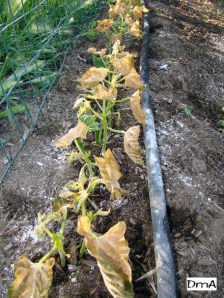
In addition, two of my county fair entries were damaged (my fault) and my green bean seedlings that appeared happy and perky on Monday turned into crispy, brown foliage today.

The beans are growing along a fence line between a row of vigorous snow peas and asparagus bean seedlings. The brown green beans no longer blend beautifully between its neighbors. Like an unkempt front yard in the middle of well-groomed landscapes, the green beans are an eyesore.

I hadn’t fertilized. It wasn’t windy. The soil was damp so there’s no logical reason for fried leaves. It’s just one of those mysterious disorders that oftentimes leaves the caregiver baffled.

Since the stalks look good, I’m going to watch them for a week. If new leaf buds appear, I won’t replant. Replanting now would put harvest off for month.

The lifeless landlines, damaged county fair entries, and impaired bean crop are minor setbacks, slight disappointments. However, the distant roar of heavy equipment that woke me from a ten-minute snooze this afternoon was anything but trivial. More on this next week. 

Thursday, May 05:  Late afternoon Verizon repaired my landlines, and my hand-me-down computer is running smoothly. Now, though, the “service engine soon light” in my car lite up like a huge hotel sign. Tomorrow, I’ll have to take it into the shop which means I won’t have transportation to the Amador Master Gardeners’ annual plant sale to volunteer with set up and sales—a fun day that I will miss.

The good news is that Wednesday’s article, written by Guest Writer Bernadine Chapman-Cruz,  will be posted Saturday.  (There’s always something good to look  toward.) Stayed tuned for tomorrow’s Soulful Plotting and Bernadine’s article on the history of Mother’s Day.

h1

Artichoke Facts

May 2, 2011

Artichokes

Scientific NameCynara scolymus

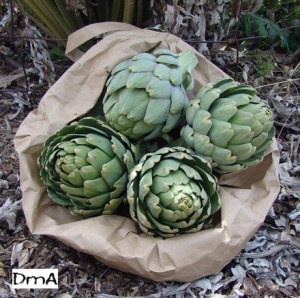
Description:  Artichokes are large thistle-like perennials with silver-leaves. The bud or vegetable has prickly petals. When artichoke buds are left to bloom they produce beautiful lavender flowers.

History:  The French are credited with bringing the first artichokes to the U.S. during the early 1900’s. By the 1920’s artichokes were being shipped to the east coast. Soon Half Moon Bay billed itself as the artichoke capital of the world.

Nutritional Value:

½ cup, boiled =

Calories 37

Fat 9.1 g

Calories from fat 2%

Sodium 55 mg

Protein 1.9 g

Carbohydrate 8.7 g

Planting Tips:  Artichokes prefer cool, moist summers with mild winters but usually do well in some hot climates. Depending on the variety and climate, artichokes can be grown as a perennial or annual.

Plant artichokes in early fall, late winter or early spring after last frost date. Start seed, rooted offshoots, or divisions from mature plants. Plant in full sun, in rich well-drained soil with plenty of organic matter. Fertilize in early spring. Artichokes love water so keep moist and mulch deep. Some buds will develop the first spring but a good crop usually starts one year after planting. Plants mature in size 3×3 feet but can grow up to 8 feet wide and 4 feet high so allow room for growth.

Watch for aphids, earwigs, slugs, and snails. Every three or four years, dig up and divide otherwise production will decline from overcrowding.

Harvest Tips: Harvest while buds are tight and two to four inches in diameter. Cut the stem two or three inches below the bud. The California Master Gardener Handbook says, “A recommended cultural procedure is to cut the entire plant down to, or slightly below soil level after the spring production peak. Reduce irrigation for several weeks. Once you resume irrigation, it encourages rapid and vigorous regrowth bearing new buds for fall production period.”

Recommended Varieties:  Imperial Star, Emerald, Big Heart, Desert Globe, Green Globe. Check with your local nursery for varieties that grow best in your zone.

Copyright © 2011 Dianne Marie Andre