

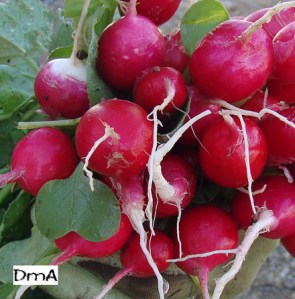
 Radishes
Scientific Name: Raphanus sativus
Description: An edible taproot and a relative of the wild mustard family, dozens of radish varieties are available in white skin/pink flesh and vice visa, purple skin/white flesh, pure white, clear white, black skin/peppery white flesh, pale green skin/flesh, and red skin/white flesh. Size and shape vary from silver dollar to baseball, round or long and thin.
History: Raphanus is a Greek name meaning “quickly appearing” which refers to the rapid germination of radishes. Ancient Egyptian laborers (who built the Pyramids) received their wages in the form of radishes, onions, and garlic. Ancient Greeks cherished and served radishes on gold platters as offerings to their gods. England used radishes as a remedy for kidney stones, facial blemishes, and intestinal worms. Radishes were grown as early as 700 B.C. in China.
Nutritional Value: Mostly consumed raw, radishes add cool crispness and punch to salads or hors d’oeuvres. Radishes are also suited for roasting, and adding to hot dishes minutes before serving. Some of the more creative uses for radishes include radish chips, sautéed, cream soup, and dips.
½ cup, sliced raw =
- 0 fat calories
- 7 calories
- 9 cholesterol
- 8 mg sodium
- 0.6 mg protein
- 1.3 mg carbohydrate
- 15 mg vitamin C
Planting Tips: Sow seeds early spring or fall when soil is cold and workable. Soil should be light and airy. Direct sow radish seeds in garden in full sun in fertile, well-drained, moist soil with plenty of organic matter. Sow seeds ½ inch deep 1-2 inches apart in rows 6 inches apart. Use cover cloth after planting to prevent flea beetles. Radishes like water so give them plenty. For a continuous crop, sow seeds every two weeks. Companion veggies include beans, carrots, cucumbers, lettuce, parsley, peas, spinach, and tomatoes. Bad companion include cabbage.
Recommended disease resistance varieties: Cherry Belle, Champion, Scarlet Knight (each of these is red), Easter Egg Hybrid (multicolored), April Cross Hybrid (long, pungent Oriental type), Icicle (tapered/mild), Snowbelle (round).
Recommended heirlooms: Cincinnati Market, French Breakfast, Helios, Philadelphia White Box, Plum Purple, and Rat-Tailed which is grown for edible seedpods and not the roots. The seedpods are eaten raw, pickled, or chopped in salads.
Harvest Tips: Radishes are ready for harvest 3-4 weeks. As harvest time approaches, watch closely and pick before cracks or splits appear or seed stalk bolts. Copyright © 2011 Dianne Marie Andre
 After what seemed like an eternity of rain, sunshine has been a welcome change. The lawn is still soggy and the dirt is wet ten ladders deep, but Ralphie and I don’t mind. We are grateful to have our knees and paws caked with mud and our bodies filled with rays of sunlight.



 In and Around the Garden