
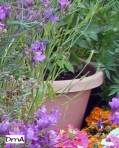
“Plant a dream in good soil,
care for it daily,
and it will flourish.”
Copyright © 2010 Dianne Marie Andre

“Plant a dream in good soil,
care for it daily,
and it will flourish.”
Copyright © 2010 Dianne Marie Andre
The vegetable garden went in this week with a bit of anxiety. I haven’t managed a vegetable crop for over a decade, and never in a raised bed. The old garden patch was much larger (50’x100’) than today’s 4×15-foot box. That’s what I call it, a box.
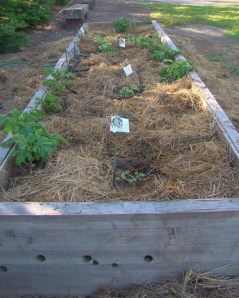
The plants growing along the sides are volunteer potatoes in the donated soil that I received.
Before planting in the box, I wanted to put drip tape down. It’s still on back order. I wanted hog wire panels put up for the heirloom tomatoes and blue lake beans to climb. My husband is working 16-hour days (Yeah, he’s working). But he’s my skilled carpenter. Without him, I have to make do. So I planted everything (cucumber, honeydew, watermelon, cantaloupe, eggplant, onions, zucchini, and tomatoes) except the beans and sugar pumpkins. I’m using my son’s round wire cages for the tomatoes.
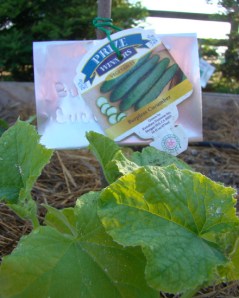
As it turned out, the box wasn’t large enough for the beans or the sugar pumpkins. My mind, it seemed, still envisioned a large spread of earth on which to grow anything and everything I desired. Don’t get me wrong, the land hasn’t shrunk. However, the family did over a decade ago. Downsizing a garden is a lot like learning how to cook for two. You just have to think small. Copyright © 2010 Dianne Marie Andre
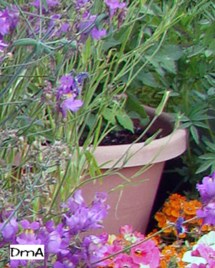
“Look for a fairy today . . .
you’ll find her
following
the scent
of a rose.”
Copyright © 2010 Dianne Marie Andre
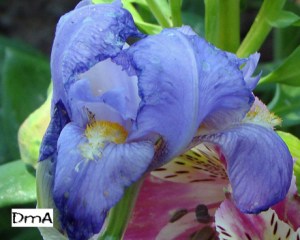
This is my first iris (Iridaceae) ever. About a month ago, a local lady was giving away a couple hundred irises to friends and neighbors. (She’s turning her iris plot into raised veggie beds.) I received a dozen or so irises, most of which I planted under the flowering plum trees (Prunus x blireiana). Two iries are in the garden, one planted on each side of the heart-shape pathway. Unlike the other ones, these two have variegated green and yellow foliage. As one strolls to the left or to the right, each iris is a pleasant surprise . . . a pop-of-color behind the society garlic (Tulbaghia violacea). Dug up the wrong time of the year, they aren’t performing at high-capacity. Next year, though, I have big expectations.
Iris Tips:
Over 300 species
Grown from bulbs or rhizomes
Three categories: bearded, beardless, and crested
Irises need full to half day of sun
Plant July – September 12 – 24 inches apart
Bloom periods is spring or early summer
Deadhead bloom stems close to the ground.
Apply small amount of fertilizer one month after bloom
For prolific blooms, divide every 3-4 years before they become crowded
Remove only diseased or brown leaves
Copyright © 2010 Dianne Marie Andre
“Motherhood doesn’t command
the same blood type.
Grace and love
are better suited.”
Copyright © 2010 Dianne Marie Andre
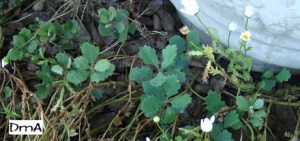
Look what I found beneath the fading chrysanthemums (paludosum). Acorn seedlings!
Both must come out: The acorns because I don’t want a forest and the chrysanthemums because they’re a winter annual that are dying off. The chrysanthemums are volunteers. I love that about them. Every winter the garden’s entrance is edged with free, daisy-like waves.
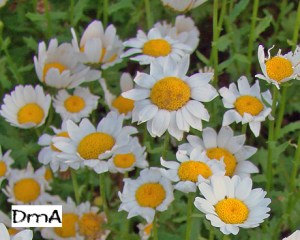
I have a hard time letting go of flowers, even spindly ones. (I can’t face the fact that I’m not a flower goddess with magical powers that enables flowers to last forever.)
I am hosting a small wedding here at the end of May. This is forcing me to let go, and fortunately, I found a bargain on zinnias with similar daisy-like appearance and growth habit.
I’ll plant them this weekend, just as soon as I yank out those gosh-darn acorn seedlings.
Yesterday, I attended the San Joaquin Master Gardeners’ Home Garden Tour. Strolls like these make me feel good, and this first-time event was impressive for reasons other than the gardens. (Not that the gardens weren’t worth seeing, because they were.)
At each residence, there were several Master Gardeners dressed in matching red vests eager to answer questions. They handed out plant lists detailing exposure
 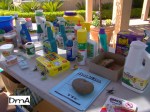 needs and water requirements. ID tags marked the plants throughout the grounds. If you spotted a desirable plant, you’d know what to ask for at the nursery! Horticulture literature, books, and information on products and composting were available. My favorite mapping highlight was the roadside directional flags. Most organizations place small, short signs that blend into the landscape making them invisible behind parked cars and shrubs. The flags at yesterday’s tour were tall and colorful, easy to sight a block away.
One of the six gardens included Sue Chinchiolo’s beautiful grounds. (Sue has the black mulch written about in the last Give and Take article.) As I wandered about each garden, camera strap around my neck, I overheard people noting plants they intended to add to they’re yard. Comments on the placement of accents (such as antiques and whimsical ironwork) spurred bright ideas. Even Sue’s black mulch attracted questions, mostly from people asking where to buy it.
Although many of us have had to cut back on activities, pinching elsewhere to attend at least one home garden tour is worth the sacrifice. You’ll walk away energized, hopeful, and best of all you’ll feel good.
When Touring Gardens Note:
Where to place seating
Where to place focal points
Material options for fencing
Material options for pathways
How to connect garden rooms
How to dress up unsightly sheds
How to blend structures with plants
What to do with a long narrow yard
How to integrate vegetables in flowerbeds
How to marry plant heights, texture, and hues
How to integrate antiques without looking junky

At this residence, there were several old buildings throughout the grounds. The homeowner dressed them up by painting the doors a bold color.
To create a theme they used the same color on each door, including the house—clever and inexpensive.
This is just one example of the many ideas
gained by attending home garden tours.
Copyright © 2010 Dianne Marie Andre
“The sun speaks
of a thousand ways
to be with nature.
Select one and
enjoy it to the fullest.“
Copyright © 2010 Dianne Marie Andre
It rained the last two days, knocking most of the Locust tree blossoms to the ground. Many people detest this kind of mess in their yard, but I think the snow-like appearance is delightful. Every time I walk around the perennial garden, it puts a smile on my face. There’s no explanation for this ticklish reaction. It’s just one of nature’s buoyant gifts that I enjoy.
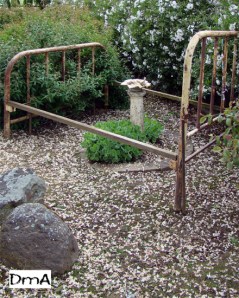
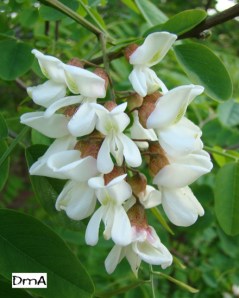
The Locust tree (Robinia pseudo-acacia) was here long before me and I have loved it since moving on the property. The pinnately compound leaves produce a lovely feather influence while the flower clusters fill the air with a fragrance I can’t identify. Nor do I try with the pollen allergies that I have. Because of the thorny branches, it’s best to stay out of this tree. Still, the Locust tree is a nice delicate touch next to the strong oak. Certainly, the blossoms on the ground are less of a burden than the dreaded acorns.
Copyright © 2010 Dianne Marie Andre
“Gardening is an extension of one’s personality.
Show it off in a big way!”
Copyright © 2010 Dianne Marie Andre
You are currently browsing the archives for the Dianne's Blog category.


 | Aimee E on Slanted Light |
 | Anonymous on A Lesson in Forced Blub F… |
 | Corinne W on I have Argyranthemum Frut… |
 | Dianne Marie Andre on How to Deadhead Snapdrago… |
| Anonymous on How to Deadhead Snapdrago… |

 In and Around the Garden