h1

Radishes

April 6, 2011

MyFreeCopyright.com Registered & Protected

Radishes

Scientific Name: Raphanus sativus

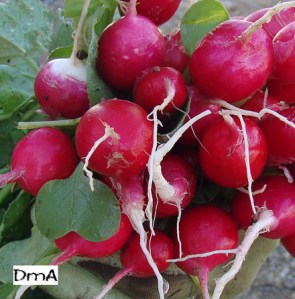
Description:  An edible taproot and a relative of the wild mustard family, dozens of radish varieties are available in white skin/pink flesh and vice visa, purple skin/white flesh, pure white, clear white, black skin/peppery white flesh, pale green skin/flesh, and red skin/white flesh. Size and shape vary from silver dollar to baseball, round or long and thin.

History:  Raphanus is a Greek name meaning “quickly appearing” which refers to the rapid germination of radishes. Ancient Egyptian laborers (who built the Pyramids) received their wages in the form of radishes, onions, and garlic. Ancient Greeks cherished and served radishes on gold platters as offerings to their gods. England used radishes as a remedy for kidney stones, facial blemishes, and intestinal worms. Radishes were grown as early as 700 B.C. in China.

Nutritional Value:  Mostly consumed raw, radishes add cool crispness and punch to salads or hors d’oeuvres. Radishes are also suited for roasting, and adding to hot dishes minutes before serving. Some of the more creative uses for radishes include radish chips, sautéed, cream soup, and dips.

½ cup, sliced raw =

  • 0 fat calories
  • 7 calories
  • 9 cholesterol
  • 8 mg sodium
  • 0.6 mg protein
  • 1.3 mg carbohydrate
  • 15 mg vitamin C

Planting Tips:  Sow seeds early spring or fall when soil is cold and workable. Soil should be light and airy. Direct sow radish seeds in garden in full sun in fertile, well-drained, moist soil with plenty of organic matter.  Sow seeds ½ inch deep 1-2 inches apart in rows 6 inches apart. Use cover cloth after planting to prevent flea beetles. Radishes like water so give them plenty. For a continuous crop, sow seeds every two weeks. Companion veggies include beans, carrots, cucumbers, lettuce, parsley, peas, spinach, and tomatoes. Bad companion include cabbage.

Recommended disease resistance varieties: Cherry Belle, Champion, Scarlet Knight (each of these is red), Easter Egg Hybrid (multicolored), April Cross Hybrid (long, pungent Oriental type), Icicle (tapered/mild), Snowbelle (round).

Recommended heirlooms:  Cincinnati Market, French Breakfast, Helios, Philadelphia White Box, Plum Purple, and Rat-Tailed which is grown for edible seedpods and not the roots. The seedpods are eaten raw, pickled, or chopped in salads.

Harvest Tips:  Radishes are ready for harvest 3-4 weeks. As harvest time approaches, watch closely and pick before cracks or splits appear or seed stalk bolts. Copyright © 2011 Dianne Marie Andre

h1

The Awakening

April 4, 2011

After what seemed like an eternity of rain, sunshine has been a welcome change. The lawn is still soggy and the dirt is wet ten ladders deep, but Ralphie and I don’t mind. We are grateful to have our knees and paws caked with mud and our bodies filled with rays of sunlight.
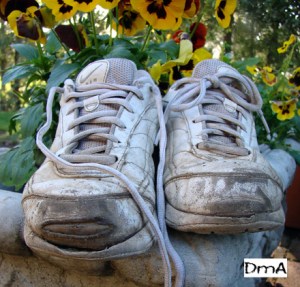
I’ve been gathering debris, plucking a few weeds (where the soil is drier), and inspecting plants in the perennial garden and veggie patch. To appease Ralphie, I mosey through the green pasture toward the winter stream. Ralphie follows in crazy-quilt fashion, bouncing here and there as if playing hopscotch. Should I spy ducks hunkered down between grass blades at the water’s edge, I divert Ralphie toward another direction, not that he could apprehend a fleeing duck.

Whatever outdoor activities we engage in, sunshine and passionate work or play has a way of making our appetite for life explode.

It’s nearly 7:00 p.m. on a Sunday evening. Supper has been prepared and consumed. Beyond the window, past the keyboard where I am typing, the sunset throws a last bit of drunkenness on swelling vineyards, tender willow buds, and a spread of brilliant white chrysanthemum paludosum. Ralphie is sitting at the other windowsill, to my right, watching the hens peck at the dirt before retiring to their perch. The windows are closed. But like me, I’m sure Ralphie can smell the clean wash of recent rains. The wet dirt mingling with gentle temperatures. The awakening of springtime. It’s a welcome change. Copyright © 2011 Dianne Marie Andre

h1

Carrots Anyone?

April 2, 2011

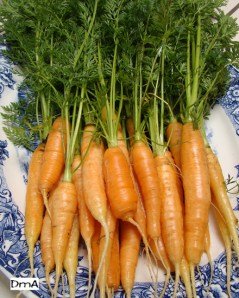
This morning I harvested carrots. Earlier this evening, I prepared a few to sauté and serve for dinner along with the spare ribs and baked beans cooking in the oven. But, surprise! My husband came home with a pizza!

It’s after 8:00 p.m. and my kitchen still carts the aromas of barbecue sauce on tender ribs (our own beef), beans, salami, pizza bread, and melted cheese—but no sautéed carrots! The good thing is, except for the carrots, tomorrow’s dinner is cooked!

h1

Soulful Plotting

April 1, 2011

Everlasting Flowers:

Flowers that have been grown for drying and preserving. They usually have papery petals that retain some or all of their color once they are dried. Some Everlasting Flowers include Gompherena, strawflower and statice.

h1

The Dinner Garden

March 31, 2011

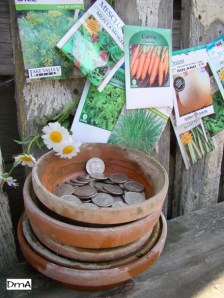
Today is your last chance to pledge a quarter and a pack of seeds through In and Around the Garden’s fundraiser. Remember, one-hundred percent of collected funds/seeds will:

  • Help someone grow a garden in the future.
  • Provide vegetable seeds to the thousands of students who only eat when they get free meals at school.
  • Increase food security for families through gardening and lessening their dependence on public assistance.

Your donation is needed so please email me (inthegarden@softcom.net) for mailing instructions by tonight, March 31, midnight.

Thank you, Dianne 

h1

April Events

March 30, 2011

Outdoor activities and garden events are emerging like spring buds. Don’t miss out . . . view April events and start planning FUN for the whole family.

h1

Science in the Garden

March 28, 2011

Did you know:

  • Ferns can soak up poisons such as arsenic from the soil. Absorbed through their roots, arsenic is stored in fern leaves which can be cut off. Arsenic, once used to treat wood can still lurk in old roofs, decks, and playgrounds. (Purdue University, 2010, June 14)
  • Some common flowers have not-so-sweet or toxic nectars. Researchers found that both the sugar content and the toxins in nectar affected a honeybee’s memory for learned odours. Honeybees learned not to respond to odors associated with toxins within 20 minutes of eating toxins, and would retain this ability up to 24 hours after eating a toxin. This suggests that honeybees can react to toxins in nectar, but that this ability may mainly be after they have ingested the toxins. (Society for Experimental Biology, 2007, April 10).
  • A study lead by Dr Rebecca Dolan, director of the Friesner Herbarium, Butler University, found that over the past 70 years, Indianapolis’s native plants have been lost at a rate of 2.4 species per year, while over the same period 1.4 non-natives arrive each year. According to Dolan: “This study shows that our flora is becoming less distinctive.The team examined 2,800 dried plants collected around Indianapolis before 1940 and compared these with plants found at 16 field sites between 1996 and 2006. Although the city supports a similar number of plant species (around 700) today’s flora has fewer native plants and more non-native species, which have been introduced from other parts of the world and are now spreading on their own.” (Rebecca W. Dolan, Marcia E. Moore, Jessica D. Stephens. Documenting effects of urbanization on flora using herbarium records. Journal of Ecology, 2011)
  • In addition to polishing silverware, leather shoes, and houseplant leaves, minced banana peels perform better than other purifications materials. (American Chemical Society, 2011, March 10)

A little heath tip:

A daily dose of safflower oil for 16 weeks can improve health measures as good cholesterol, blood sugar, insulin sensitivity, and inflammation in obese postmenopausal women who have Type 2 diabetes. This is based on an 18-month study after researchers learned that safflower oil reduces abdominal fat and increases muscle tissue in a group of women after 16 weeks of daily supplementation. Researchers suggest that a daily dose of safflower oil in the diet (about 1 2/3 teaspoons) is a safe way to help reduce cardiovascular disease risk. (Reprinted by Ohio State University, 2011, March 21. Original article written by Emily Caldwell.).

h1

Soulful Plotting

March 25, 2011

Weed

Any plant (usually unattractive) growing out of place where it’s unwanted or interferes with desirable plants in the landscape. Generally weed seeds spread by winds. But seeds can also spread through domestic and commercial bulk or bags of manure, potting soil etc., and through transplants from neighbor’s yards and nursery plants.

h1

March 25, 2011

What a muddy mess with all this rain! So much for getting started on the spring checklist.

h1

Spring Checklist

March 23, 2011

When springtime rolls around and indoor chores expand to the landscape a checklist can create a sense of order. Time, money or bad weather may not allow completion right away, but a task list does inspire one to move forward and to prioritize the must-dos from the I-wants. Here are a few spring tasks to get you started.

  • Repair garden hoses
  • Reorganize garden shed
  • Clean bird baths and feeders
  • Test pond and fountain pumps
  • Replenish driveway road base
  • Remove old fly and wasp traps
  • Clean and repair outdoor furniture
  • Clear debris or turn into woodchips
  • Tighten screws in deck and re-stain
  • Wash exterior windows and screens
  • Clean and sharpen hand-tool blades
  • Check sprinkler heads and test timers
  • Tighten or replace stakes and tree ties
  • Transplant root bound plants to larger pots
  • Power wash walkways and patio hardscape
  • Repair and repaint wrought-iron fence or railing
  • Repair retaining walls, raised beds, and walkways
  • Clean gutters and splash trays under down spouts
  • Clean barbecues, wheelbarrows, and lawn mowers
  • Sterilize pots with 1-part bleach to 10-parts water
  • Remove standing water from saucers and unused pots
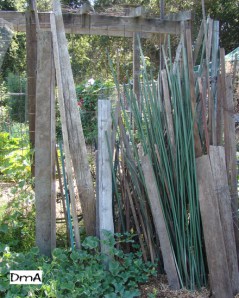
  • Organize and store tree stakes and fence boards out of sight
  • Repair loose and damaged fence pickets, trellises and arbors
  • Build or buy supports for peonies, peas, beans, tomatoes
  • Remove trees and/or branches that lean heavily against rooftops and fence lines
  • Dispose of hazardous chemicals according to county and city waste management guidelines

Chores such as these will keep the landscape looking pristine and life running more smoothly. For spring ‘gardening’ tasks, click on Monthly Tasks on the sidebar to the right.