Intercrop:
A crop which is grown with another crop but matures at a different rate.

Intercrop:
A crop which is grown with another crop but matures at a different rate.
 There’s something about homemade soup that reminds me of country living, unassuming moments and earth friendly produce. Even though I’m just an okay cook, I make a mighty-fine pot of soup. Most soup recipes are my concoction, a mingling of day-old goodness in the CrockPot with two purposes in mind: using leftovers and preparing an easy meal.
I’ll look for any excuse to make a quick and simple dish, like when I thinned a few carrots from my crop. Rather than wasting the immature carrots, I decided to use them in homemade soup. These tiny carrots are tender and yummy and swim beautifully in a palatable broth amongst other vegetables.
Hot soup on a cold, wintry evening is the perfect solution to warm my family’s bodies and appease my laidback cooking preference.
Here’s my Second-Time-Around Chicken Soup recipe. It’s simple but mouthwatering.
Ingredients:
Note: Feel free to substitute any of the vegetables below with your favorites—day-old or fresh.
2- 32 oz. organic or homemade chicken broth
1 packet McCormick four cheese sauce mix
2 cups cooked extra wide egg noodles (or leftover cooked rice)
1 cup each petite peas and corn
2 cups cooked chicken, shredded or cubed
1 cup cooked carrots, sliced thinly
Optional: Celery, petite onions, petite black beans, sour cream for garnish.
Instructions:
Note: Although, I prefer using a CrockPot a large stove top pot is adequate.
Makes 8-10 servings
Got cabin fever? Check out the 2011 March events for some well-deserved fun.

In spite of the outdoor mess, I do love the morning after a storm. When the sun first emerges and calm whispers across the rolling hills every speck of foliage sparkles. Late winter, droplets cling to barren branches pushing out tiny buds wet by rainwater. On mornings like this, the air smells like the waterfalls of Yosemite, fresh and clean.
My house is positioned east and west, so I have the advantage of watching the sun escalate then later slide below farmlands and vineyards. After a rain, in the dawn sunlight, everything shines. But this morning the pasture grasses, perennials, and lawn blades are touched by frost—so much for raindrops on branches and buds. I didn’t expect to see frost but there it is white and cold, clinging to every available surface. And here I am looking from the inside out of my warm and cozy house. This is why I chose a house plan with lots of windows, so I could enjoy the view without getting cold.
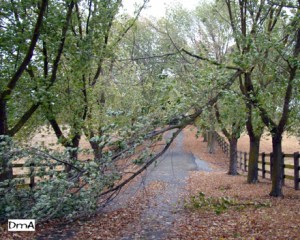
What a storm. Pouring down rain and strong winds practically all day, and then sun–beautiful sunshine kissed by blue skies and frothy white clouds. I hope those without power have it soon, but I know from listening to the news many won’t for two to five days.
In the past, I’ve lived powerless longer than five days, had rain fall through the ceiling, attic pipes burst, and power surges execute most of my appliances. I always feel blessed when my lights work and I can use the computer, cook a hot meal, and look through the windows and see all the trees standing tall after a storm. Out here in the sticks, we don’t have neighborly buildings as windbreaks, just a barn or shed. Limbs and debris fly like paper but never beyond my landscape where clean up is a day’s work.
I took advantage of today’s lock-in and became a domestic diva with duster and mop in hand. Knowing there’s a mess outdoors it feels good to be in a pristine environment. The fireplace is roaring, hubby and Ralphie are playing indoor catch, the storm has calmed, the clothes dryer is humming, and I feel like baking a cake. This country estate is still standing—rubbish littered, muddy and wet—but safe and warm. So cake it is. After all, there’ll be plenty to do outdoors, tomorrow, to work it off.

Hardening Off:
To gradually toughen plants for new environment before transplanting into the garden.
This is done over several days, increasing the time outside each day after taking seedlings or transplants home from the nursery, out of the greenhouse, or moving them outside to a cold frame or protected area.

Potatoes are easy to grow in raised beds, cages, potato bins or in the ground. This year, I’m experimenting with Smart Pot, a 20-gallon fabric container. The manufacture (High Caliper Growing) claims that Smart Pot has “unique breathability and excellent drainage.” Concerned how to sterilize the Smart Pot before reuse I emailed the company. Charles Jackson wrote back, “I would wash it in the washing machine with a little bleach. Do not [heat] dry, the spin cycle will dry the Smart Pot. I may even do this twice just to make sure.”
How about that—a pot you can launder!
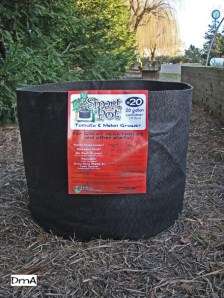
At first thought, this seemed like an awkward nuisance. One would have to hose down the Smart Pot to remove dirt granules before shoving it into the washing machine. On the other hand, this method eliminates the use of gloves and a mask, hand scrubbing, and finding a place (if you don’t have an outdoor sink) where bleach won’t infect the soil, plants or run down street drains.
Whatever method you use to grow potatoes, in the ground or in a container, the process is the same. Here are the steps.
Choosing seed potatoes:
Before planting:
How to plant:
Harvest:
Copyright © 2011 Dianne Marie Andre
Earlier this month, I thought winter had signed up for springtime sports. It was so sunny and warm (in the mid 60s) the landscape transformed from a wet, chilly icebox to a bright and beautiful pause. Outdoor activities increased and my mind began to cultivate modest possibilities and far-fetched dreams. Between the shedding of layered clothing and accomplishing alfresco projects, I felt revived—as did Ralphie.
Thankful to be outside, I spent several hours gathering debris and raking last fall’s remaining oak leaves. A few days later, I popped potato seeds into the earth and transplanted volunteer snapdragons and calendulas. In the days ahead, in the garden, I pruned two large shrubs, one crape myrtle tree, and six buddleia bushes while my husband, Joe, trimmed a huge Chinese maple in the backyard. We ran our trimmings through a wood chipper then laid the shredded mulch around a raised bed for weed control. Sustainable gardening at it’s best!

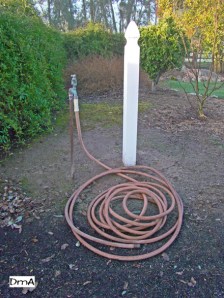
Since Joe was out of work during the springtime capsule, I nudged him to tackle a few projects. Using recycled material, stashed in the barn, he installed a new garden faucet, put a hose post next to three old faucets (the hose holders will have to wait), built a cover for the woodpile, and laid tile on the garden house floor and windowsills. I can’t tell you how long I’ve waited for these tasks to get done.
Everyday that we were outside working, Ralphie wandered the pastures for cow pies and gopher holes, he chased cats, sandhill cranes, and cattle. Then he rested in the sun. We accomplished a lot. Even Ralphie, in his own way, filled sunny days with boundless deeds.

The beautiful spring-like weather could have held me hostage forever. But winter rain and gusty winds returned, then yesterday another sunny day. But there’s more rain in the forecast. What can I say? It’s Fickle February. Regardless, indoors or out, I can still visualize modest possibilities and far-fetched dreams, and that’s a delightful place to be. 2011 © Dianne Marie Andre
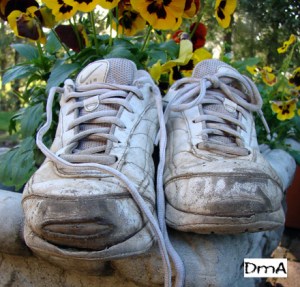
Crown:
The plant crown is where the stem meets the roots. Most crowns are planted at soil level or a little above ground level. Burying the crown below the soil can lead to rot and eventually kill the plant.
By Bernadine Chapman-Cruz
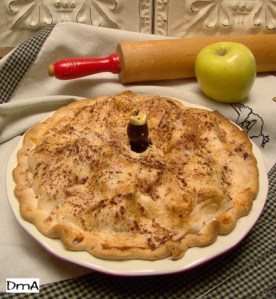 I always dreamed of owning an apple tree, but this wish remained on my to-do-list. Then, one day while channel surfing, something not only caught my eye, but made my mouth water. Staring back at me from a shopping channel was a big, steaming hot apple pie. I could almost smell the sweet, spicy aroma drift into my living room.
“With giant apples from the Big Apple Tree, you’ll be able to bake a nine inch apple pie with only one piece of fruit.” The pitch further enticed me, as the camera moved from the pie to a close-up of the hostess’ sparkly teeth, perfectly coiffed hair and Cheshire cat grin. I knew she was talking directly to me.
“Ooh, it smells so good,” she said, taking a big whiff, her eyes closed leaving at least a half inch of false eyelashes resting on each cheek. I followed the hostess’ lead inhaling deeply.
When I opened my eyes, the screen had changed to ‘The Big Apple Tree Orchard.’
“Renown for apple trees producing giant apples big enough to make a nine inch apple pie out of each piece of fruit,” she reiterated.
“Delivered directly to your doorstep, The Big Apple Tree comes with a root ball ready to plant for only $39.99, plus shipping and handling. It can be yours today.”
Hooked, I couldn’t get to the phone fast enough to place my order.
As promised, within five days, my Big Apple Tree arrived. My heart beat wildly beneath my sweater as I ripped open the long thin box, revealing a large bulge the size of a small grapefruit encased in sturdy burlap. Apples! Apples! pounded through my brain, but it was only a root ball. On a mission, I dug deeper, flinging crumpled paper over my shoulder as I inched up through the protective wrapping.
To my dismay, instead of giant apples, I discovered a skinny stick no thicker than the thin bone of a skeleton’s leg, with three dead leaves clinging to four tiny branches no bigger than chopsticks.
I couldn’t believe my eyes. This tree will take years to mature, and even longer to bare giant fruit. My hopes of ‘a big apple pie’ were shattered.
Heartbroken, I rewrapped my coveted Big Apple Tree placing it back into the box. I pasted the pre-printed return label on the outside, grabbed my car keys and headed for the post office, stopping at the bakery on the way home.
That night, as I cut into the local baker’s juicy apple pie placing a big piece on my plate, I looked outside to where my Big Apple Tree would have been. A lump rose in my throat. I couldn’t even take a bite. Dejected, I pushed the plate away and picked up the remote control to watch television.
“Today we are offering ‘Pie of the Month,’” I heard. My heart began to beat wildly beneath my sweater as I gazed at a dozen luscious fresh-baked pies on the shopping channel table.
My eyes grew wide. My mouth watered. I knew I shouldn’t, but I reached for the phone. Copyright © 2011 Bernadine Chapman-Cruz


 | Aimee E on Slanted Light |
 | Anonymous on A Lesson in Forced Blub F… |
 | Corinne W on I have Argyranthemum Frut… |
 | Dianne Marie Andre on How to Deadhead Snapdrago… |
| Anonymous on How to Deadhead Snapdrago… |

 In and Around the Garden