
“Good or bad,
all insects
were created
for nature. “
Copyright © 2010 Dianne Marie Andre

“Good or bad,
all insects
were created
for nature. “
Copyright © 2010 Dianne Marie Andre
 Like most gardeners, I find it impossible to read scientific plant names. The names look like jumbled letters, similar to those floating in a bowl of Campbell’s alphabet soup. As frustrating as this is, there’s a good explanation for the use of these complex names.
Carl von Linne (May 23, 1707 – January 10, 1778), known by his pen name Linnaeus, developed the scientific name system called binomial. Still used today, with many changes, Linnaeus’ method is complex in its entirety. Below I will try to explain the basics, the important elements that will help you understand Linnaeus’ reasoning. Most importantly, how it will keep you from making costly mistakes.
A plant’s common name is, without question, easier to read than its scientific names. However, a single plant can have many common names according to different regions or countries. For example, in some areas the Red Maple is referred to as Scarlet or Swamp Maple. Think of the confusion this would cause retailers (or consumers) when placing orders.
To solve this problem Linnaeus created the universal method binomial. This includes two scientific names, both in Latin or Greek, the first being the genus and the second specific epithet.
The genus name indicates that the plant is part of a particular group with similar characteristics.
The specific epithet indicates that the plant is part of a genus with dissimilar characteristics. The specific epithet identifies the plant’s organ, the founder’s name, or something to describe the plant.
Here is an example chart using two spruce trees of the same genus.
Common name Binomial (scientific name system)
white spruce (Picea glauca)
Picea is the genus; glauca is the specific epithet which refers to bluish white needles
black spruce (Picea mariana)
Picea is the genus; mariana is the specific epithet which refers organ: Maryland, N. America
Although there’s no reason for the average gardener to store scientific plant names in his or her brain (unless they find this fascinating), it is essential to know a plant’s scientific name before ordering from a catalog or nursery especially if you: 1) are ordering from a company in another area; 2) have recently moved to a new region or country; 3) don’t have a photo match to insure that you’ve made the right choice. Copyright © 2010 Dianne Marie Andre
Please note: What I write in this space are lessons learned through trial and error, research, and from other gardeners and professionals. I garden in zone 9, but share garden experiences that I believe are relevant to most zones within a reasonable time frame and planting conditions.
JUNE
All around the Garden: During hot spells keep potted plants, hanging baskets, seedlings, and newly planted shrubs and trees moist—not soggy. Early morning watering will help reduce powdery mildew and black spot. A timer is a great assistant for busy homeowners. A gardener’s best tool, timers can save replacing dead plants, money, and labor.
Keep up with the weeding so plants don’t have to compete for nutrients.
Compost where needed. For weed control and water retention, mulch veggie and landscape beds. Use pine needles, crushed gravel, or volcanic rock where slugs and snails are a problem. They don’t like to crawl on these.
In the vegetable garden: Last chance to plant warm season vegetables. Seedlings of eggplant, squash, tomato, pepper, sweet potatoes, corn, melon, pumpkin, beet, carrot, herbs, and bean should go into the soil the first part of June.
To insure good root development, thin previously planted seedlings. Overcrowded stocks can become weak and disease-prone.
Seedlings need protection from the harsh summer sun. Check tender seedlings several times per day for wilting. Providing shade during peak hours will help prevent heat stress. Shade cloth or cardboard are an inexpensive, temporary source of protection. (Don’t cover plants completely.) Simply prop cloth or cardboard at an angle with stakes so the plants are shaded. An umbrella is another quick and easy method. Remove each day when the temperature lowers.
Handpick tomato hornworms (Manduca species). Feed to the chickens or drive a spade through them.
In the landscape:
Continue to cut back spring-blooming perennials through mid-July.
After lavender blooms have halted, do a light pruning to maintain shape.
Divide three-year-old irises. They don’t like to be crowded.
Feed camellias with a fertilizer designed for camellias.
Fertilize deciduous trees and shrubs, and lawns. After applying fertilizer according to package instructions, water well.
Keep surveying roses and snapdragons for mildew. (A preventive product is better.)
Look for caterpillars on potato vines. Keep your eyes open for aphids and other pests.
To promote repeat blooms and to keep plants looking their best, deadhead regularly.
Replace spring annuals with summer annuals.
For a fuller plant with more fall blooms, pinch half the height off chrysanthemums before July.
Keep birdbaths and feeders clean.
Copyright © 2010 Dianne Marie Andre
Cultivate flowers to please your eyes and nose,
fruit and vegetables for satisfaction,
and your soul will know peace.
Copyright © 2010 Dianne Marie Andre
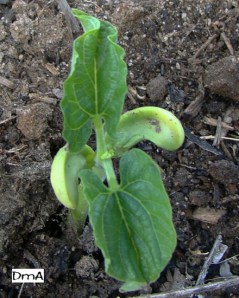 The Blue Lake beans have germinated!
Fifty-eight days till harvest.
First, they’ll grow into vines.
Buds will sprout.
Pods will form.
Then dangly strings.
Green all the way through.
Yum! Beans to-go!
Copyright © 2010 Dianne Marie Andre
My friend, Judy Crosby, woke me this morning with a phone call. Usually, I’m up early but with all the wind in the valley lately, the pollen is wearing me out. Judy called because she had read about the upcoming wedding in my backyard and my mission to find bargains for a red Japanese Maple tree, hydrangeas, vincas, and pots.
“Rite Aid has hydrangeas,” Judy said with excitement, “for $2.99.”
I would have jumped out of bed, dressed, and headed to town but here is the thing, the wedding invitation that I received Saturday (the ceremony is this coming Sunday.) halted a day of plant shopping. The young couple had changed the site!
The good side of this is that Joe and I washed the winter muck off the windows, inside the house and out. I trimmed the small weeping willow grove. (A beautiful place for round tables dressed in white linens.) I weeded, pruned, and raked the perennial garden. It blooms in soft whites, pinks, and lavender. Joe tested the lawn sprinklers. Early morning the little sprinkler heads pop up and hiss liquid across partly brown blades to turn them green.
These are chores normally done in May, undoubtedly this time for a specific date. For a special couple.
Funny how we work faster and harder when company is coming.
In my household, Joe knows guests are coming when I’ve combed the area rug’s fringe, straight and even. He knows to get out of my way when I rush around the house, a crazed woman. Hide dirty pans in the oven for instance, because someone called to say he or she would arrive in five minutes. Wearing a bra is a for-sure sign that company is on their way. If an unexpected car trails up the driveway, there’s no time for a hair or face makeover. Just get the darn bra on. When my sister comes on one of her rare (and I mean RARE) visits, for days I tidy the grounds and gleam every nook and cranny in the house.
By now, you’ve probably sized me up pretty good so I won’t go into what all this says about me. Whatever vain character lies beneath the surface, I do love to create an intimate setting in the garden for guests. It makes them feel special. Beforehand, I will fuss so much I’m exhausted afterwards. At the end of the day, the sparkle in their eyes makes it worthwhile. Big smiles, memorable moments with nature tucked into their hearts. The goal for any outdoor gathering.
I think it’s time for a party.
Come on over folks.
The grounds are manicured.
Copyright © 2010 Dianne Marie Andre
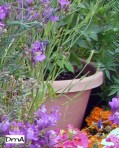 “Grow your own shade.
Trees are much more
beneficial to the universe
than manmade structures.”
Copyright © 2010 Dianne Marie Andre
I love a good day, when something simple presses through your veins and you can’t help smiling until the nighttime stars appear. To a mathematician a good day would be solving a complicated problem. A surfer looks to the ocean for a good day. For a gardener, it might be tilling the earth, harvesting veggies or flowers or if you’re like me, planting.
If I had a million dollars, I’d buy a million plants. Pot some up and earth-bound the rest. What an exotic dance that would be, a regular ongoing gala drunk in happiness for months. Heaven! Pain and sorrow forgotten for the duration, unanswered questions and forked roads put aside. Inactive dreams and disappointments lost in ecstasy. This is why people have hobbies. For good days, like the one I recently had.
My husband’s cowboy friend who owns the cattle grazing my land rounded them up and hauled them off to the property he recently bought. Cowboy friend won’t be bringing them back. (No, Cowboy’s not tall, dark, and handsome. Heck, he doesn’t even wear a cowboy hat. He does ride a horse and brand cattle. By my standards, that’s a cowboy.) The cattle-less pasture opened up opportunity. The Blue Lake bean seeds that the raised bed couldn’t accommodate could now grow along the fence. No cows to eat the vines.
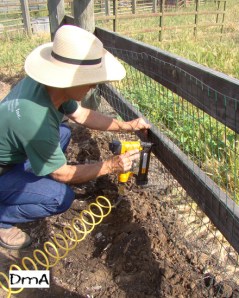 It didn’t take long to sow the beans. My husband, Joe, helped. Four hands are better than two are. A small project Joe’s tired body could handle after a 16-hour-a-day workweek. Joe turned over the soil with a shovel and stapled wire to the fence boards. I was so excited, standing there holding the wire to keep it from springing back and slapping Joe in the face, I could have been in the Garden of Eden.
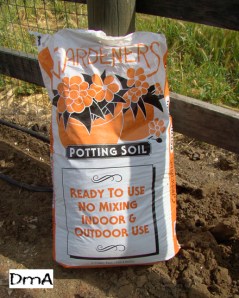
Since I didn’t have aged manure, I threw potting mix into the upturned soil. (When you live 17 miles from town, you use whatever’s in the shed.) I don’t recommend using potting soil because it won’t blend with dirt, at least most won’t. But the cheap concoction that Lowe’s employees’ uses, does. In fact, I like it better than the higher-priced outdoor amendments that I’ve used in the past. The best way—the proper way—to prepare the soil is to work fertilizer in at least one month before planting. Sometimes you just have to do what you can, when you can. It all works out in the end.
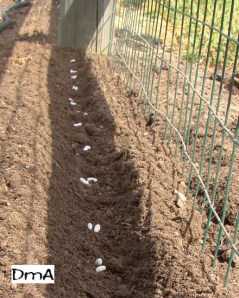 I can’t explain my excitement of sowing a seed or planting a tree except to say there’s more to it than just getting close to nature. The creative action stirs my soul in the moment and for the future. On Dancing with the Stars, I recently heard it said that Pro Dancer Anna Trebunskaya knows how to bring about situations that will lead her to success. Perhaps this is why I enjoy planting so much. Success is right around the corner. I can’t help feeling rich.
This weekend I’m going plant hunting. My backyard is nice but it needs color for the intimate wedding a week from Sunday. My hope is to find a red Japanese Maple tree, hydrangeas, and maybe some vincas. The bargains have to be there or I won’t buy. Even when Joe isn’t working under wage and benefit cuts, 99.9 percent of my purchases will be discounted. I rarely pay full price. Great buys make me feel like I’m contributing to the household, successful. I’ll need pots and potting mix as well. So wish me luck. I’m looking forward to more planting, this time for a young couple in love. Another good day, for sure. Copyright © 2010 Dianne Marie Andre
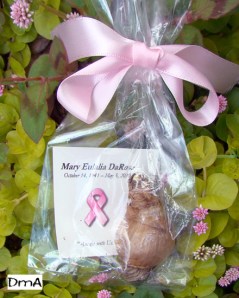 Yesterday, I received a bulb. Its species is unknown as it is one of many wrapped in a single silicon bag with a card in memory of my sister-in-law, who loved flowers.
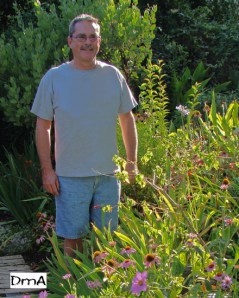
Stockton, CA | Influenced by his father’s gardening passion, Dale Smith became interested in horticulture between the ages of seven and eight when he entered a landscape project (through a club similar to 4-H) in the local fair. To participate, Dale had to plant and maintain a small bed in his parents’ yard, and then display photos and documentation. Since then, wherever Dale has lived, his hands are in the soil growing perennials, cut flowers, and vegetables.
Eight years ago, Dale and his wife, Leigh, moved from Ontario, Canada, to California for a job transfer. Dale was pleased with the area’s year-round gardening abilities, a bonus for the former seed breeder and current manager of Heinz global seed business.
Once the couple settled into their Stockton residence, Dale started to build flowerbeds over the large Hackberry (Celtis) tree roots in the front yard. Frustrated, Dale hired a crew to remove the roots and existing lawn. Also installed was an automatic sprinkler system and rich organic soil for mounted perennial beds that circled new sod. (Circling rather than following along the lot’s traditional square lines softened the landscape.)
“I read a lot of gardening books for California to figure out what would grow here,” Dale confessed. “The daylilies and irises I brought with me from Ontario.”
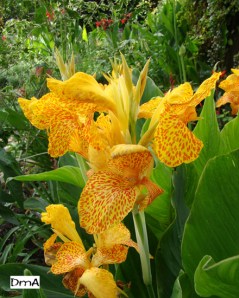
Choosing a blue theme with complimentary hues such as pinks and oranges, Dale filled the beds with a focus on texture, as well. “The great thing about owning your own place,” Dale said, “is if you don’t like it, you can dig it out and move it.” Some of Dale’s plantings include daylilies (his favorite), irises, heathers, cosmos, coneflowers, Western red bud, native or wild hollyhocks, native salvias and columbines, foxgloves, and cannas.
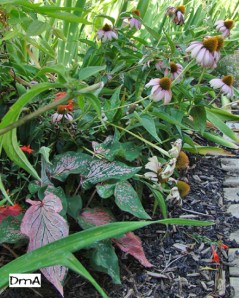
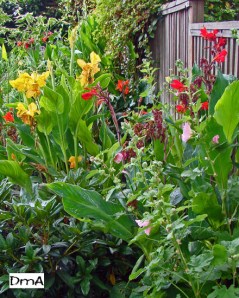
Once a year, Dale adds compost to the beds. Instead of blowing the leaves out of the flowerbeds, Dale blows them into the beds to rot and turn into organic matter. Occasionally Dale will use an all-purpose fertilizer. The only pesticide used is to control the snail and slug family.
On the east side of the house, Dale grows vegetables in raised beds. On the southwest end of the house, there are roses and gladioluses for bouquets that Dale cuts and arranges in vases throughout the house. To learn how to display flowers and keep them fresh, Dale took a flower arranging class offered at the local college. Here are Dale’s flower-cutting tips:
Although Dale’s job takes him all over Europe, Eastern Europe, North America, Africa, and Asia in search of seeds, Dale would rather be home gardening. “I find gardening relaxing,” Dale explains. “I don’t think about work or anything else. I’m thinking about what I’m doing in the garden, what it looks like, and the next plant I can buy.” Copyright © 2010 Dianne Marie Andre


 | Aimee E on Slanted Light |
 | Anonymous on A Lesson in Forced Blub F… |
 | Corinne W on I have Argyranthemum Frut… |
 | Dianne Marie Andre on How to Deadhead Snapdrago… |
| Anonymous on How to Deadhead Snapdrago… |

 In and Around the Garden