Archive for May, 2010

h1

My Granny’s Garden

May 13, 2010

Text and Art by nine-year-old Julia Andre

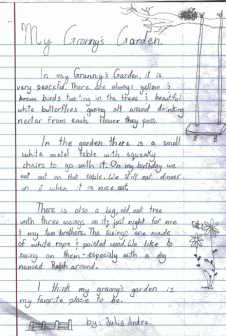
In my Granny’s Garden, it is very peaceful. There are always yellow & brown birds tweeting in the trees & beautiful white butterflies going all around drinking nectar from each flower they pass.

In the garden there is a small white metal table with squeaky chairs to go with it. On my birthday we eat out on that table. We still eat dinner on it when it is nice out.

There is also a big, old oak tree with three swings on it; just right for me & my two brothers. The swings are made of white rope & painted wood. We like to swing on them – especially with a dog named Ralph around.

I think my granny’s garden is my favorite place to be.

h1

Budding Garden Thoughts

May 11, 2010

MyFreeCopyright.com Registered & Protected

“Look for a fairy today . . .

you’ll find her

following

the scent

of a rose.”

Copyright © 2010 Dianne Marie Andre

h1

A First in my Garden

May 10, 2010


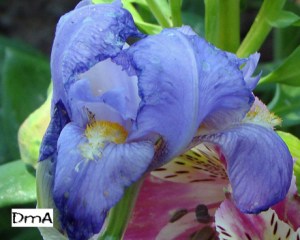
This is my first iris (Iridaceae) ever. About a month ago, a local lady was giving away a couple hundred irises to friends and neighbors. (She’s turning her iris plot into raised veggie beds.) I received a dozen or so irises, most of which I planted under the flowering plum trees (Prunus x blireiana). Two iries are in the garden, one planted on each side of the heart-shape pathway. Unlike the other ones, these two have variegated green and yellow foliage. As one strolls to the left or to the right, each iris is a pleasant surprise . . .  a pop-of-color behind the society garlic (Tulbaghia violacea). Dug up the wrong time of the year, they aren’t performing at high-capacity. Next year, though, I have big expectations.

Iris Tips:

Over 300 species

Grown from bulbs or rhizomes

Three categories:  bearded, beardless, and crested

Irises need full to half day of sun

Plant July – September 12 – 24 inches apart

Bloom periods is spring or early summer

Deadhead bloom stems close to the ground.

Apply small amount of fertilizer one month after bloom

For prolific blooms, divide every 3-4 years before they become crowded

Remove only diseased or brown leaves

Copyright © 2010 Dianne Marie Andre

h1

Budding Garden Thoughts

May 7, 2010

  MyFreeCopyright.com Registered & Protected

“Motherhood doesn’t command

the same blood type.

Grace and love

are better suited.”

Copyright © 2010 Dianne Marie Andre

h1

What Lies Beneath

May 5, 2010

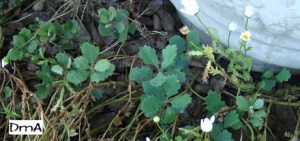
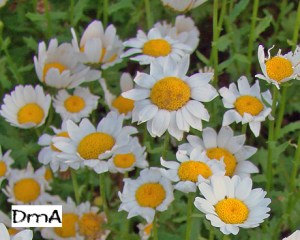
Look what I found beneath the fading chrysanthemums (paludosum). Acorn seedlings!

Both must come out:  The acorns because I don’t want a forest and the chrysanthemums because they’re a winter annual that are dying off. The chrysanthemums are volunteers. I love that about them. Every winter the garden’s entrance is edged with free, daisy-like waves.

I have a hard time letting go of flowers, even spindly ones. (I can’t face the fact that I’m not a flower goddess with magical powers that enables flowers to last forever.)

I am hosting a small wedding here at the end of May. This is forcing me to let go, and fortunately, I found a bargain on zinnias with similar daisy-like appearance and growth habit.

I’ll plant them this weekend, just as soon as I yank out those gosh-darn acorn seedlings.

h1

Field Trip

May 3, 2010

MyFreeCopyright.com Registered & Protected

Yesterday, I attended the San Joaquin Master Gardeners’ Home Garden Tour. Strolls like these make me feel good, and this first-time event was impressive for reasons other than the gardens. (Not that the gardens weren’t worth seeing, because they were.)

At each residence, there were several Master Gardeners dressed in matching red vests eager to answer questions. They handed out plant lists detailing exposure needs and water requirements. ID tags marked the plants throughout the grounds. If you spotted a desirable plant, you’d know what to ask for at the nursery! Horticulture literature, books, and information on products and composting were available. My favorite mapping highlight was the roadside directional flags. Most organizations place small, short signs that blend into the landscape making them invisible behind parked cars and shrubs. The flags at yesterday’s tour were tall and colorful, easy to sight a block away.

One of the six gardens included Sue Chinchiolo’s beautiful grounds. (Sue has the black mulch written about in the last Give and Take article.) As I wandered about each garden, camera strap around my neck, I overheard people noting plants they intended to add to they’re yard. Comments on the placement of accents (such as antiques and whimsical ironwork) spurred bright ideas. Even Sue’s black mulch attracted questions, mostly from people asking where to buy it.

Although many of us have had to cut back on activities, pinching elsewhere to attend at least one home garden tour is worth the sacrifice. You’ll walk away energized, hopeful, and best of all you’ll feel good.

When Touring Gardens Note:

Where to place seating

Where to place focal points

Material options for fencing

Material options for pathways

How to connect garden rooms

How to dress up unsightly sheds

How to blend structures with plants

What to do with a long narrow yard

How to integrate vegetables in flowerbeds

How to marry plant heights, texture, and hues

How to integrate antiques without looking junky

At this residence, there were several old buildings throughout the grounds. The homeowner dressed them up by painting the doors a bold color.

To create a theme they used the same color on each door, including the house—clever and inexpensive.

This is just one example of the many ideas

gained by attending home garden tours.

Copyright © 2010 Dianne Marie Andre

h1

Budding Garden Thoughts

May 2, 2010

MyFreeCopyright.com Registered & Protected

“The sun speaks

of a thousand ways

to be with nature.

Select one and

enjoy it to the fullest.

Copyright © 2010 Dianne Marie Andre

h1

May Garden Tasks

May 1, 2010

Please note:  What I write in this space are lessons learned through trial and error, research, and from other gardeners and professionals. I garden in zone 9, but share garden experiences that I believe are relevant to most zones within a reasonable time frame and planting conditions.

MyFreeCopyright.com Registered & Protected

May | For drip lines or soaker hoses used last season, test the lines and heads for leaks and clogs. Replace and unclog necessary parts. Check water equipment (sprinklers, drip heads, values, etc.) now, and periodically through fall. One day of water loss can kill.  For unidentifiable bugs or disease, take a small branch sample in a “sealed” plastic bag to your local nursery. If herbicide or pesticide is recommended, ask for an organic product that is safe for humans, pets, and the environment.

In the vegetable garden:  If you haven’t planted your veggies yet, there’s still time. Before doing anything, though, draw out a vegetable plan. If you’re not sure how much space each vegetable requires, take your plot or raised bed measurements and a list of vegetables to a nursery or Master Gardeners’ office for assistance. Lay out your drip line and run a test. When the water system is working to your satisfaction, put bean trellises and tomato cages in place, and then plant.

Thin seedlings. Toss out the weak ones so the strong seedlings have room to develop good roots and strong stocks. Sow lettuce, carrots, spinach, radishes, beans, peppers corn, melons, eggplant, cucumbers, zucchini, squashes, and gourds. Start crops of potatoes, Brussels sprouts, cabbage, pumpkins, and asparagus.

Cut off strawberry runners for more fruit and less plant.

Protect tomato seedlings from cutworms by covering the stems with aluminum foil. Remove the foil once the stock has matured and the threat of cutworms has passed. For earwig problems, tightly roll up a damp newspaper. They’ll crawl inside during the night. In the morning, toss the newspaper into the incinerator, or secure it in a plastic bag and then put into the garbage can, or feed them to the chickens. For snails and slugs, place a cheap pie pan on the soil and fill with beer. The smell lures them into a tub where they drown.

In the landscape:  There’s still time, before the temperature rises, to fertilize shrubs, vines, and lawns. Spray or hand-pull weeds while the soil is moist, before they get too large and out of control. Cut out any diseased areas, dead wood, and crossing branches on shrubs and trees.

Prune Lilac, forsythia, and honeysuckle shrubs as soon as they finish blooming.

Stake large buds that tend to flop over at maturity and tall flowers, now, before they become too difficult to handle. This will also help prevent damaging roots with stakes which is hard to avoid when the flowers are mature. Plants that require staking include peony buds, hollyhocks, delphiniums, larkspurs, foxgloves, and gladioluses.

Deadhead1) rhododendron (also known as azaleas) blooms so the plant’s energy will go toward producing next year’s flower buds; 2) faded roses. This will encourage a second bloom period for early summer. Be sure to fertilize your rose bushes. Watch out for aphids. Avoid mildew and blackspot on roses (and snapdragons) by treating them before an outbreak occurs.

Ants, Syrphid fillies (resemble bees or wasps), or sticky leaves are most likely a symptom of aphids. Ants farm aphids in the cold seasons, and then relocate them on host plants for the sweet substance aphids produce. Controlling ants will help eliminate aphids. Syrphid flies are the good guys—their larva devours aphids. If you must treat your plants with pesticides do it in the evening after the bees have left the scene.

At the nursery:  Rhododendron buds are in bloom, so now is the time to choose a variety you’ll love. Before choosing any plant or tree, read the label. Things to consider are sun/shade requirements, climate (is it suitable for your zone?), water and soil preferences. Look for maturity size. Choose a plant that won’t overpower the space and create more pruning at maturity than you care to do in the future. Determine if it’s an evergreen. Do you mind raking fall leaves or looking at naked plants during winter months? Make a wise choice and you’ll save money, time, and work.

For color spots in the beds, pots, and window boxes consider petunias, impatiens, zinnias, vincas, begonias, cosmos, marigolds, aster, lobella. Also in bloom are flowering perennials and vines. Consider Santa Barbara daisies for an abundance of continuous bloom spring through fall. This perennial doesn’t require deadheading. Santa Barbara daisies look best if planted in part shade. Before you make a final decision, read the label. After planting, pinch off flowers. This allows nutrients to go to the roots and not the flowers, establishing a strong system and a healthier plant.

Take houseplants outdoors for a dusting off with a gentle spray with the water hose.

Treat yourself to a home garden tour for inspiration. Take your camera and notepad. Copyright © 2010 Dianne Marie Andre