Archive for the ‘Dianne's Blog’ Category

h1

Art, Magnolia and Flowering Plum Trees

February 15, 2012

A recent day trip to de Young Fine Arts Museum in San Francisco not only gave me an opportunity to look upon exclusive paintings by Venice artists from the 1400 and 1500s, but also splashes of spring blooms gracing the de Young courtyard and city sidewalks.

I wish I could share some photos of the collection by Titian, Giorgione, Veronese, Tintoretto, Mantegna and more, but the museum did not allow cameras with this showing, which ended last Sunday. I can tell you that it was an awesome feeling to stand before the works of artists from the Renaissance-era, paintings 500-plus-years-old.

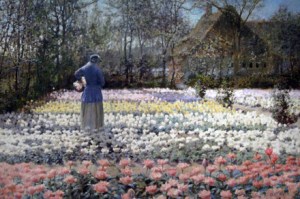
As if the renaissance collection of Venice wasn’t enough, this beautiful oil on canvas, Tulip Culture, 1889, by George Hitchcock (1850-1913) made my day. (The museum permitted cameras in this area of the gallery and my artist and master gardener friend, Em Rojas, took this photograph.) I would love to be the woman in this painting!
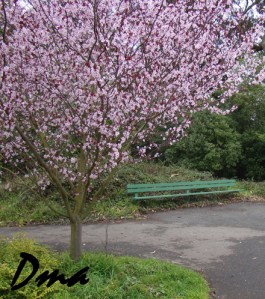
Leaving de Young Museum, what a treat it was to walk through the courtyard with budding Magnolia (Magnoliaceae) trees and along the sidewalk under the flowering plum blossoms—a perfect ending to a fun day in the city with renaissance artists, a splash of spring, and great company.
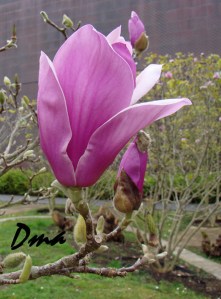
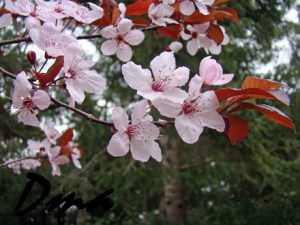
FYI:  San Francisco Botanical Garden’s rare and historic magnolia collection is now blooming! A much-anticipated, not-to-be-missed event, the show goes on from mid-February to mid-March, though some start blooming in late December and last into May.–S.F. Botanical Garden
h1

Tips Hints and Cool Things: waterproof paper

February 10, 2012


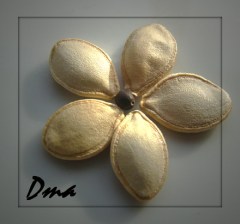
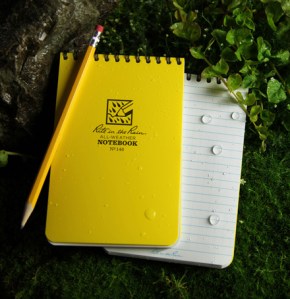
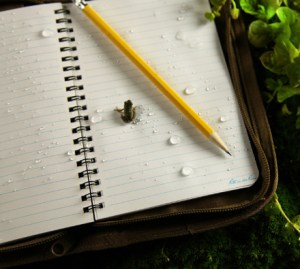
Writing paper that sheds water and enables you to write in the rain!

www.RiteintheRain.com

Even though I’m not likely to garden in the rain, I couldn’t resist passing this ‘cool thing’ on to those involved in sports and other outdoor activities or employment where this innovative product could be useful.

It’s a cool thing!


Photos courtesy of Rite in the Rain

h1

Seed Starting Guide

February 8, 2012

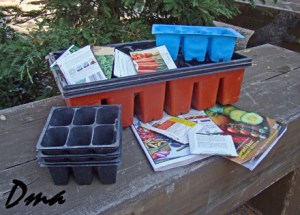
Recently, I came across a FREE, on-line seed-starting guide at Johnny’s Seeds. This is an awesome tool that I hope you will use. Although it’s not a complete list of vegetable and flower crops, it includes those most grown by home gardeners.
In order to explain a couple of things about the guide, I have posted part of it below:

  • Once you are at the link, enter the last estimated frost date in your area (where it says mm/dd/yyyy) and the dates following each crop will automatically  change accordingly. Is that cool or what!
  • In the cell where it says, “Safe time to set out plants (relative to frost-free date)”, the phrase ‘to set out’ simply means ‘hardening off’. This is a horticulture term for placing indoor seedlings outside during daylight to gradually make them more resistant to their new environmental conditions. If you are a gardener who doesn’t have the time or patience to do this and prefer transplanting seedlings directly into the soil, simply protect your tender plants from the hot afternoon sun with a cover cloth until they adjust to the climate.
Enter spring frost-free date (include year):  
mm/dd/yyyy
Crop Number of weeks to start seeds before setting-out date When To start inside Setting-out date
From To Safe time to set out plants (relative to frost-free date) From To
Artichoke 8 19-Feb on frost-free date 15-Apr
Basil 6 11-Mar 1 week after 22-Apr
Beets* 4 to 6 19-Feb 4-Mar 2 weeks before 1-Apr
Broccoli 4 to 6 19-Feb 4-Mar 2 weeks before 1-Apr
Cabbage 4 to 6 5-Feb 18-Mar 4 weeks before 18-Mar 15-Apr

After you utilize Johnny’s Seeds’ seed-starting guide, check out their online catalog. I know several master gardeners who are pleased with their service and products. Have fun with both!

h1

Garden Tips Hints and Cool Things

February 3, 2012

A Cool Thing:

  • Fog is simply ground clouds made of millions of tiny water droplets floating in the air and usually forms when the humidity reaches 100% at ground level.
  • Dewpoint determines how fast or slow fog appears and disappears as the sun warms the fog from the top down.
  • Fog is thicker at lower areas where heavy air flows downward.
  • Different fog types include:  Radiation fog, Sea fog, Ground fog, Advection fog, Steam fog (also called evaporation fog), Precipitation fog, Upslope fog, Valley fog, Ice fog, Freezing fog and Artificial fog.

Tip

Enjoy the precipitation that fog brings to the earth. But be smart, don’t drive in dense fog unless absolutely necessary.

h1

February 2012 Events in Sunny California

January 30, 2012

As of Wednesday, the month of January will be history! There’s no looking back, just forward  . . . to grand days and wonderful opportunities. You’ll find a few of the latter under “Events” on the sidebar.

Now, go out and have some fun in and around your garden and community.


h1

Garden Tips Hints and Cool Things

January 27, 2012

A Cool Thing:

Celebrated people often have the honor of being named after a street, park, building, rose, and even an insect—that’s right an insect. Who had this honor? Pop singer Beyoncé.

The horse fly, Scaptia (Plinthina) beyonceae, was part of a collection of unnamed flies captured in 1981, Beyoncé’s birth year. However, the main reason for naming the horse fly after Beyoncé was for its desirable golden lower abdomen.

Whom can Beyoncé thank for this honor?  Twenty-four-year-old researcher Bryan Lessard at Australia’s Commonwealth Scientific and Industrial Research Organization.

Perhaps, in this case, the fly received the honor. Either way, horse flies are pollinators of native plants in Australia and all over the world. So, don’t swat horse flies! You might kill one of our most valuable and desirable creatures, Beyoncé.

h1

Tips Hints and Cool Things

January 20, 2012

Tips: 

Water Temperature:  Houseplants prefer water that isn’t too hot or cold and de-chlorinated. De-chlorinate water by filling a watering vessel the night before. The chlorine will evaporate overnight.

Bamboo splitters:  A medical professional should always remove bamboo splitters as bamboo has barbs that break off under the skin.

Cool Thing: 

Researchers found that the speed at which protein renewal in plants takes place dictates how quickly plants can adapt to environmental changes, such as a sudden frost or drought. Therefore, scientists could develop crops that can handle sudden weather changes. Journal of Proteome Research.

A personal note:  Finally, it’s raining in my neck of the woods! I removed the frost cloths, turned off the timers to the drip lines and lawn, covered the firewood, and put out the drain gutters. I hope you remembered to do the same. Have a wonderful weekend.

P.S.:  I’m writing a book. I’ve got the page numbers done. — Steven Wright

h1

Lemon Tree Facts and Growing Tips

January 18, 2012

Scientific Name:  Citrus limon

Description:  A sour fruited citrus used in fish, salad, cooking, juices, baking, desserts, drinks, and as a cleaning agent.

History:  The origin of the lemon tree is unknown but many believe it came from northwestern India and was introduced in southern Italy in 200 A.D. then in California around 1751. Heavy cultivation did not begin in the U.S. until 1870. Lemon trees are widely grown all over the world and grow in abundance in India, Sri Lanka, Malaysia, Mexico, and West Indies.

Nutritional Value:

Serving Size: 1 cup raw lemon sections, without peel (212g):

Amount Per Serving

  • Calories 61
  • Calories from Fat 0
  • Total Fat 0
  • Cholesterol 0mg
  • Sodium 4mg
  • Total Carbohydrate 20g
  • Dietary Fiber 6g
  • Sugars 5g
  • Protein 2g
  • Vitamin A 1%
  • Vitamin C 187%
  • Calcium 6%
  • Iron 7%

Planting Tips:  Lemon trees can usually be planted any time of the year. However, it is best to plant according to your zone’s best timetable. Generally, early spring is best, as it will allow the root system to get established and acclimated before frost danger.

Harvest Tips: Available year-round (lemon is widely grown all over the world), with supplies peaking from April to July. In California’s Central Valley, where I live, harvest time is February to July. Unripe lemons are green. When matured, the color changes to yellow.

Recommended Varieties:

Eureka:  True North American-grown lemon trees. Medium size (10-20 feet), few thorns, everbearing but short-lived.

Lisbon:  True lemon tree grown in North America. Tall (30 feet), most productive, thorny.

Dorshapo:   True lemon tree that grows in Brazil and other Latin American countries. It produces a sweet, low-acid lemon, and it’s growing habit resembles the Eureka’s with a large open canopy.

Improved Meyer:  Not a true lemon tree. This hybrid is rounder and orange-colored. Small, ideal for containers, makes an excellent hedge, few thorns, no pruning needed.

Variegated Pink:  Eight feet, good container plant.

Check with your local nursery professional for the best varieties (these and others) for your zone, landscape, and care needs.

h1

Seed Jargon

January 16, 2012

New to growing seeds? Here are definitions for words you may read on seed packets or in catalogs:

  • Sow:  To scatter or to place seeds in a systematic matter in the soil or in seed starting cells for germination.
  • Seed starting cell, 6-pack, or plug tray:  Reusable plastic tray containing individual cells for starting seeds. Tray can contain a pack of six to 200 cells.
  • Fiber Pots, peat pots:  Starter pots made of biodegradable matter. Both pot and seedling are transplanted directly into the soil without disturbing the root system. Eliminates plant shock.
  • Soilless Mix or Seed Starter: A soilless blend, with fewer disease-free problems, that provides aeration, drainage, water retention, and holds nutrients. Often contains perlite, vermiculite, and peat moss. Soilless mix does not contain natural soil.
  • Seed master, seed sower, mini seeder, or dial seed sower:  A small hand tool used to control the flow and number of seeds sown at whatever spacing is required. Saves seeds and thinning time.
  • Germinate:  When a seed starts to sprout above the soil.
  • Seedling:  A young developing plant grown from a seed.
  • Thin or Thinning:  The removal of crowded seedlings in cells or ground for proper air circulation, light, and growing space for full development of the remaining seedlings.
  • Hardening-off:  To gradually toughen plants for new environment prior to transplanting into the garden. This is done over several days, increasing the time outside each day. Usually done when taking seedlings or transplants home from the nursery, out of the greenhouse, or moving them outside to a cold frame or protected area.
  • Transplant:  To plant a seedling (or mature plant) from one place to another, i.e., from cell to pot or soil, or from soil to pot.
  • Zone:  Regions in which particular plants grow well according to climatic and growing seasons.

Note: For help with catalog seed ordering read, Shopping for Seeds via Catalogs: Part I.

h1

Tips Hints and Cool Things

January 14, 2012

Tip

Divide daylily, Shasta daisy, chrysanthemum and other perennials.

Since it hasn’t rained, be sure to check your outdoor potted plants and gardens. Moist soil helps protect plants on frosty mornings.

Cool Thing

World’s smallest frogs belonging to the genus Paedophryne was found in southeastern New Guinea. These species are extremely small, with adults of the two new species — named Paedophryne dekot and Paedophryne verrucosa — only 8-9 mm in length. The members of this genus have reduced digit sizes that would not allow them to climb well; all inhabit leaf litter, and their reduced digits may be a corollary of a reduced body size required for inhabiting leaf litter and moss. Habitation in leaf litter and moss is common in miniaturized frogs and may reflect their exploitation of novel food sources in that habitat. The frogs’ small body sizes have also reduced the egg complements that females carry to only two, although it is not yet known whether both eggs are laid simultaneously or at staged intervals.

Note:  Sorry this is late folks. I had problems getting into my blog again.

Thank you everybody for your kind words regarding Miss Boo Boo and my young hens. Have a wonderful weekend.