Archive for the ‘Dianne's Blog’ Category

h1

How to Repurpose Autumn Leaves

October 6, 2010


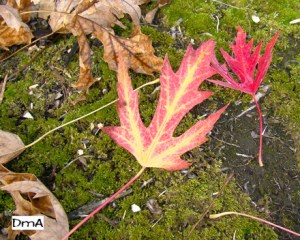
Autumn leaves will continue to litter our yards and beds through November or December. You can rake and bag them for the landfill, use as mulch, or toss them in the compost pile. If you have an overwhelming amount of leaves, most (if not all) of them will go to the landfill especially if you live in town. However, you can repurpose the last of the leaves as mulch and for composting. Here are a few tips.

Leaf Mulch:

  • Shred leaves first through a chipper-shredder or run over them a couple of times with the lawnmower to prevent matting which prevents air circulation and water seepage.
  • Leaf mulch isn’t as appealing as other mulches but it’s one of nature’s freebees.
  • Leaves decompose slowly and provide good moisture retention.
  • Leaf mulch adds nitrogen and nutrients to the soil.
  • Leaf mulch does a fair job of weed control.
  • Eucalyptus leaves are slow to breakdown.
  • Use oak leaf mulch for acid-soil plants.

Mulch:  1) covers the soil; 2) retains moisture; 3) cools the soil in the summer and keeps it warm in the winter; 3) keeps topsoil from being washed away; 4) reduces weeds; 5) provides nutrients as it decomposes; 6) should be at least three inches from the base of plants and trees; 7) fine mulch should be one-three inches deep and coarse or shredded matter three-six inches. 

Composting Leaves:

  • Leaves are a good source of carbon.
  • Leaves will decompose faster if shredded.
  • Add leaves to compost pile in layers. If your leaves are green use for green layer. Dry, brown leaves for the brown layer. Turn pile 2 to 3 times per week. Keep moist like a sponge not soggy.

Compost:  1) is decomposed matter worked into the top soil; 2) amends the soil; 3) helps with erosion; 4) helps stimulate healthy root systems; 5) improves soil structure; 6) improves water retention; 7) provides good air circulation.

Note:  1) Oleander leaves should NOT be used as mulch or compost because of the high toxin. 2) Leaves left on lawns can smother the grass. 3) Remove diseased and chemically treated leaves from beds and lawns. Avoid mulching and composting these.   

Copyright © 2010 Dianne Marie Andre
h1

Overrun with Autumn Leaves

October 5, 2010

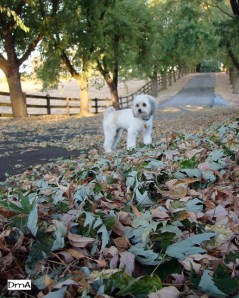
Silver maple leaves litter my driveway with golden hues and playful piles, a pretty sight this time of year. The leaves in the perennial garden aren’t as appealing. Brown, dull oak and yellow locust leaves are caught in every inch of every shrub, vine, groundcover, annual, and the soil.

The trees are undressing faster than I have time to gather their discarded clothing. Until last weekend, my rake hadn’t slipped across the beds in weeks. The landscape (and my life) felt unmanageable. I couldn’t stand the unkempt grounds any longer. Another week and the garden would be such a mess a crew would have to be hired. That’s not in my budget. Therefore, I shifted priorities and spent some time in the garden. First on the agenda was the entrance. 

It’s been several years since I first bought my first flat of Chrysanthemums (paludosum) for cool season color. Every year since, when summer’s heat skyrockets, the chrysanthemums dry up and spill seeds like sugar. Then when fall returns the seeds germinate between the flagstones. Once they reach transplanting size, I relocate them. This year there was enough to fill the beds edging the entrance and three areas in the garden. FREE seasonal flowers. I call that nature’s blessings.

Second on the garden agenda, were the leaves, millions-and-millions of leaves. The job of raking (and some trimming) turned into a two-day effort. Fortunately, my husband helped with the bagging. He’s amazing. Then, at the end of the day, wind dispensed its humor across the grounds. Soft laughter blew through the branches and tilting shadows as millions-and-millions of leaves fluttered downward onto my clean garden floor.

The landscape still feels unmanageable. But I feel better for the effort.

h1

Bragging on Brussels Sprouts

October 4, 2010

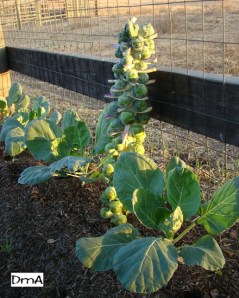
It’s hard to believe that these squatty plants will grow into a tall stock* of little green balls that children—and many adults—would rather use in a game of dodge ball then eat. There’s nothing sweet about Brussels sprouts, but they are nutritious. 

The first time I served Brussels sprouts to my family, no one ate them. The second time, I smothered them in a creamy, cheese sauce. Unimpressed, my two young sons rolled Brussels sprouts around their plate like a game of hockey. It was several years later (after the boys left the coop) that I reintroduced Brussels sprouts to my husband. As I learned to prepare them different ways (pan and oven roasted are a favorite), Brussels sprouts have become a regular vegetable at our dinner table. Now, I’m growing them. Why not? Brussels sprouts are easy to freeze, and unlike frozen string beans, they maintain their fresh flavor.

Growing Tips:

  • Plant mid or late summer in full sun in fertile, well-drained soil.
  • Before planting work in 2-4 inches organic compost matter and all-purpose fertilizer.**
  • Plant 12-18 inches apart and 24-30 inches between rows.
  • Place transplants deep in the soil like you would a tomato plant.
  • Water deep (from the bottom, not overhead) and infrequent.
  • Don’t fertilize during sprout growth which can cause loose, soft sprouts, and splitting.

Watch for:

  • Aphids and ants
  • Cabbageworms and loopers

Harvest Tips:

Pick sprouts about 1-inch in diameter from the bottom up as they mature.

Nutrition:

  • High in vitamin C, iron, calcium, and fiber
  • Low in calories and carbohydrates
  • Zero saturated and trans fat

*The Brussels sprout stock in above photo was purchased at Trader Joe’s. The “squatty plants” are in my garden.

**Gardner & Bloome has a “Natural and Organic Tomato, Vegetable & Herb Fertilizer.”

h1

Tie a Pink Ribbon Around your Garden Hat

October 1, 2010

Today is Pink Friday

 As an eighteen-year survivor

I’m wearing Pink to celebrate life

and

Breast Cancer Awareness Month

 Please do the same.


h1

September Contest Winner

October 1, 2010

The winner of In and Around the Garden’s September Contest is:

 Valerie H.

Congratulations Valerie. I hope you enjoy your Lowe’s $10 gift card.

Thank you, everyone, for participating.

Your comments were encouraging and helpful.

h1

Budding Garden Thoughts

September 30, 2010

MyFreeCopyright.com Registered & Protected  


“It does me good, sometimes, to be alone

To break away from mosaic pieces of my life

To find repose again.”


Copyright © 2010 Dianne Marie Andre

h1

Insect Verdict

September 28, 2010

Dr. Gillian W. Watson, California Pest Prevention Service’s Entomology Lab, emailed the results regarding the plant sample that I mailed last week for scale identification.  Dr. Watson recognized the scale on my “Stairway to Heaven Jacob’s Ladder” (Polemonium reptans) plants as Coccus hesperidum, Common name Soft Brown Scale, C rated (native insect).

Dr. Watson also wrote, “Unfortunately, as an identification lab we cannot advise you on how to control them. Your County Agricultural Commissioner’s office can help you in that way or perhaps your local Nursery.”

Instead of contacting the suggested services, I turned to my Pests of Landscape Trees and Shrubs book for a quick read. Fortunately, Soft Brown Scale seldom causes serious damage. One recommendation is to treat with horticultural oil during dormant season or in spring when crawlers are active. The text also suggested removing heavily infested branches. Unfortunately, most of the stems and leaves on my plants were extremely infested. As I shared before (see September 22 post.), I opted to pull them out.

Although I lost two of my favorite plants, I view this backyard experience as a learning tutorial:  Examine my plants closely at the first sign of trouble, and send a sample for insect identification ASAP.

h1

Budding Garden Thoughts

September 24, 2010

MyFreeCopyright.com Registered & Protected


“Step outdoors.

Inhale fresh oxygen,

deep and soulful

and the earth is yours.”


Copyright © 2010 Dianne Marie Andre

h1

How to Prepare and Submit Data for Plant Diagnosis

September 23, 2010

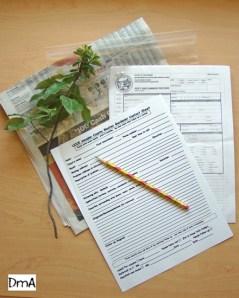
For insect and disease diagnosis, yesterday’s article mentioned two referrals:  California Pest Prevention Services and your local Master Gardeners Association. It’s important that you give as much information as possible when seeking their assistance. Below is an overview of what type of questions you can expect to answer.

The current form at the California Pest Prevention Services office asks for the following information:

  • Plant distribution (limited, scattered or widespread)
  • Plant parts affected, such as bark blossoms, seeds, tubers, etc. (seventeen choices given)
  • Plant symptoms 

Basic questions your local Master Gardeners may ask.

  • Description of problem
  • Name of problematic plant/tree*
  • Watering method (how frequent and duration)
  • Location (north, south, east, west)
  • Applications of fertilizer, pesticides, amendments, etc.
  • A description of the surrounding area of the plant/tree, i.e. neighboring vegetation, slopes, animals, drainage.

Further information that Master Gardeners may need could include, but are not limited to the following:

  • Perennial, evergreen, annual or deciduous
  • Age of plant/tree
  • Number of plants affected with same problem
  • Planted in the ground or a container (what type of container and duration)
  • Sun/shade exposure (how many hours, morning or afternoon)

Of course, both organizations will need your name, location, and county. The environment, conditions, and care involving a plant are important factors in diagnosing a problem. So be ready to give as much information as possible.

As stated below, provide a good sample. The sample should be fresh, placed between two sheets of newspaper or paper towels in a baggie.


*If you don’t know the name, they can help identify the plant. Provide a good sample (leaf, stem, and flower) and a photo of the plant/tree.


h1

Battle of the Scales

September 22, 2010

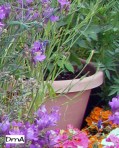
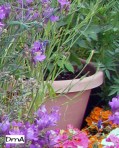
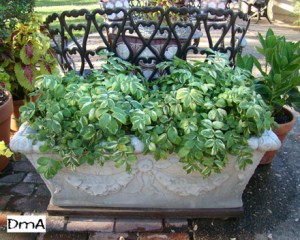
Several weeks ago, I noticed that the leaves on two “Stairway to Heaven Jacob’s Ladder” (Polemonium reptans) were sticky. Thinking aphids had infected them, I hosed both plants (above photo ) off after each watering. I did this for two or three weeks. It was only when the lower, underneath leaves turned yellow that a serious problem became clear.

Spreading the plants apart for a slower look, I saw hundreds of insects feasting on the stems and leaves. I took a sample to the Amador Master Gardener’s office and learned that the insect was scales. Scales are so small they are difficult to spot in the beginning. Still, if I had paid attention, looked deeper, taken more interest maybe the scales could have been controllable. Now, there’s a chance scales will infect neighboring potted plants.

Here’s what I found in my Pests of Landscape Trees and Shrubs book on scales:

The newly hatched scale nymphs, called crawlers, emerge and walk along branches or are spread by the wind or inadvertently by people or animals. Scale crawlers are usually pale yellow to orange and about the size of the period. Within 1 to a few days, crawlers settle and insert their strawlike mouthparts to feed on plant juices. After settling, armored scales secrete a waxy covering and remain on the same plant part for the rest of their lives; nymphs of soft scale species can move a little, usually from foliage to bark before leaves drop in the fall.”

Considering how infested the plants were and that scales live on the plant(s) for a lifetime, and can easily spread, I pulled them out and placed them in a tightly sealed bag for the incinerator. Before doing this, I saved a sample to submit to the State of California Pest Prevention Services in Sacramento. Identifying what type of scale may help eliminate or control any future spread of this insect.

For information on how you can submit samples troubled with disease or insects to the California Pest Prevention Services, call 1-919-262-1100. Forms and submission information is not available online. However, their website http://www.cdfa.ca.gov/phpps is worth viewing.

If you have an insect from the United States or Canada, and want it identified, you can upload images at http://bugguide.net. (If you misplace the web address, you can find it here, under Helpful Resources.) This is an amazing sight, from which the family can benefit.

Your local master gardeners can also help identify insects and disease, and offer possible solutions.