Archive for the ‘Dianne's Blog’ Category

h1

Managing Pests in the Garden

August 18, 2010

Lately, there’s been more action in and around my garden than I care to have. Don’t get me wrong, I enjoy activity, positive changes, and the challenging journeys that gardening and country life sometimes take me on. It’s the damages and losses (even near losses) that I don’t cotton too. Here’s what’s been happening.
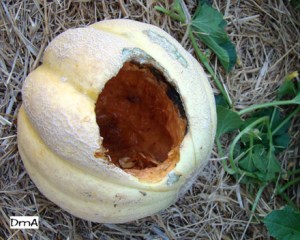
In the vegetable bed, voles have devoured two cantaloupes, one ready to harvest and the other green as grass. Voles run above ground on the paths they’ve created between holes. I placed two mousetraps and four glue traps on the running trails. If you place two traps back-to-back on the paths, you’re bound to capture one. So far, I’ve caught four. I plunked a blend of peanut butter and oatmeal on each, although a small piece of spearmint gum seems to attract them better. Ralphie, however, is also attracted to the gum, not the peanut butter, so I have to go with the latter.

The vole number is low so far. When hundreds of voles invade a garden or raised bed like my neighbor (or as I’ve experienced before), there’s not much you can do. I’m hoping this year’s vole litter in my garden isn’t a prelude to next year’s over breeding.

I’ve heard some master gardeners say pouring a mix of plaster of Paris and oatmeal down the opening works well. The voles, supposedly, eat it and die.

In addition to voles, it seems that I now have to be watchful of coyotes. Around 3:30 in the afternoon, a coyote tried to take my hens hostage. Ralphie and I just happened to be in the hammock, a few feet away, when we heard the ladies squawking frightfully. Between Ralphie’s barking and my yelling, the coyote fled silently without bloodshed, not even a nugget of country chicken. Thank heaven. (I also have to stay extra close to Ralphie now when he’s outside.)

A lot of dust and feathers flew overhead as the ladies ran for cover. I counted hens (all present, unharmed) and consoled them with a reassuring voice. The next morning, when I checked the mousetraps, one was gone. If triggered, mousetraps can fly a distance. This one, however, had vanished. I imagine it tangling on the nose of a sore loser, the coyote.

Here are some tips to help you decide who’s tunneling in your beds:

Vole:  Diet consists of vegetation, roots, and grass. Creates several open holes within a small area with above-ground trails between them.

Mole:  Diet consists mainly of earthworms and insects. Creates horseshoe-shape mound around the hole.

Gopher: Destroys roots while digging for food. Uproots and eats vegetation including tree roots, flower roots, and bulbs. Creates a round mount with hole in center.

h1

Hot August Contest

August 16, 2010

This month’s contest is an easy win! It begins today, August 16 and ends August 31, midnight.

THE PRIZE:  An attractive, 40-page book-bound photo album. Each page holds two horizontal 4×6 photos with a sidebar for journaling. The album is new. It has a soft, black leather cover. Ideal for storing/showcasing family photos for you or give as a gift.

Here’s the rules and game plan:

  1. You must be a subscriber to play. It’s FREE!
  2. Simply post a comment. No restrictions on length. The person with the most comments by August 31, midnight is the winner.
  3. The winner will be notified by email. The winner’s first name and last initial will be announced on inandaroundthegarden.net.

Best of luck and happy commenting!

Note:  In and Around the Garden has the right to refuse publication of unsuitable comment(s) and/or to exclude them in the above contest.

h1

It’s Melon Time

August 13, 2010

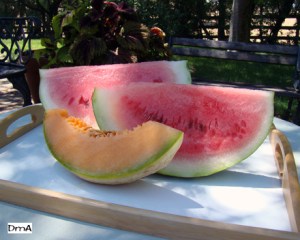
Ripe for the picking, this is what I have waited for all summer. Watermelons, cantaloupes, and honeydews (not yet mature) are a favorite summertime flavor to squeeze against my taste buds. These melons are as sweet and juicy as they look, and they’re from my garden. There’s not very many on the vine so I will savor every mouthful, every drizzle down my chin. What a blessing . . . earthy and simple, yet gratifying.

Health benefits:

For watermelon go to: 

http://www.whfoods.com/genpage.php?tname=foodspice&dbid=31

For cantaloupe go to: 

http://www.whfoods.com/genpage.php?tname=foodspice&dbid=17

For honeydew go to: 

http://hubpages.com/hub/Health-Benefits-of-Honeydew

h1

Budding Garden Thoughts

August 12, 2010

MyFreeCopyright.com Registered & Protected

“There ought to be

a flower garden

for every city dweller,

even if it’s a single flowerpot. “

Copyright © 2010 Dianne Marie Andre

h1

Bench Benefits

August 11, 2010

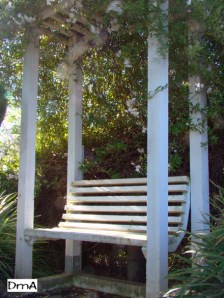
During the dreaming stage of my perennial garden, I envisioned at least one shaded, seating area. Years later, after the garden became a reality, I spotted the perfect white arbor bench at a rural outdoor boutique. What I didn’t think about at the time was the many benefits of owning an arbor bench. 

  1. Potato vines (Solanum jasminoides) hug my arbor creating a cool, shady, cocoon-like-space . . . a plus during one-hundred degree temperatures.
  2. I can disappear into the background. If I don’t move, hummingbirds and butterflies think I’m part of the landscape and practically perch on me.
  3. The arbor adds a focal point. It draws people to come from across the garden to sit for a spell.
  4. Mostly, the arbor bench invites me to dismiss the weeding, pruning, and deadheading—if only for a few minutes—that awaits my attention. Copyright © 2010 Dianne Marie Andre
h1

How to ID your Plant’s Ailment

August 9, 2010

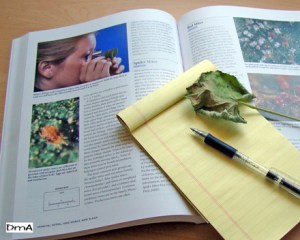
If you enjoy crossword puzzles, like to dabble in a little detective work, and establish a solution, then determining your plant’s problem will give you the same self-satisfaction. Here are four steps that will help you detect what is wrong with any plant in your perennial or vegetable bed.
Note:  You can find many research answers online, or in reference books at the library or local bookstore.

1.  ID your problematic plant. This is important because all species have its own set of disease and pest tendencies. What one species is prone to another may not be. Therefore, identifying the name of your plant’s species will narrow down the otherwise one-trillion possibilities.

2.  Research growing habits. As with disease and pest tendencies, different species have different growing habits and needs. For example, I once gave a Japanese maple tree as a wedding gift. When I visited the honeymooners later that fall, they had put the potted tree out of my view because its leaves were drying up and they thought it was dying. Of course, I asked about the maple tree, and they sheepishly took me to it. After asking a few questions about care and the tree’s normal location, I reassured them that this is normal and new leaves would return come springtime.

Other aspects you should know about your plant in question is its zone, exposure, and water requirements. If you live in the desert, and purchased a plant from the bay-area, it’s probably going to die, as it’s not suited for your zone. If you plant a sun-loving plant in the shade, a drought resistant plant where the soil has poor drainage, or a summer annual in the fall (yes nurseries do sell these at the end of each season) the plant will become stressed. This will make it weak and susceptible to pests and disease.

To recap:  write down your plant’s zone, growth habits, required location, and care.

3.  Determine common problems. For example, is the plant species prone to powdery mildew, sensitive to acidic soil, or apt to get caterpillars? Make a list of the common problems and then determine the cause affecting your plant (disease, pest invasion, inadequate care, or poor location). Oftentimes, the easiest way to do this is by elimination.

4.  The solution.  Once you’ve identified your plant, understood its growing habits, studied its required environment and care, and narrowed down the problem, you are ready to apply a solution. In some cases, when the problem has an insect like with leafhoppers, you just have to wait it out.

If it turns out you have a stressed plant because it’s in the wrong location, if possible, transplant it in the fall when the temperature is cool.

If you use a pesticide or insecticide, oftentimes both organic and commercial methods are available. When choosing between the two, consider exposure to children and pets, and environmental impact. Always (always), when working with chemicals, follow package directions to the letter, and protect yourself with proper attire. This would include enclosed shoes or boots, long sleeves and pants, gloves, mask, goggles, and hat.

If you don’t have the time or simply don’t enjoy plant detective work, take a leaf or branch sample to a reputable nursery or master gardeners’ office. Make sure you place the sample in a sealed zip lock bag or capped jar. If you don’t know the name of your plant, print a color photo of it, large enough to see the details and growing habit. Some plant parts look similar and this will make the professional’s job easier.  Copyright © 2010 Dianne Marie Andre 

Helpful resources:

The following books are available through the Amador County Master Gardeners’ office. Contact information:  phone 209-223-6838 | email mgamador@ucdavis.edu | on the web at ceamador.ucdavis.edu 

  • Pests of the Garden and Small Farm, a grower’s guide to using less pesticide
  • Pests of Landscape Trees and Shrubs, an integrated pest management guide  
h1

Produce-Selecting Tips from a Restaurant Chef

August 6, 2010

Last night I attended the Farmer’s Market Chef’s Tour listed under In and Around the Garden’s August Events. I would definitely do this tour again. The overall feel was like one big party. The sound of loud, live music folded into the scents of fresh produce stirred up a jig in your body and a hunger in your belly.

The tour is limited to twelve. Ten people showed. One person, to my surprise (and hers) was an ex-coworker. We hadn’t seen each other in years. Gosh, she hasn’t aged at all.

Back to the tour.

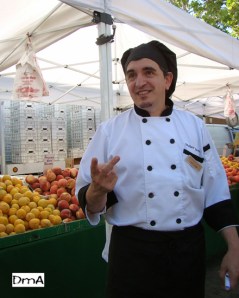
Restaurant Chef Didier Gerbi (of Wine and Roses) is a tall Frenchman who’s accent had us leaning in a tad closer, sometimes asking Didier to reiterate his tips. He did so gladly. Before walking us through School Street, Didier said to keep three things in mind when shopping at farmer’s market:  Focus on seasonal produce; locally grown, and look for the best throughout the market before buying. “Price shouldn’t matter,” Gerbi said.
As we strolled through the crowd from farmer to farmer, Chef Gerbi was honest and never shy about pointing out bad produce. “This is very bad, very bad,” Gerbi said, waving his large hands over various crops. “These farmers aren’t going to like me.”

Most of Gerbi’s disapproving comments referred to out-of-season crops which meant they aren’t locally grown, not ripe, and overripe produce. Chef Gerbi’s other recommendations were as follows:

  • Never buy at the beginning of a crop’s season because they’re not ripe.
  • Choose pluots that are soft, almost overripe. (We tasted the Flavor Queen, and it was to die for.)
  • Corn is ripe when the tip of the ears is yellow (or white if choosing the white variety). White corn is best in salads and yellow corn is best prepared hot.
  • Choose small carrots because they’re sweet. Never peel a carrot before cooking. The best carrot is the original purple or black carrots (very sweet), but they are hard to find. 
  • Buy green peppers when they start to turn red. The first crop will always have a large brownish-white spot, kind of like blossom-end rot. Don’t buy these.
  • Choose only very small, firm zucchini. The life of a zucchini is six days.
  • Choose very thin cucumbers, preferably the English cucumber, which has fewer seeds.
  • Buy strawberries April through June, and again when the second season takes off in September.
  • A cantaloupe is ripe when the outer layer is smooth, not rough. The female cantaloupe is 80 percent better than the male. You can tell them apart by looking at the circle on the end. The Female will have a larger circle. Choose the lighter, female cantaloupe because it has less water and will be sweeter. (In the garden, hold up the cantaloupe by the stem, and if it falls off it’s ripe.)
  • A watermelon is ripe when you hold it up to your ear, knock on it, and it sounds like someone is knocking at the door—no kidding, it really does! In the garden, pick watermelon when three curly veins appear not far from where the stem connects to the melon. Also, look for a yellow underside.
  • Zebra tomato is ripe when it starts turning yellow. Black cherry tomato is like candy. A good tomato should have sweetness and acidity taste.
  • Peaches are ripe when the top (where the stem was) explodes.
  • The redder the pear the better they are.

Throughout the tour, Chef Gerbi shared a few cooking hints. The tour ended with Chef Gerbi’s tip on how to cook a chicken that is, without fail, juicy and tender. The chicken should be room temperature, and the oven preheated at 200 degrees. Every 30 minutes increase the temperature by 50 degrees until it reaches 350 degrees. It will always be done then. Remove from oven, and let sit 5 – 10 minutes before cutting or serving.

I hope Chef Gerbi’s professional tips help make your farmers’ market shopping (and backyard harvesting) easier as you raise melons to your ears, hunt down small carrots, and female cantaloupes.

h1

Budding Garden Thoughts

August 5, 2010

MyFreeCopyright.com Registered & Protected


“Nature’s most magical power

is its ability to forgive.”

Copyright © 2010 Dianne Marie Andre

h1

We have a winner

July 29, 2010

DRUM ROLL PLEASE . . . the WINNER of In and Around the Garden’s First Book Give-Away Contest is . . .
VALERIE H.

Congratulations Valerie. Amy Stewart’s book is packed full of helpful information. I hope you enjoy it.

To those who participated, but didn’t win, a big fat thanks to each of you.

Before I post the next contest, I’d like to hear your thoughts on the first one, and on future contests. Without your suggestions, I’m guessing in the dark how you’d like to compete, what you would like for prizes, deadline timeframe, if the first contest requirements were too steep, or the book undesirable or if it even matters—not everyone cares what the prize is or likes to participant, and that’s okay. If you’re enjoying the read, then I’m happy.

You can leave your thoughts in the comment box or email me at, inthegarden@softcom.net. –Dianne

 NOTE:  Tomorrow, under “Country Buzz,” look for my thoughts on friendship entitled, A Tea Luncheon in the Country. 

h1

Strange Growing Season

July 28, 2010

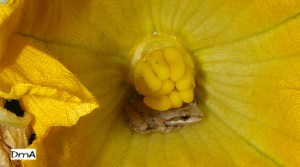
It’s been a strange season in my vegetable garden. The green beans never developed runners and they are producing a less-than-normal crop. Looper (Trechoplusia ni) caterpillars ate my lettuce crop overnight. Tobacco Streak disease attacked the Mortgage Lift tomato plant. It has one tomato. And remember when I showed you a photo of ants in the zucchini blossoms, and after researching a solution I decided to try corn meal as a pesticide—well as you can see in the photo below, the ants moved out (or died off) and tiny frogs moved in. Okay by me, they’re much cuter and they eat the bad bugs. (Okay-okay, I know ants eat aphids, but my zucchini plant didn’t have aphids. The ants were after the nectar. If you have a large army of ants like my zucchini plant, the blossoms will drop off and as a result, no zucchini.)

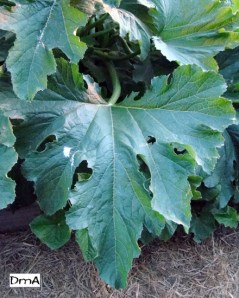
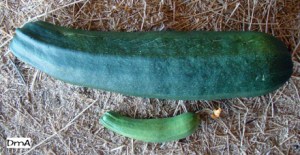
That problem solved, my crazy zucchini plant is producing elephant-size leaves (see photo below) which explain why I missed the oversized zucchini (below) at a whopping 20 inches long and 16 inches around. I’m sure there are larger ones in the Guinness World Records, but never in my garden. The zucchini plant is so large (probably too much nitrogen in the soil) it’s producing fewer veggies, and it’s shading the eggplants. They’ve only produced two eggplants. I may as well pull them out. I may as well pull out the Mortgage Lift tomato plant and live off zucchini and beans! They are producing enough to keep one to two people alive.

From what I’ve read, other central and eastern US gardeners are experiencing some of the same issues, like vegetable plants doing nothing or next to nothing. Some suggest the culprit is a late cold snap, heavy rains, and minimum solar. Too much nitrogen or one plant shading another may not be the problem after all. Without having the soil tested, I’ll never know. However, I do know that I’m not alone when I say it’s a strange growing season this year.

(Note:  Remember, entries for the Book Give-Away Contest closes at midnight today,  July 28, 2010 . Good luck!)