Archive for the ‘Dianne's Blog’ Category

Summary of Buying a Little Green Book
February 5, 2014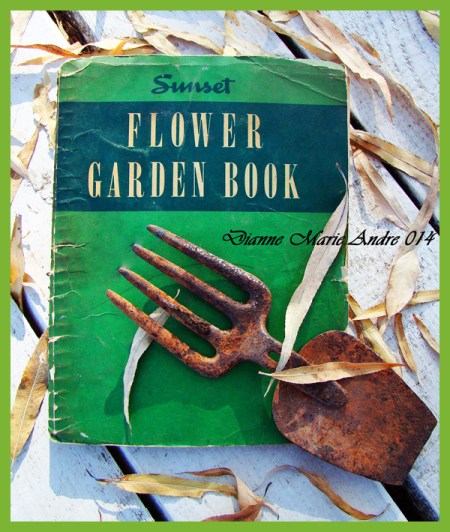
I went again to the used book store and purchased this 1946 Sunset Flower Garden Book for fifty cents. It is tattered and worn, no doubt thoroughly used. Thumbing through the pages, I noticed several of the illustrations were colored with crayon. Clearly, the young and mature enjoyed this little green book and perhaps read it together, eager to plot out a family garden or single bed.
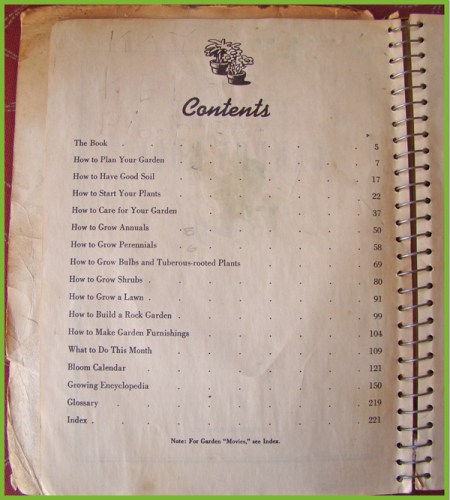
One look at the Contents and my interest was heightened. The book is small, but packed with boundless horticulture practices that encourage one to grow the tastiest, healthiest vegetables on the block, and ornamentals to die for.
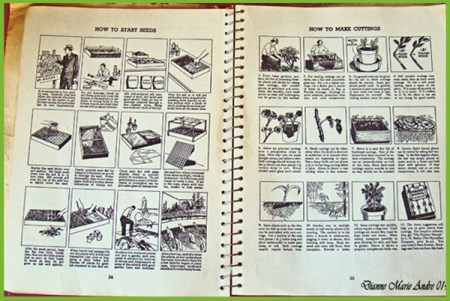
Gardening books, like this one, hold a wealth of cultivation methods, and are keepers of illustrations, solutions, landscape ideas, and daytime dreams of yards small and carefree or grand and magnificent . . .
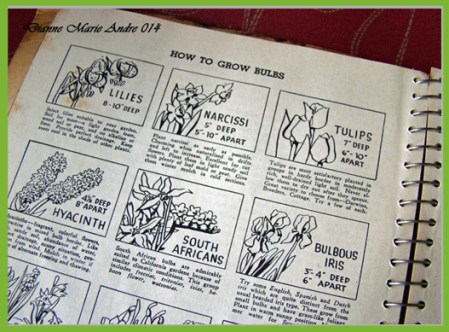
. . . yards full of progressive blooms, fragrances sweet, mild or strong. There’s no doubt this book represents professionals and the home gardener who have delved into horticulture through paper volumes and soil. How could I not purchase this little green book from 1946 with the inscription Kay Catherine Nille?
Be sure to Friend me on:
No Words Sunday | Time to Rest
February 2, 2014
Planting | What and Why
January 29, 2014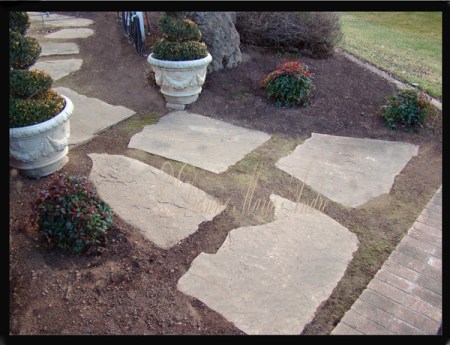
Success in the garden depends on choosing plants that suit the location and how much care you can put into your choice. Do this correctly and you won’t have to do it over.
The small beds on either side of my perennial garden entrance have been empty for some time. This past weekend I put in Dwarf Heavenly Bamboo Nandina domestica ‘Nana Pygmaea’ on both sides of the flagstone. This is a good choice for several reasons. Heavenly Bamboo is drought tolerant. The beds at the garden entrance receive little water. As I mentioned in a earlier post, the mature Nandina domestica variety (non-dwarf) in my landscape do not get watered and they have thrived for years.
Please note even drought tolerate transplants need regular deep watering for the first year. And, although my mature Heavenly Bamboos do well without watering, the amount and frequency of water needed will depend upon your location, microclimate, and soil condition.
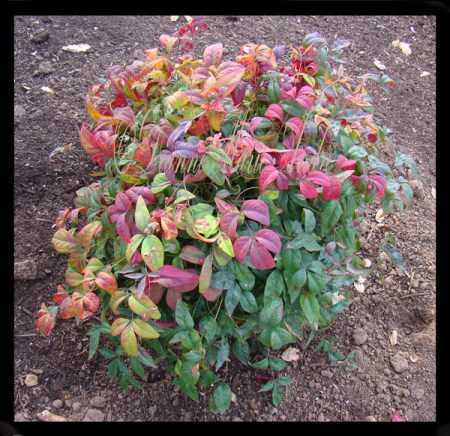
Other reasons this shrub is a good choice is low maintenance, cold hardiness is 0 to -10°F, and it is an evergreen. I want the entrance to look good year round with plants that perform well during the cold season as well as the rest of year. As you can see in the photo above, the leaves turn a beautiful reddish hue in winter.
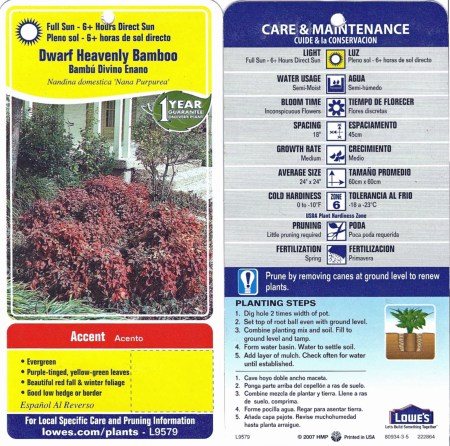
The beds also have well-drained soil and receive full sun. Heavenly Bamboo grows best in these conditions. As soon as I come across two more Dwarf Heavenly Bamboos, I will plant one more in each bed. The shrubs won’t outgrow the space because I did my research. These plants will fill in 24×24 inches and cascade over the edge just enough to soften the walkway.
Here’s a guide on Dwarf Heavenly Bamboo Nandina domestica ‘Nana Pygmaea’.
Be sure to Friend me on:
Leaves, Leaves, And More Leaves: Part II
January 22, 2014The rumbling mower zipped over the leaves and snatched them up with metal blades.
Dirt flew out; dust swirled around and glazed my face a coat of grubby brown.
This isn’t going to work, I said with a huff, a cough, and fluttered eyelids.
But I persisted on giving it a try, on completing the task at hand.
When the bag was full, I turned off the mower, removed the bag, and peered inside through raccoon eyes.
No surprise. It didn’t work. The leaves were whole, not broken down for swift decay.
I sighed then looked around at all the leaves, one trillion to be exact.
I should have known the old way is best: A good rake and large leaf bags.
It beats the roar of a mower, dust swirls, and raccoon eyes.
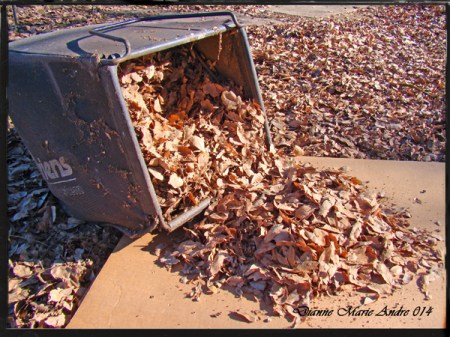
Note: All fun aside, it is possible to break down leaves with a mower, but you’ll have to run over them at least twice. (I didn’t have the patience to do this—too much dust.) Be sure to wear goggles and a face mask. You can try a chipper.
I DO recommend using broken-down leaves as mulch. It’s free. It’s good for the soil and mulching is especially important now that we are in a severe drought.
Since I have decided to pass on the dusty task, I will be adding four inches of commercial mulch where needed. I am placing the oak leaves in the pasture along the outside of the garden fence to control the weeds.
Wild Edibles I: Meet Author Alicia Funk
January 22, 2014Join Author Alicia Funk on a seasonal discovery of the uses of plants native to our region—seen through photographs and a walk through Soil Born Farms & Elderberry Farms and tasted through a sampling of wild treats. Learn how to prepare fresh and locally available native, wild plants in this interactive program that includes highlights from her book, Living Wild—Gardening, Cooking and Healing with Native Plants of California.
WHEN: Saturday, February 1, 2014, 10:00am – 1:00pm
WHERE: Soil Born Farms American River Ranch, 2140 Chase Drive in Rancho Cordova
Itinerary:
10-11: Seasonal Cooking with Native Edibles
11-12: Tasting of Edibles: Prepare Oak Nut Flour & Manzanita Sugar to Take Home
12-12:30: Growing Drought Tolerant Natives, Chris Lewis, Elderberry Farms Native Plant Nursery
12:30-1: Native Plant Walk at the Farm
For fee and registration information go to Wild Edibles registration or phone 916 868-6399.
Elderberry Farms Native Plant Nursery, 2140 Chase Drive, Rancho Cordova, along the American River Parkway at Soil Born Farms’ American River Ranch
Annie’s Annuals and Perennials
January 14, 2014Here is an upcoming, FREE event at one of my favorite nurseries, Annie’s Annuals and Perennials
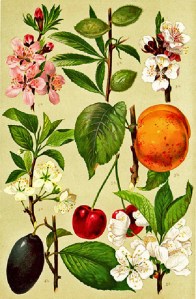 Bare-Root Fruit Trees!
FREE TALK with Phil Pursel of Dave Wilson Nursery on Saturday, January 18 at 11 am!
January is the perfect time for Bay Area gardeners to plant bare root fruit trees and Annie’s Annuals & Perennials are thrilled to welcome back our favorite fruit tree expert, Phil Pursel of Dave Wilson Nursery on January 18 at 11 am!
Not sure what fruit trees are best suited to your growing zone or space? Phil can totally help with that.
And what about that all important “first cut” – the very first pruning cut that should be made to keep backyard fruit trees a manageable height for harvesting? Phil will walk you through that, too, and give you all of the compelling reasons why you should do it.
Whether you have an established backyard orchard, or are planting your first fruit tree, Phil’s extensive knowledge and passion will get you fired up about growing your own fruit! You’ll walk away with everything you need to know about selecting, planting, pruning, protecting your tree and more. Bring your questions!
BONUS: The fine and fabulous folks at Dave Wilson are generously donating a wonderful selection of beautiful bare root trees to RAFFLE OFF! No purchase necessary – just be here by 11 am to nab a free raffle ticket!
Annie’s Annuals and Perennials
Nursery: 740 Market Ave. Richmond, CA 94801
Business Office: 801 Chesley Ave. Richmond, CA, 94801
(888) 266-4370
Catalog Shopping
January 13, 2014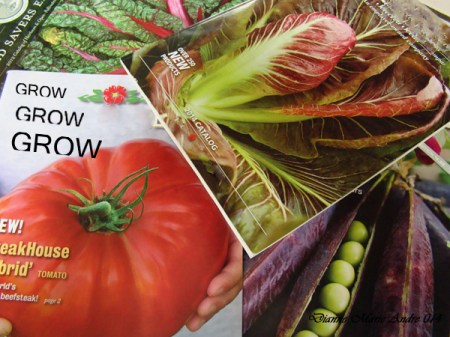
It’s time to plan and decide what vegetables to grow this spring and summer. Seed catalogs and online versions are available now to inspire you with a wealth of new and unusual varieties not offered in stores. When making your seed selections via catalog (or local nursery), be sure to read the full description.
One of my favorite catalogs is Johnny’s Selected Seeds. It has growing charts, tech tips, variety comparison charts, growing information (covering diseases, insect pests and control, harvest, storage, and culture), resistance codes, and an easy symbol guide that tells you if the seed variety is organic, heirloom, trellis needed, container friendly, and more.
Before you order seeds, READ MY TIPS on Shopping for Seeds via Catalogs: Part II


 In and Around the Garden