
Please note: What I write in this space are lessons learned through trial and error, research, and from other gardeners and professionals. I garden in zone 9, but share garden experiences that I believe are relevant to most zones within a reasonable time frame and planting conditions.
Maintenance: As you begin to spend more time indoors, plan a few tool cleaning and repair sessions. First remove soil from your garden tools with a nylon or metal brush. Sharpen, wipe clean, and oil metal with spray or machine shop oil. If wooden handles are getting rough, lightly sand, oil or repaint to protect the wood.
Repair the end of water hoses. Replace broken sprinklers. Soak clogged shower-hose heads in warm water and vinegar. Bring timers indoors and remove the batteries. If battery acid leeks, it can damage the timer.
Protect faucets, pipes, and sprinkler valves from frost by wrapping them with old bath towels or rags.
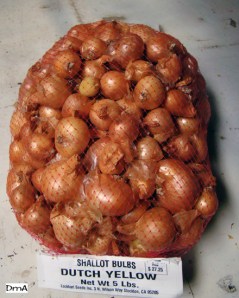
In the vegetable garden: Seed fava beans, carrots, Swiss chard, lettuce, mustard, onions, peas, radishes, shallots, spinach, turnips. Transplant Bok choy/Pak choc, broccoli, cabbage, cauliflower, celery, kale. Plant garlic cloves, horseradish roots, rhubarb roots.
If you’re not a winter vegetable gardener, you can amend the soil for spring planting before the ground turns soggy or frozen. Work in organic matter like shredded leaves, compost, and peat moss or plant cover crops such as fava beans and vetch. Cover crops add nitrogen to the soil and slow down the leaching of nutrients caused by rains.
In the landscape: Cover frost-sensitive plants with frost cloth and move potted plants to a sheltered area. Frost cloth can stay on during daylight as it lets the sun in.
After pruning fruit trees and the leaves have fallen, apply dormant spray. Clean up the debris to prevent insects from gathering underneath.
Replace weak or damaged stakes so young trees and shrubs can stand against strong winds.
Mulch beds after the first frost, keeping mulch 3-6 inches away from trunks.
Plant cool-season color spots such as pansies, annual stock, primroses, snapdragons, Iceland poppies, calendulas, African daisies, chrysanthemums. Sow wildflower seeds now for a spring show. There’s still time to plant spring-blooming bulbs like tulips, daffodils, hyacinth, narcissus.
Although this is the time of year to cut back on watering, don’t let the soil dry out. Moisture provides warmth which helps to fight off frost damage. Potted plants don’t necessarily catch raindrops so keep an eye on the soil and water as needed.
Copyright © 2010 Dianne Marie Andre
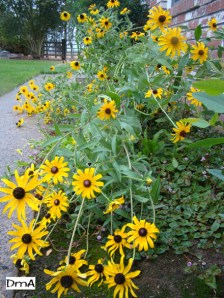 Beneath my office window, these wild sunflowers are as sunny as fresh-squeezed orange juice. They keep blooming as if they’re made of silk and don’t need watering. They were in a wildflower seed packet from a fan (thank you), and I have to say their spunk perked me up.
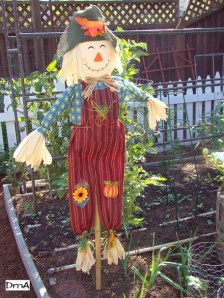 Last weekend my phone lines were down. Now I am down. For several days, I’ve been in and out of bed with a bad bug and a sore back. Who knows where I caught the bad bug. The sore back was of my own doing. I had unknowingly arched my back while planting irises on a steep hillside. As gardeners, oftentimes we tend to focus on the task, unmindful of our posture. How we push and pull, dig and hoe. How we haul, reach and lift, and breathe. There is a right and a wrong way to carry out each of these movements. A way that is favorable to our bodies.




 In and Around the Garden