
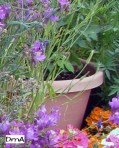
 “There ought to be
a flower garden
for every city dweller,
even if it’s a single flowerpot. “
Copyright © 2010 Dianne Marie Andre

“There ought to be
a flower garden
for every city dweller,
even if it’s a single flowerpot. “
Copyright © 2010 Dianne Marie Andre
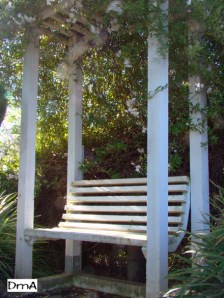
During the dreaming stage of my perennial garden, I envisioned at least one shaded, seating area. Years later, after the garden became a reality, I spotted the perfect white arbor bench at a rural outdoor boutique. What I didn’t think about at the time was the many benefits of owning an arbor bench.

After recently posting an article past midnight, a friend asked me what I was doing up so late. Besides the fact that I’m a little zany, it’s difficult to post at a reasonable hour. Country folks just have too much to do.
Before I roll out of bed, twelve hens and one turkey are waiting. They want outside the running pen, scratch in their feeder, and fresh water in their pan. Cobwebs need brushing down in the chicken coop and poop removed from beneath the roosting bar. (I use a cat litter scooper—it works great for a small flock.) The horses take care of themselves grazing the back pasture. Thank heaven. No steers at this time. The vegetable garden requires a once over, moving the hose, and if I’m lucky (this year’s crop is so weird) harvest a few veggies. In the perennial garden, there are weeds to pluck, deadheading, pruning, and plants swooning in a dramatic wilt for water.
Then there’s Ralphie who can’t wait for his morning walk. We take the same trail every day on the private road and amazingly, he never grows weary of it. I’d love to stroll through the neighboring pasture or vineyard, but foxtails stick to Ralphie like glitter, and if we walked the vineyard we would be trespassing. The owner might think I’m a grape thief!
In the evening, I revisit most of the same rounds, gathering eggs, playing catch with Ralphie, bedding critters down, re-watering thirsty plants on hot summer evenings, and noting what needs tending too in the coming days. These chores are minimal compared to medium to large ranches, and the cowboys of those outfits would laugh at my small efforts. It certainly doesn’t read like much in text. Similar to the cowboys, though, the farm animals and gardens are vehicles into the faculties of my soul. This is why I stay up past midnight.
A country spread takes time, effort—, and money. A co-worker once told me, “Get rid of those animals. Sell everything and move into town. You’ll have money in your pocket.” What she didn’t understand is that my pockets are full of riches. By the end of the day, after closing the door to moonlit chores, I have filled each pocket with invaluable memories. I can spend and re-spend them as often as I want—they never depreciate. Copyright © 2010 Dianne Marie Andre
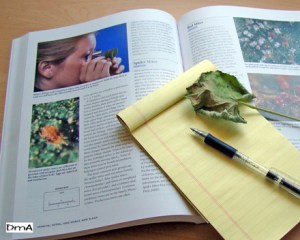 If you enjoy crossword puzzles, like to dabble in a little detective work, and establish a solution, then determining your plant’s problem will give you the same self-satisfaction. Here are four steps that will help you detect what is wrong with any plant in your perennial or vegetable bed.
Note: You can find many research answers online, or in reference books at the library or local bookstore.
1. ID your problematic plant. This is important because all species have its own set of disease and pest tendencies. What one species is prone to another may not be. Therefore, identifying the name of your plant’s species will narrow down the otherwise one-trillion possibilities.
2. Research growing habits. As with disease and pest tendencies, different species have different growing habits and needs. For example, I once gave a Japanese maple tree as a wedding gift. When I visited the honeymooners later that fall, they had put the potted tree out of my view because its leaves were drying up and they thought it was dying. Of course, I asked about the maple tree, and they sheepishly took me to it. After asking a few questions about care and the tree’s normal location, I reassured them that this is normal and new leaves would return come springtime.
Other aspects you should know about your plant in question is its zone, exposure, and water requirements. If you live in the desert, and purchased a plant from the bay-area, it’s probably going to die, as it’s not suited for your zone. If you plant a sun-loving plant in the shade, a drought resistant plant where the soil has poor drainage, or a summer annual in the fall (yes nurseries do sell these at the end of each season) the plant will become stressed. This will make it weak and susceptible to pests and disease.
To recap: write down your plant’s zone, growth habits, required location, and care.
3. Determine common problems. For example, is the plant species prone to powdery mildew, sensitive to acidic soil, or apt to get caterpillars? Make a list of the common problems and then determine the cause affecting your plant (disease, pest invasion, inadequate care, or poor location). Oftentimes, the easiest way to do this is by elimination.
4. The solution. Once you’ve identified your plant, understood its growing habits, studied its required environment and care, and narrowed down the problem, you are ready to apply a solution. In some cases, when the problem has an insect like with leafhoppers, you just have to wait it out.
If it turns out you have a stressed plant because it’s in the wrong location, if possible, transplant it in the fall when the temperature is cool.
If you use a pesticide or insecticide, oftentimes both organic and commercial methods are available. When choosing between the two, consider exposure to children and pets, and environmental impact. Always (always), when working with chemicals, follow package directions to the letter, and protect yourself with proper attire. This would include enclosed shoes or boots, long sleeves and pants, gloves, mask, goggles, and hat.
If you don’t have the time or simply don’t enjoy plant detective work, take a leaf or branch sample to a reputable nursery or master gardeners’ office. Make sure you place the sample in a sealed zip lock bag or capped jar. If you don’t know the name of your plant, print a color photo of it, large enough to see the details and growing habit. Some plant parts look similar and this will make the professional’s job easier. Copyright © 2010 Dianne Marie Andre
Helpful resources:
The following books are available through the Amador County Master Gardeners’ office. Contact information: phone 209-223-6838 | email mgamador@ucdavis.edu | on the web at ceamador.ucdavis.edu
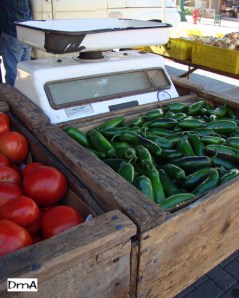
Last night I attended the Farmer’s Market Chef’s Tour listed under In and Around the Garden’s August Events. I would definitely do this tour again. The overall feel was like one big party. The sound of loud, live music folded into the scents of fresh produce stirred up a jig in your body and a hunger in your belly.
The tour is limited to twelve. Ten people showed. One person, to my surprise (and hers) was an ex-coworker. We hadn’t seen each other in years. Gosh, she hasn’t aged at all.
Back to the tour.
 Restaurant Chef Didier Gerbi (of Wine and Roses) is a tall Frenchman who’s accent had us leaning in a tad closer, sometimes asking Didier to reiterate his tips. He did so gladly. Before walking us through School Street, Didier said to keep three things in mind when shopping at farmer’s market: Focus on seasonal produce; locally grown, and look for the best throughout the market before buying. “Price shouldn’t matter,” Gerbi said.
As we strolled through the crowd from farmer to farmer, Chef Gerbi was honest and never shy about pointing out bad produce. “This is very bad, very bad,” Gerbi said, waving his large hands over various crops. “These farmers aren’t going to like me.”
Most of Gerbi’s disapproving comments referred to out-of-season crops which meant they aren’t locally grown, not ripe, and overripe produce. Chef Gerbi’s other recommendations were as follows:
Throughout the tour, Chef Gerbi shared a few cooking hints. The tour ended with Chef Gerbi’s tip on how to cook a chicken that is, without fail, juicy and tender. The chicken should be room temperature, and the oven preheated at 200 degrees. Every 30 minutes increase the temperature by 50 degrees until it reaches 350 degrees. It will always be done then. Remove from oven, and let sit 5 – 10 minutes before cutting or serving.
I hope Chef Gerbi’s professional tips help make your farmers’ market shopping (and backyard harvesting) easier as you raise melons to your ears, hunt down small carrots, and female cantaloupes.
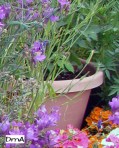
“Nature’s most magical power
is its ability to forgive.”
Copyright © 2010 Dianne Marie Andre

“I’m always ready to ride along in the car. Getting left behind isn’t cool, although I do get treats when this happens. I love the humans at the vet’s office, even Dr. Klapstein, UNTIL she pinches my skin, like she did the other day. That’s when I’m ready to leave the vet humans behind, lead Mommy out of the building and into the car.
Ruff, I’m always ready to come home, see if the cat’s in the garden!”–Ralphie.

All but one hog was snoozing. He was busy licking the feed bowl, but took a moment to snort at my camera lens. There were about 50 other hogs, two per pen, none of them interested in eating. I don’t blame the sleeping hogs, as they will soon be in someone’s freezer. This is a harsh reality for the 4-H boys or girls who raise them to show and sale at their local fair. In the case of these hogs, they were at the Amador County Fair that I attended last weekend.
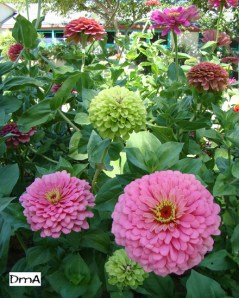
The Amador County Fair is a small rural event. It has a western stage town where you can shop for souvenirs. On hand are pioneer blacksmith, weavers, campfire demos, and reenacted shootouts. The fair featured the usual carnival rides, food, exhibits, tractors, art competitions, and lucky for me, a garden area with a pond. Even the grounds had a huge display of flowers . . . beautiful, multi-colored zinnias. I loved it!

This was a mini vacation for me. I stayed for two nights and three days. When I wasn’t at the fair, I scoured thrift shops and antique stores. Early mornings and evenings after dinner I worked on “the project.” My room had a small round table and two chairs. I pulled the table and one chair in front of the window, pushed up the window, and worked with fresh air on my face and a pleasant view to gaze at for inspiration.
While shopping, I purchased two antique floral frogs, something I’ve always wanted to collect, but they are oftentimes pricey. When I got home, my husband handed me a bouquet of fresh-cut flowers. Delighted by the sweet gesture and the immediate opportunity to use one of my frogs, I figured this was an omen. A sign of the small area I want to grow cut flowers. Maybe next spring this will come about, and along with it more frogs, and kind man to bring fresh bouquets from my own cutting garden.
Note: Check out the adorable photo on my Facebook page of two sleeping hogs spooning! They’re really cute. (Once you log into Facebook type “In and Around the Garden” in the search box.)
Please note: What I write in this space are lessons learned through trial and error, research, and from other gardeners and professionals. I garden in zone 9, but share garden experiences that I believe are relevant to most zones within a reasonable time frame and planting conditions.
August
Maintenance: Start fall clean up. Get cold frames cleaned up and ready. For building instructions on cold frames, go to http://www.groovygreen.com/groove/?p=905. Clean out greenhouses, potting sheds, and garden houses. Replenish supplies. Dispose of chemicals according to your county regulations. If you don’t have them secured in a locked cabinet, now is a good time to do this. Repair and replace garden tools as late-summer early-fall sales begin.
Around the garden: Continue to deep water all plants and trees. Replenish mulch where needed. Keep mulch three inches from trunks and plant bases.
In the vegetable garden: If you haven’t begun fall planting now is the time to make your selections. Check with a local nurseryperson for a planting guide suitable to your zone. He or she should be able to tell you which vegetables you can start NOW indoors and outdoors by seed or seedlings. Below is a list of cool season crops.
Chard, cabbage, cauliflower, broccoli, onions, spinach, lettuce, Brussels sprouts, beets, fennel, leeks, kale, peas, carrots, radishes, celery, turnips, mustard, chives, parsley, cilantro, dill.
While your seeds are germinating, prepare the garden soil with manure or compost. Let sit at least two weeks before sowing or planting.
Continue harvesting summer vegetables and preserving the overflow. To save space, train or tie vegetable vines such as tomatoes, melons, gourds, cucumbers, and pumpkins. Dry herbs for later use. Scout for pests regularly.
In the landscape: Stop pinching back mums. For larger blooms, remove side shoots leaving one or two buds per stem.
For free, self-sowing flowers next spring and summer, let some annuals go to seed. If you prefer to direct-sow, gather seeds and package them (be sure to label/date) to sow indoors next spring.
Late August look for cool season annuals to plant. For color all winter, try annual stock.
If ants are a problem in potted plants, look for aphids. Until you can get rid of the aphids, temporarily place a saucer of water underneath the pot to keep the ants out.
Order spring bulbs and peonies for fall planting.
Deadhead roses and perennials for a second color burst. Trim Victoria Blue Salvia (Salvia farinacea) to two-foot tall. Cut Shasta daisies, coreopsis, and delphiniums to six inches.
Divide spring flowering bulbs and perennials.
Prune hydrangeas as soon as the flowers fade. For fewer, larger flowers next year, cut stems to the base of the plant. For more flowers, cut back 12 inches on stems that have bloomed.
Remove dead branches from trees and perennials. Don’t place diseased foliage in compost pile.
Feed ground and potted annuals regularly for continuous blooms through the end of summer and into the beginning of fall. Regularly fertilize mums until they bloom using a low nitrogen fertilizer (5-20-02). Don’t feed mums that started blooming in July. Feed fruit trees. Copyright © 2010 Dianne Marie Andre
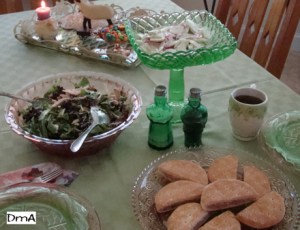 Earlier this week, a friend invited me to her country home for a tea luncheon—just the two of us. A well-organized woman, every thing was ready when I arrived. We sat in her quaint kitchen of beautiful antiques.
It was easy to see how much forethought went into preparing lunch, even for one guest: what to make, what ingredients to load up on at the supermarket, scheduling prep and cleanup time, and all the other fussing we do to make guests feel comfortable.
The shopping, the cooking, and the cleaning are familiar tasks, most done daily in simple terms. As a hostess, we don’t always think about these simple tasks (driving to the store, peeling, chopping, tasting) and the impressive measure they bring to the table through savory flavors and visual presentation. However, the guest does—every step every rhythm—and it makes her (or him) feel downright grand.
After consuming a second helping of tea sandwiches, and fresh summer salads (so yummy I couldn’t control myself), we took a stroll through her well-loved garden, and then chatted under a beautiful covered patio.
There’s something reassuring and satisfying about those who share, who take the time to make you feel celebrated.
Thank you, friend, for the delicious meal, the garden stroll, friendly conversation, and more. It made my ordinary week exceptional.
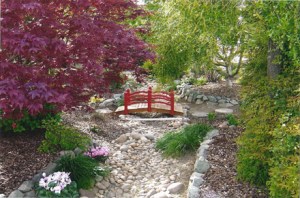
My Friend’s side yard.
A beautiful place to stroll.
Note: Monday, look for August gardening tasks.


 | Aimee E on Slanted Light |
 | Anonymous on A Lesson in Forced Blub F… |
 | Corinne W on I have Argyranthemum Frut… |
 | Dianne Marie Andre on How to Deadhead Snapdrago… |
| Anonymous on How to Deadhead Snapdrago… |

 In and Around the Garden