Archive for the ‘Dianne's Blog’ Category

h1

A Quarter and a Pack of Seeds

March 14, 2011

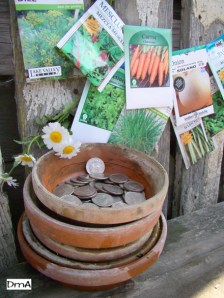
I have partnered with Dinner Garden in a fund drive and you’re invited to help with this worthy cause. All you have to do is donate 25 cents, which will grow one garden for someone now, and a pack of seeds used to help someone grow a garden in the future.

Dinner Garden, featured in the Mar/Apr 2011 issue of Angels on Earth, a Guideposts Publication, is a non-profit organization that provides fruit and vegetable seeds free of charge to anyone in the United States who wants to grow a garden. Currently they are working to provide vegetable seeds to the thousands of students who only eat when they get free meals at school. With Dinner Garden’s Seeds for Kids program, Dinner Garden (www.dinnergarden.org) hopes to increase food security for families through gardening and to help lessen their dependence on public assistance.

What I like about this wonderful fund drive is that it’s affordable. These days most people are experiencing major cutbacks. But just about everyone can give 25 cents and a pack of seeds.

A Quarter and a Pack of Seeds begins today March 14 and ends March 31, 2011, midnight. Please feel free to invite your friends, neighbors, family members, and co-workers to take part. One-hundred percent of the collected funds and seeds will go to Dinner Garden in San Antonio, Texas.

All donations (a quarter and a pack of seeds) must be sent snail mail so be sure to email me (inthegarden@softcom.net) for details. It’s simple and only takes a few minutes.

I appreciate your support in the fight for hunger, in and around the garden. — Dianne

h1

West Sacramento Tree Program

March 12, 2011

Sacramento residents: GET 2 FREE 15 gal. Shade trees for your home or business. Come to the LAST FREE SHADE WORKSHOP this year on Weds. April 6th from 6:30 p.m. to 8:00 p.m. at City Hall 1110 West Capitol Avenue, Sacramento CA. For more information go to http://www.westsactrees.org

h1

Soulful Plotting

March 11, 2011

Horticulturist:

Scientists who use a variety of tools to study plants from fruits, vegetables, and flowers to ornamentals. Horticulturists may focus on a variety of issues, from fruit yield to appearance to the ability to endure cold or drought. They are interested in everything from plant genetics to breeding to aesthetics and may work everywhere from greenhouses to gardens to parks.

h1

Epicurious on Fresh Produce

March 9, 2011


I came across a great website, Epicurious, that I thought you’d find helpful. Epicurious offers an interactive map that you can click on to see what fresh produce is available in your area at local markets. This nifty tool makes budgeting and everyday meal and special event planning easier. In addition, Epicurious also has recipes.

http://www.epicurious.com/articlesguides/seasonalcooking/farmtotable/seasonalingredientmap


h1

Soulful Plotting

March 4, 2011

Intercrop

A crop which is grown with another crop but matures at a different rate.

h1

Soulful Plotting

February 25, 2011

Hardening Off

To gradually toughen plants for new environment before transplanting into the garden.

This is done over several days, increasing the time outside each day after taking seedlings or transplants home from the nursery, out of the greenhouse, or moving them outside to a cold frame or protected area.


h1

How to Grow Potatoes

February 23, 2011

MyFreeCopyright.com Registered & Protected

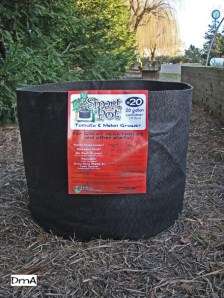
Potatoes are easy to grow in raised beds, cages, potato bins or in the ground. This year, I’m experimenting with Smart Pot, a 20-gallon fabric container. The manufacture (High Caliper Growing) claims that Smart Pot has “unique breathability and excellent drainage.” Concerned how to sterilize the Smart Pot before reuse I emailed the company. Charles Jackson wrote back, “I would wash it in the washing machine with a little bleach. Do not [heat] dry, the spin cycle will dry the Smart Pot. I may even do this twice just to make sure.”

How about that—a pot you can launder!

At first thought, this seemed like an awkward nuisance. One would have to hose down the Smart Pot to remove dirt granules before shoving it into the washing machine. On the other hand, this method eliminates the use of gloves and a mask, hand scrubbing, and finding a place (if you don’t have an outdoor sink) where bleach won’t infect the soil, plants or run down street drains.

Whatever method you use to grow potatoes, in the ground or in a container, the process is the same. Here are the steps.

 Choosing seed potatoes:

  • Buy certified disease-free seed potatoes. Supermarket potatoes are not seed potatoes and oftentimes treated with a sprouting inhibitor.
  • Choose varieties that you and your family like, but just for fun try something new.

Before planting:

  • Set seed potatoes in a warm room with lots of light. This will cause the eyes (dimples) to sprout.
  • With a clean, sharp knife cut potatoes in half, quarters or 1-inch chunks with one eye per piece. Let the seeds air-dry until the cut edges seal. This helps resist disease.

How to plant:

  • Choose a sunny location with good drainage. Don’t plant in the same area (or follow in rotation) as tomatoes, eggplants, or peppers. These are in the same family as potatoes and can easily spread diseases to potatoes.
  • Containers should be at least 12 inches deep.
  • Work in one trowel or half a shovel of compost per square-foot area of soil. The soil needs to be loose enough for seed potatoes to easily send down roots.
  • To help prevent fungi, shake seed potatoes in a bag with a small amount of sulfur powder until evenly coated.
  • With the ‘eye’ facing up, press seed potatoes firmly into the soil 8-10 inches apart for limited space or 12 inches apart.
  • Cover with a 6-8-inch mound of soil or mulch. Water gently and keep evenly moist.
  • Mound soil or mulch around the plant stems each time they grow about 6 inches.

Harvest:

  • Maturing day will depend on the potato variety.
  • Harvest in the morning while still cool. If the ground is frozen, wait until the soil warms.
  • You can harvest fingerlings and/or mature potatoes after the flowers bloom or wait until the plant dies. Either way, stop watering after flowers bloom. When the plant dies leave the potatoes in the ground for two weeks so the skins can cure.
  • If the soil is wet when harvesting, let the potatoes air dry on the surface.

Copyright © 2011 Dianne Marie Andre

h1

Weather, Projects, and Dreams

February 21, 2011

Earlier this month, I thought winter had signed up for springtime sports. It was so sunny and warm (in the mid 60s) the landscape transformed from a wet, chilly icebox to a bright and beautiful pause. Outdoor activities increased and my mind began to cultivate modest possibilities and far-fetched dreams. Between the shedding of layered clothing and accomplishing alfresco projects, I felt revived—as did Ralphie.

Thankful to be outside, I spent several hours gathering debris and raking last fall’s remaining oak leaves. A few days later, I popped potato seeds into the earth and transplanted volunteer snapdragons and calendulas. In the days ahead, in the garden, I pruned two large shrubs, one crape myrtle tree, and six buddleia bushes while my husband, Joe, trimmed a huge Chinese maple in the backyard. We ran our trimmings through a wood chipper then laid the shredded mulch around a raised bed for weed control. Sustainable gardening at it’s best!

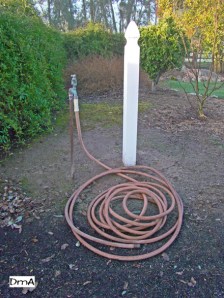
Since Joe was out of work during the springtime capsule, I nudged him to tackle a few projects. Using recycled material, stashed in the barn, he installed a new garden faucet, put a hose post next to three old faucets (the hose holders will have to wait), built a cover for the woodpile, and laid tile on the garden house floor and windowsills. I can’t tell you how long I’ve waited for these tasks to get done.

Everyday that we were outside working, Ralphie wandered the pastures for cow pies and gopher holes, he chased cats, sandhill cranes, and cattle. Then he rested in the sun. We accomplished a lot. Even Ralphie, in his own way, filled sunny days with boundless deeds.

The beautiful spring-like weather could have held me hostage forever. But winter rain and gusty winds returned, then yesterday another sunny day. But there’s more rain in the forecast. What can I say? It’s Fickle February. Regardless, indoors or out, I can still visualize modest possibilities and far-fetched dreams, and that’s a delightful place to be.   2011 © Dianne Marie Andre

h1

Soulful Plotting

February 18, 2011

Crown:

The plant crown is where the stem meets the roots. Most crowns are planted at soil level or a little above ground level. Burying the crown below the soil can lead to rot and eventually kill the plant.

h1

Valentine Wish

February 14, 2011

Be with Us in the Circle of Our Love

Be with us in the circle of our love,
Even if by chance you are alone.
Our greetings we have hope your heart will move,
Uniting our good wishes with your own.
Remember there are those who think of you,
Vested in the will to be a friend.
As distant hills give depth to what we view,
Let these words some grace to your day lend.
Each life is lived behind a sheltering veil,
Not lifted but for love. Yet when we will,
There is a wind that shifts the rampart frail,
Invading with sweet scent the spirit still.
Now may we all enjoy this fragrance fine,
Each other’s secret Valentine.

Copyright by Nicholas Gordon