Archive for the ‘Dianne's Blog’ Category

h1

How to Dispose of Christmas Trees

December 29, 2010

After the holidays, it’s best to remove your Christmas tree from your house as early as possible. Never burn your tree in the fireplace or outside. Christmas trees ignite rapidly, pop, spark, and can cause a fire and the loss of homes or worse, lives.

If you have a mulching machine, or you plan to rent one, get the job done right away. Dry Christmas trees are just as dangerous when left outdoors.  

Most towns offer curbside pickup after Christmas. Contact your municipal office by telephone or Google their website for information on proper disposal, pickup schedules, or locations of the nearest drop-off recycling center. Nonprofit organizations, such as The Boy Scouts, also offer pickup service for a small donation fee.

h1

Christmas Greeting

December 22, 2010

h1

Vertical Habitats

December 20, 2010

Only one tree fell during the weekend’s storm. I’m crossing my fingers that the trees throughout our property will stay grounded, limbs in tact, during the remainder of this, and other winter tempests. I hate the thought of losing any of my husband’s trees. They are, after all, earth’s great big, green friends, and ours.

Joe is the one who designed, bought, and planted (with our sons’ help and mine) more than one thousand trees. Over the years, we’ve watched them grow from seedlings and five-gallon-sized adolescents into maturity. My husband has fussed over their need for water, weeding, staking, and pruning. A great deal of forethought and labor has gone into the continued nurturing of Joe’s trees.

We’ve received enormous pleasure from his vertical habitats. The trees have added value and beauty to our land, shaped a welcoming entrance to our home, purified the atmosphere, formed windbreaks and screens to hide junk piles and farm equipment, and provided quarters and refuges for critters.

We’ve lost several trees over the years. Seven weeping willows were removed, evergreens, birch, mulberry, locusts, cherries, and an orange tree. To this day, large voids remain where they once stood. When I squint, I can see their ghostly figures. Losing trees isn’t the end of the world. It’s the end of a big, beautiful, green friend. I can’t help feeling a tad sad when this happens.

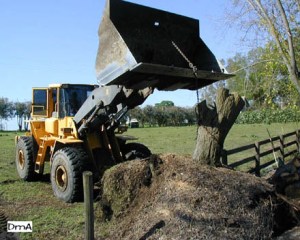
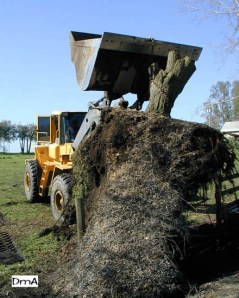
This is one of the weeping willow trees we had to remove.

h1

Budding Garden Thought

December 17, 2010

MyFreeCopyright.com Registered & Protected


“White flakes of snow

remind me of my rose.

A warm garnish beneath my nose.”

Copyright © 2010 Dianne Marie Andre

h1

Bare-Root Roses

December 16, 2010

It’s time for bare-root roses. Shop now at your local nursery for old-time favorites as well as the new 2011 varieties such as Dick Clark.

To view some of these beauties go to:

http://www.ridgeroadgardencenter.com/bareroot_roses2011.htm

Tell them In and Around the Garden sent you!


h1

How to Thin Root Vegetables

December 15, 2010

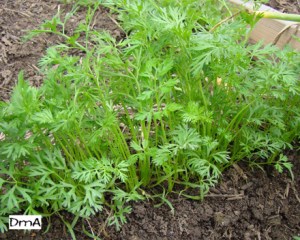
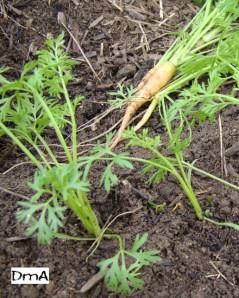
Thinning root-vegetable seedlings is important for good growth development. Proper spacing between plants reduces an underground battle for water, nutrients, room to expand, and air circulation. As you can see in the photo above, these carrots are too thick. One can avoid this by spacing seeds correctly when planting, but that is tedious work, especially with fine seeds. Although sowing fine, tiny seeds mixed with sand does help with better distribution and spacing, you will still need to do some thinning.

Here are some tips to make thinning root seedlings easier: 

  • Thin when seedlings have 1-2 sets of true leaves or reach a height of 2-3 inches.
  • Soil should be damp not soggy. Damp soil will make it easier to extract only those seedlings you want to remove. Soggy soil acts like glue making it difficult for roots to separate from one another.
  • Remove the smaller, thinner, weak seedlings.
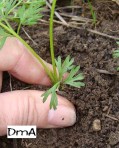
  • Before thinning, use your thumb and forefinger to secure the good seedling, then gently pull up the undesirable plant.
  • Mound soil around wobbly seedlings to secure them.
  • You can do two thinnings, three or four weeks apart.
  • Work discarded seedlings into the soil or toss into the compost pile. (Lettuce, beets, and spinach can be used in salads.)


Spacing between root vegetables varies according to varieties. Refer to your seed packet or use these basic guidelines:

  • Beets: 3-6″ apart
  • Carrots:  2-3″ apart**
  • Lettuce:  18-24″ apart
  • Onions:  3-5″ apart
  • Parsnips:  3-6″ apart
  • Radishes:  2-3″ apart
  • Rutabagas:  8″ apart
  • Spinach:  2-6″ apart
  • Turnips:  2-4″ apart**


**When thinning carrots and turnips, carefully remove one plant at a time. Disturbing the roots of these vegetables can cause deformities.   Copyright © 2010 Dianne Marie Andre

h1

Budding Garden Thoughts

December 10, 2010

MyFreeCopyright.com Registered & Protected


Winter days stretch endlessly.

The cold, the rain, and the tulle fog hang.

Copyright © 2010 Dianne Marie Andre

h1

Proper indoor Care for Living Christmas Trees

December 9, 2010

Here are some helpful hints to keep your living Christmas tree happy and alive.

  • Always pick up your tree by the container or ball-and-burlap, not by the trunk.
  • After you bring your living tree home, immediately place it in a covered porch, patio, in the garage or shed for a few days. This will help prepare it for indoor conditions.
  • If possible, don’t keep your living tree indoors for more than seven days.
  • Once indoors, keep your tree in the original pot or its burlap wrapping.
  • Don’t place your living tree (or any tree) near heat sources such as fireplaces, vents, wall units.
  • Whether you choose a potted or ball-and-burlap tree, protect your floor or carpet with a saucer, or drip pan. If you slip the ball-and-burlap tree inside a decorative container, make such it has drainage holes so the root ball doesn’t sit in water.
  • Don’t let your tree’s soil or root ball dry out. Check daily and keep moist, not soggy.
  • If you string Christmas lights around your living tree, use miniature or LED lights to minimize burning the needles. Also, limit the time you keep them turned on. A timer works great for tree lights, and other decorations.

When you are ready to relocate your living tree outside, place it in a sheltered area such as a covered porch, patio, inside the garage or shed for a few days to prepare it for outdoor conditions. Plant it according to the nursery tag where it has plenty of growing space, in well-draining soil.

h1

How to Choose a Living Christmas Tree

December 8, 2010

I wish every family could experience, at least once, the pleasures of having a living Christmas tree. It’s a wonderful way to honor a loved one or to mark a special milestone or occasion, first indoors adorned with ornaments, then outdoors where family and neighbors can enjoy it for years to come.

Every day I look through the windows at my living tree, a blue spruce. It anchors the perennial garden’s northeast corner. My husband surprised me with it one Christmas after learning that I had cancer. Eighteen years later, the blue spruce stands tall and bold, a thriving celebration of life.

If you don’t have outdoor space for a living Christmas tree, consider donating it after the holidays to your favorite park, community organization, school, or church. If you have outdoor space for a potted tree, choose a slow growing or dwarf variety.

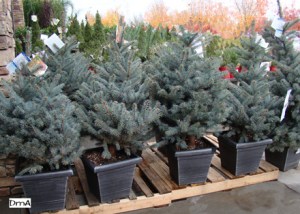
Living trees do cost more than a cut tree, but it will give you years of pleasure. Here are some tips to help you choose the right tree:

  • Living Christmas trees include spruce, cedar, sequoia, fir, cypress, pine.
  • A good variety for keeping a living tree in an outdoor pot is blue spruce. These grow less than eight inches per year.
  • Take your time, and inspect the trees carefully before making a purchase.
  • Read the nursery tags. Determine if the tree’s mature size, light, soil, and drainage requirements match your planting site and zone.
  • Look for new growth and flexible branches.
  • Avoid trees that have yellow, brown, or shedding needles or other signs of damage.
  • Never buy a tree (or shrub) that is root bound. Lift the tree out of its nursery pot. If the roots wrap around the root ball/soil like a girdle, don’t buy it. Eventually, the tree will choke and die.
  • The root ball of a ball-and-burlap tree should be firm, not falling apart. Rock-hard soil is an indication of improper watering.

Tomorrow:  Tips on caring for your living Christmas tree.

h1

Christmas Tree Farms

December 7, 2010


To find choose-and-cut Christmas tree farms by county go to:

http://www.cachristmas.com/ChooseandCutFrame.html

In addition to general information (address, contact numbers, website, etc.), this site also provides a key showing services and fun activities for the whole family that is offered at each farm.

Note:  Before going to the tree farm of your choice, first visit their website or call to confirm services provided, days/times of special events like hayrides, and hours.