Archive for the ‘Dianne's Blog’ Category

h1

Indoor Bulb Forcing: Part I

November 8, 2010

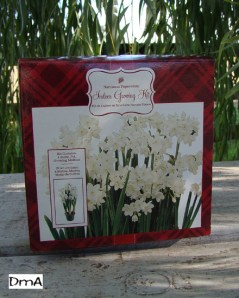
This is my first bulb-forcing kit. For five dollars, I thought it was worth buying. The idea of bulb forcing is to brighten the indoors of an otherwise dull winter season with bright blooms and fragrant scents.

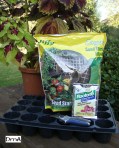
The term “forcing” means to cause a plant to sprout, grow, and flower out of its natural environment and season. I didn’t have to buy a kit to do this but it sure seemed handy to have everything ready. However, as I looked through the contents (four Narcissus Paperwhite bulbs, one coir disk, and one pot), I noticed three problems:  No saucer, no drainage holes in the pot and the bulbs have sprouted.
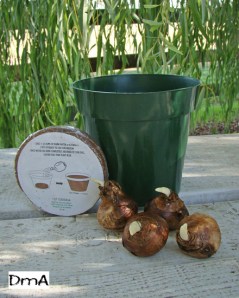
All plants, even bulbs, need good drainage. The instructions don’t mention this which could saturate the bulbs and kill them. When buying bulbs, they should be firm and without sprouts. Curious about the results of sprouted and non-sprouted bulbs, I purchased four single Narcissus Paperwhite bulbs. Then, I decided to use one of my clay pots with drainage holes, and planted the non-sprouted bulbs in the center.

The kit instructions said to place the coir disk in the pot and add 3.5 cups of warm water. Once the water is completely absorbed by the coir disk, loosen the soil. Then press the bulbs nose up into the soil until just the tops stick out. Walter well and keep moist but not wet. Keep in a well-lit area out of direct sunlight. It should bloom in six weeks.

Keep your fingers crossed, and I’ll keep you posted on the results.

Note:  Some bulb-forcing kits come with decorative pots (no drainage holes, though), for about ten dollars.

Tomorrow, look for Indoor Bulb Forcing:  Part II, for instructions on how to do this from scratch.
h1

A Beautiful Autumn Day

November 5, 2010

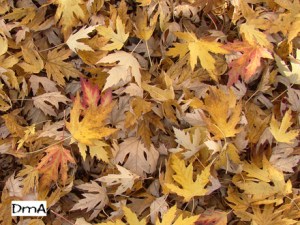
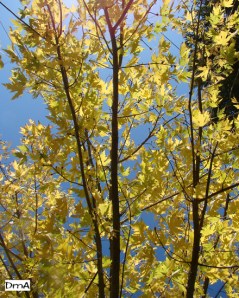
A beautiful autumn day under the silver maple trees (Acer Saccharinum).

Photos were taken yesterday at different times.


Facts about Silver Maple Trees:

  • Deciduous.
  • Transplants easily.
  • Can live 130 years or more.
  • Ideal for wet bottomland sites.
  • One of the best trees for poor soil.
  • Medium to large fast growing tree.
  • Often used in residential areas for shade.
  • Leaves turn yellowish orange in the fall.
  • Easily recovers from extended periods of flooding.
  • Leaves are deeply cut and silvery white underneath.
  • The wood is soft and can be damaged by severe winds or ice storms.
h1

Budding Garden Thoughts

November 4, 2010

MyFreeCopyright.com Registered & Protected


“No leisure

until the rains come.

At autumn’s end

I am glad for the rest.”

Copyright © 2010 Dianne Marie Andre

h1

Last Chance for Homegrown Tomatoes

November 3, 2010

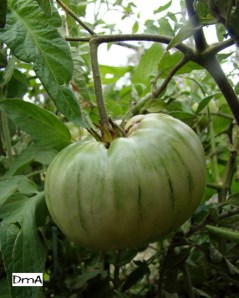
While talking with other gardeners, I learned that they haven’t removed their tomato plants because the vines are loaded with green tomatoes. However, it’s too cold now for tomatoes to ripen. They will ripen off the vine, though, or you can cook up a batch of green tomatoes to use as a garnish or add to your favorite recipes.

Pick the good green tomatoes before the first hard frost and toss the rest along with the tomato plant into the compost pile. Sort those you want to ripen into groups:  green with a little pink (these will ripen fastest), all green, and by size if you are using them for a specific recipe. Once you’ve sorted them, let them ripened in one of three ways:

  • Wrapped individually in newspaper.
  • Placed on a flat tray or box between a bottom and a top layer of several sheets of newspaper.
  • Placed in a closed paper bag.

Helpful hints:

  • Ripen stem side up.
  • Do not let the tomatoes touch one another.
  • Place tomatoes where the temperature won’t fall below 55 degrees.
  • Check daily. If one spoils, remove immediately so the other tomatoes don’t get infected.
  • Increase flavor by placing near-ripe tomatoes by a warm window one or two days before use.

Green tomatoes are delicious used in a variety of recipes: in vegetable soup, relish, sautéed and added to rice, chili, omelets, a stir-fry blend, and many other ways. So dust off those old cookbooks, put on your chef’s hat, and let your imagination fly or try a few of the many recipes found at  http://www.cooks.com/rec/search/0,1-0,green_tomato_pickles,FF.html. 

h1

Rewards of your Labor

November 1, 2010

Finally, I’m out of my sickbed. A cough is hanging on and my back is still healing, but I managed to make it outside to the perennial garden for a slow walk.

Somehow, the plants coped nicely without me the past five days. In fact, the lavender is sweet and plush as if spring were about to burst. The salvia is in full bloom and a couple of humming birds have lingered longer this fall to take in the nectar. More volunteer chrysanthemums are popping up. I wonder where they got the energy to produce some many seeds.

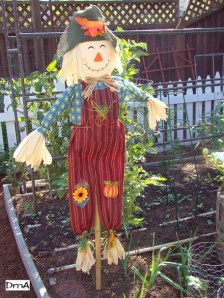
The vegetable garden doesn’t look as good. The “eager farmer’s” boots have become a bird perch and his jeans are damp from dew, and I think from rain. Not sure about the rain because I was buried under the covers. The Brussels sprouts are growing but not without chewed leaves. The lettuce and spinach have disappeared. It seems I wasn’t the only one under attack.  

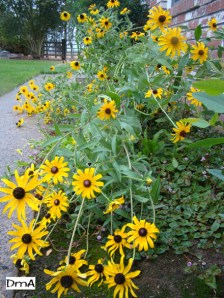
Beneath my office window, these wild sunflowers are as sunny as fresh-squeezed orange juice. They keep blooming as if they’re made of silk and don’t need watering. They were in a wildflower seed packet from a fan (thank you), and I have to say their spunk perked me up.

This is part of what gardening is about, taking in the rewards of your labor when you’re too tired or sick to dig the earth, deadhead pansies, or sow lettuce seeds. Rarely do I enter the perennial garden without an agenda. Walking the grounds to observe, minus a trowel in my hand, was nice. Special.

Maybe it was time to slow down.


h1

Contest Winner

November 1, 2010

The winner of In and Around the Garden’s October Contest is:

 Betty L

The prize is a Michaels $10 gift card.

Thank you, everyone, who participated.

h1

Garden with Grace

October 29, 2010

Last weekend my phone lines were down. Now I am down. For several days, I’ve been in and out of bed with a bad bug and a sore back. Who knows where I caught the bad bug. The sore back was of my own doing. I had unknowingly arched my back while planting irises on a steep hillside. As gardeners, oftentimes we tend to focus on the task, unmindful of our posture. How we push and pull, dig and hoe. How we haul, reach and lift, and breathe. There is a right and a wrong way to carry out each of these movements. A way that is favorable to our bodies.
Tools that “fit” our body type, hand size, and strength ability are just as important. If you have to put most of your energy into hoisting a heavy shovel, the job becomes harder. Keeping tools fine-tuned will also make gardening easier. Proper attire and sun guard is important too.

As we approach holiday preparations, there will be a rush to do too many things outdoors and indoors. To pluck the weeds, rake leaves, pop in a few color spots near the front walkway, and hang the wreath before company arrives.

As you garden toward the end of the year, do so with grace and friendliness toward your body.

PS:  Hopefully, I’ll be well by Monday.

h1

How to Propagate Coleus

October 27, 2010

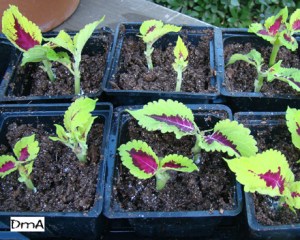
One of my favorite plants is coleus. As annuals, coleus die after one season, usually from the first frost. However, coleus are easy to propagate. With a few simple steps and little care, you can have a whole flat of coleus to plant outdoors next spring. Here are two methods to propagate coleus, and most any type of cutting.

Material for First Method:

  • Pony packs or 1” pots
  • Sharp snips or razor blade
  • Rooting hormone
  • Starter soil
  • Drip trays 

Note:  If you are reusing nursery pots, be sure to sterilize them inside, and out with a stiff brush dipped in one-part bleach to nine-parts water, rinse thoroughly with water. Always sterilize cutting tools before trimming. This will help eliminate any possibility of transferring diseases. 

  1. Fill pots with starter soil, wet thoroughly. You may have to stir the soil like cake batter to ensure that all of it gets wet.
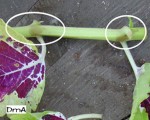
  2. Select only healthy stems and cut them just above the soil.
  3. Cut stems into sections making sure each has two leaf nodes. Leave 2 inches of stem below the lower node.
  4. Remove all leaves except the top two. Do not leave any flower shoots.
  5. Dip the cuttings in rooting hormone just above the bottom node.
  6. Place the cuttings in pots filled with wet starter soil. You can plant 2-3 cuttings per pot about half-an-inch apart.
  7. Lightly push soil around cuttings just enough to secure it.
  8. Water well.
  9. Place indoors near a window with filtered sunlight.
  10. Keep cuttings moist, not soggy.


 Material for Second Method:

  • Sharp snips or razor blade
  • Room-temperature water
  • 3-inch pots
  • Jars  
  1. Fill each jar with water.
  2. Follow steps 2-4 in the first propagation method above.
  3. Place in jars by a window with filtered sunlight. Change the water daily.
  4. Once the cuttings have 3-inch roots (this takes about two weeks), transplant to 3-inch pots.
  5. Keep moist, and place in a sunny window.
h1

After the Storm

October 26, 2010

For those of you who may have missed my note in the comment box on Monday, that was the only way I could access WordPress.  Sunday’s storm put a twist of some sort in my land and cell phones. Neither worked. I even tried to log onto WordPress this morning through the public library computer, but no luck. The day wasn’t a complete loss, though.

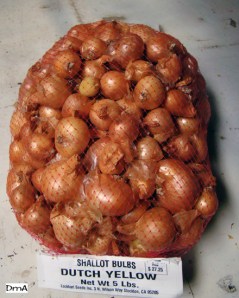
After giving the technical world a rest (no sense trying to compel a dead force), and AAA unlocked my car to retrieve the keys dangling in the ignition, I decided to drive to Lockhart Seeds in Stockton for the shallot sets I’ve been waiting to purchase. A good spirit up-lifter.

As far as I’m concerned, shallots are the best tasting onion one can put into his or her mouth. Shallots are so sweet and yummy you can’t help wanting more. Supermarket shallots are pricy and never find their way into my grocery cart. The sets weren’t cheap either, $30 for 5lbs. Nevertheless, I’ll have enough to last a year.

This will be my first time growing shallots, and I hope Monday’s weird happenings haven’t jinxed these tiny brown orbs. I don’t have to be asleep to dream big about the harvest. The vision is there on the palm of my hand, on my tip of my tongue, and in dishes dressed with tasty shallots.

h1

Budding Garden Thoughts

October 22, 2010
MyFreeCopyright.com Registered & Protected


“Into autumn we travel,

looking to reds and golds.”

Copyright © 2010 Dianne Marie Andre