
Ped:
A single natural soil aggregate such as crumb, prism, or granule.

Ped:
A single natural soil aggregate such as crumb, prism, or granule.
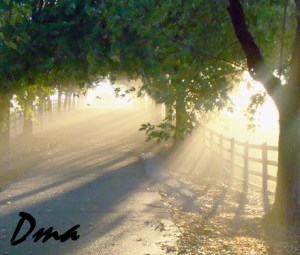
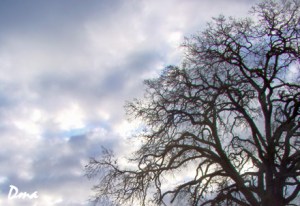
Where trees grow there are leaves to rake,
Limbs to trim, debris to compost,
And walks to take among slanted light.
Copyright © 2011 Dianne Marie Andre
… … …
Silver Maple Tree (in photo above) Facts:
Sun Ray Facts:
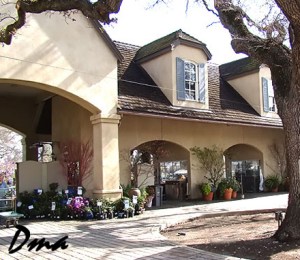 Alden Lane Nursery in Livermore, California, owned by Jacquie Williams-Courtright, is a popular crowd pleaser where novice and experienced gardeners shop for an umbrella of plants and garden accessories. There are so many garden choices and events at Alden Lane Nursery it’s hard to say who benefits most, home gardeners, professional landscapers, or children.
Crowd-pleasing facets include a two-story French country-style breezeway and gift shop. Ancient, heritage valley oaks throughout a grand circular area displaying hundreds of ornamental plants, fruit 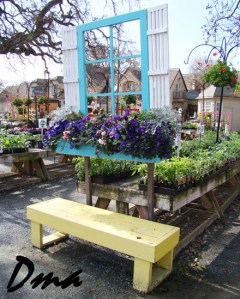 trees, vegetables, water-garden plants, decorative art, demonstration gardens, pottery, patio furniture, and more.
Throughout the year, Alden Lane Nursery is host to many community events and fun, educational clinics geared toward all ages. Folks like Quilter and Author Margaret J. Miller from Bremerton, Washington, display beautiful handiwork at the nursery’s ‘Quilting in the Garden’ affair. Other events include a Daffodil Show, Open Heart Kitchen, Orchids under the Oaks, Art under the Oaks, summertime Kids Club, County Fair Amateur Gardening Competition, Pumpkin Carving Fun, Beekeeping classes, plant and landscape workshops, seminars and much more.
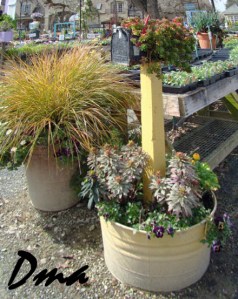 Before winter sets in, and while fall colors are at their peak, visit Alden Land Nursery. For current workshops and events go to http://www.aldenlane.com.
Alden Lane Nursery is located at 981 Alden Lane, Livermore, CA. Phone: 925- 447-0280
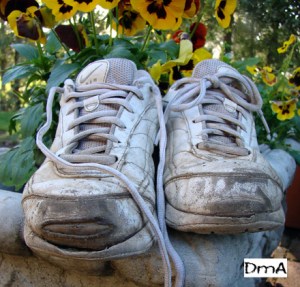
Russeting:
Brown, rough areas on the skins of fruits and tubers of potatoes that result from abnormal production of cork tissue. Caused by disease, insects, or injury, or may be a natural varietal characteristic.
In addition to spring, fall is one of the best times to dig, divide, and replant crowded perennials. Signs of stress that a plant is in need of division include:
Dividing will rejuvenate the parent plant, deliver propagation, and eliminate crowding among plants. It’s best to divide after flowering. Before dividing perennials, decide when (see list below) and where to transplant the seedlings. Consider water output, soil type and drainage, light exposure, and compatibility with new or existing neighboring perennials. Water-loving plants won’t survive in a bed alongside drought plants with little irrigation. Prepare the bed by weeding and adding needed amendments.
If you don’t have room in the landscape for transplants, pot them up for holiday gifts in attractive containers with eye-catching labels detailing plant information.
Divide in fall:
| Name | Special Note |
| Arum (Arum italicum) | |
| Canna (Canna spp.) | |
| Foxtail lilies (Eremurus spp.) | |
| Iris (Iris spp.) | |
| Moss pink (Phlox subulata) | |
| Peonies (Paeonia cvs.) | |
| Poppy (Papaver spp.) | Use root cuttings or dormant plants. |
| Siberian iris (Iris sibirica) | |
| Sweet woodruff (Galium odoratum) |
Plants to divide in spring
| Plant Name | Special Note |
| Anemone (Anemone × hybrida) | |
| Aster (Aster spp.) | Discard old clump |
| Bleeding heart (Dicentra spp.) | After flowering. Every four years sow seeds in fall. |
| Caladium (Caladium spp.) | |
| Calla lily (Zantedeschia aethiopica) | |
| Catmint (Nepeta × faassenii) | Discard old clumps. |
| Dahlia (Dahlia spp.) | Store clumps over winter. |
| Doll’s eyes (Actaea pachypoda) | |
| Delphinium (Delphinium ssp.) | |
| Elephant ear (Alocasia spp.) | |
| Gayfeather (Liatris spicata) | |
| Jacob’s ladder (Polemonium spp.) | Spring or summer |
| Lily-of-the-valley (Convallaria majalis) | Seedlings take several years to flower. Mulch in fall. |
| Primrose (Primula spp.) | |
| Rhubarb (Rheum palmatum) | |
| Wild ginger (Asarum europaeum) |
Divide in spring or early fall:
| Botanical Name | Special Note |
| African lily (Agapanthus cvs.) | |
| Amsonia (Amsonia spp.) | |
| Astilbe (Astilbe spp.) | |
| Bear’s breeches (Acanthus spinosus) | |
| Bee balm (Monarda didyma) | |
| Bellflower (Campanula spp.) | |
| Bergenia (Bergenia cordifolia) | |
| Big bluestem grass (Andropogon gerardii) | |
| Black-eyed Susans (Rudbeckia spp.) | |
| Blanket flower (Gaillardia spp.) | |
| Blood grass (Imperata cylindrica) | |
| Bugleweed (Ajuga reptans) | |
| Cactus | |
| Cardinal flower (Lobelia cardinalis) | |
| Columbine (Aquilegia spp.) | |
| Coneflower (Echinacea purpurea) | |
| Coral bell (Heuchera spp.) | |
| Corydalis (Corydalis lutea) | |
| Cranesbill (Geranium spp.) | |
| Creeping Jenny (Lysimachia nummularia) | |
| Daisy (Leucanthemum × superbum) | |
| Daylily (Hemerocallis spp.) | |
| Deadnettle (Lamium maculatum) | |
| Epimedium (Epimedium spp.) | |
| Foam flower (Tiarella cordifolia) | |
| Forget-me-not (Myosotis sylvatica) | |
| Forest grass (Hakenochloa macra) | |
| Fountain grass (Pennisetum alopecuroides) | |
| Garden phlox (Phlox paniculata) | |
| Gaura (Gaura lindheimeri) | |
| Goatsbeard (Aruncus dioicus) | |
| Goldenrod (Solidago spp.) | |
| Gunnera (Gunnera manicata) | |
| Hosta (Hosta spp.) | |
| Japanese painted fern (Athyrium niponicum ‘Pictum’) | |
| Jerusalem sage (Phlomis russeliana) | |
| Joe Pye weed (Eupatorium maculatum) | |
| Lady’s mantle (Alchemilla mollis) | |
| Lamb’s ear (Stachys byzantina) | |
| Lady fern (Athyrium filix-femina) | |
| Lemon balm (Melissa officinalis) | |
| Ligularia (Ligularia dentata) | |
| Lilyturf (Liriope spicata) | |
| Male fern (Dryopteris filix-mas) | |
| Masterwort (Astrantia major) | |
| Meadowsweets (Filipendula spp.) | |
| Penstemon (Penstemon spp.) | |
| Perennial sage (Salvia × superba) | |
| Pinks (Dianthus plumarius) | |
| Pulmonaria (Pulmonaria spp.) | |
| Pussytoes (Antennaria dioica) | |
| Red hot pokers (Knifophia spp.) | |
| Rodgersia (Rodgersia pinnata) | |
| Sea thrift (Armeria maritima) | |
| Sedge (Carex morrowii) | |
| Silver grasses (Miscanthus spp.) | |
| Snakeroot (Cimicifuga racemosa) | |
| Solomon’s seal (Polygonatum odoratum) | |
| Speedwell (Veronica spicata) | |
| Spurge (Euphorbia myrsinites) | |
| Stonecrop (Sedum spectabile) | |
| Switch grass (Panicum virgatum) | |
| Tickseed (Coreopsis verticillata) | |
| Turtlehead (Chelone glabra) | |
| Violets, pansies (Viola spp.) | |
| Wild indigo (Baptisia australis) | |
| Wormwood (Artemisia ludoviciana) | |
| Yarrow (Achillea millefolium) |
It’s time for color. And lots of it. Grey skies and short days are oftentimes depressing. Color in the landscape can change how one feels. Beauty, as scientists have proven, draws people to react with a smile. Hearts skip a beat and spirits rejuvenate.
Plant annual seedlings now, before the ground gets too cold and hard, in areas where color is most visible from inside the house, alongside paths and the driveway. Below is a list of colorful annuals to help rejuvenate landscapes, minds, and spirits.
Please note that availability of the following autumn annuals in local nurseries will vary. Depending on the zone and micoclimate, many of these will continue through winter.
ES – F: Early summer to fall LS – F: Late summer to fall
White flowering annuals:
| Botanical Name | Common Name | Bloom Time | Zone |
| Ageratum Houstonianum ‘Summer Snow’ | Flossflower | ES – Fall | All |
| Antirrhinum Majus “White Sonnet’ | Snapdragon | ES – Fall | All |
| Asclepias Fruticosa | Milkweed | LS – F | 14-24 |
| Cobaea Scandens ‘Alba’ | Cup-and-saucer Vine | ES – F | All |
| Helianthus Annus ‘Italian White’ | Sunflower | LS – F | All |
| Iberis Odorata | Candytuft | ES – F | All |
| Nicotiana Sylvestris | Flowering Tobacco | ES – F | All |
Yellow flowering annuals:
| Botanical Name | Common Name | Bloom Time | Zone |
| Gazania Linearis | Gazania | LS – F | 8-24 |
| Mentzelia Decapetala | Mentzelia | LS – F | All |
| Mentzelia Laevicaulis | Mentzelia | LS – F | All |
| Oenothera Biennis | Evening Primrose | ES – F | All |
| Oenothera Erythrosepala ‘Tina James’ | Evening Primrose | ES – F | All |
| Sanvitalia Procumbens ‘Gold Braid’ | Creeping Zinnia | ES – F | All |
| Tagetes Erecta ‘Primrose Lady’ | Marigold | ES – F | All |
| Tropaeolum Peregrinum | Nasturtium | LS – F | All |
Orange flowering annuals:
| Botanical Name | Common Name | Bloom Time | |
| Eschscholzia Californica ‘Aurantiaca’ | California Poppy | ES – F | All |
| Ipomoea Quamoclit | Cypress Vine, Star Glory | LS – F | All |
| Sanvitalia Procumbens ‘Mandarin Orange’ | Creeping Zinnia | ES – F | All |
| Zinnia Angustifolia | Narrow Leaf Zinnia | ES – F | All |
Red flowering annuals:
| Botanical Name | Common Name | Bloom Time | |
| Amaranthus Caudatus | Amaranth | LS – F | All |
| Cleome Hasslerana ‘Cherry Queen’ | Spider Flower | ES – F | All |
| Cuphea Ignea | Cigar Plant | ES – F | 16-17, 21-24 |
| Ipomoea Nil ‘Scarlet O’Hara’ | Morning Glory | LS – F | All |
| Salvia Coccinea ‘Lady In Red’ | Texas Sage | ES – F | 14-24 |
| Zinnia Elegans ‘Big Red’ | Common Zinnia | ES – F | All |
Pink flowering annuals:
| Botanical Name | Common Name | Bloom Time | Zone |
| Catharanthus Roseus ‘Tropicana’ | Periwinkle | ES – F | All |
| Celosia Cristata ‘Pink Tassles’ | Cockscomb | LS – F | 8-14, 18-19 |
| Cleome Hasslerana ‘Pink Queen’ | Spider Flower | ES – F | All |
| Diascia Barberae ‘Pink Queen’ | Twinspur | ES – F | All |
Purple flowering annuals:
| Botanical Name | Common Name | Bloom Time | Zone |
| Antirrhinum Majus | Snapdragon | ES – F | All |
| Cobaea Scandens | Cup-and-saucer Vine | ES – F | All |
| Ocimum Basilicum ‘Dark Opal’ | Sweet Basil | LS – F | All |
| Pennisetum Setaceum ‘Rubrum’ | Purple Fountain Grass | LS – F | 8-24 |
| Salvia Splendens ‘Laser Purple’ | Scarlet Sage | ES – F | All |
| Verbena Bonariensis | Vervain | ES – F | 8-24 |
Blue flowering annuals:
| Botanical Name | Common Name | Bloom Time | Zone |
| Ageratum Houstonianum ‘Blue Horizon’ | Flossflower | ES – F | All |
| Cynoglossum Amabile | Chinese Forget-me-not | ES – F | All |
| Salvia Farinacea ‘Victoria’ | Mealycup Sage | ES – F | All |
Mixed flowering annuals:
| Botanical Name | Common Name | Bloom Time | Zone |
| Alcea Rosea ‘Pinafore Mixed’ | Hollyhock | LS – F | All |
| Centaurea Cyanus | Bachelor’s Button, Cornflower | ES – F | All |
| Coreopsis Tinctoria | Calliopsis, Tickseed | ES – F | All |
| Gomphrena Globosa | Globe Amaranth | ES – F | All |
| Gypsophila Elegans | Baby’s Breath | ES – F | All |
| Lobularia Maritima | Sweet Allysum | ES – F | All |
| Mirabilis Jalapa | Four-O-Clock | ES – F | 4-24 |
| Nemesia Strumosa ‘Cardinal Mixed’ | Nemesia | ES – F | 15-17, 21-24 |
| Nicotiana Alata ‘Nikki’ | Jasmine Tobacco | ES – F | All |
| Pelargonium Peltatum | Ivy Geranium | ES – F | 8-9, 12-24 |
| Salpiglossis Sinuata ‘Bolero’ | Painted Tongue | ES – F | All |
| Xeranthemum Annuum | Everlasting | LS – F | All |
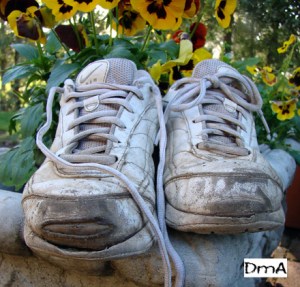
Pome:
Fleshy fruit with leathery core such as apple, pear, and quince.
When the rains came earlier this week, the landline died.
No telephone calls, incoming or outgoing.
No emails, blog posting, or cyber research.
No cellphone reception in rural-area dwelling.
Just old-fashioned living. Simple archaic existence.
— Copyright © 2011 Dianne Marie Andre
 Fall and spring are the prettiest times of the year, so why not fill your landscape with the impressive hues of both seasons. Here are a few suggestions.
For flowers that reflect spring colors choose pinks, whites, blues, and yellows. Complimentary fall blooms include bronze-orange, gold, purple, and rust to brownish red.
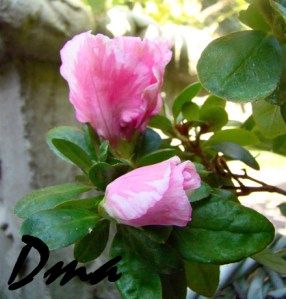
Shrubs like azaleas (left photo) and camellias provide spring-colored flowers. Encore Azaleas require full shade and blooms three times a year with leathery leaves that remain green year round. Springtime is the shrub’s biggest bloom period. There are fewer blooms in summer and autumn. Still, the fall display is colorful until the first frost.
Camellias grow in part to full shade. Choose the Camellia sasanqua species for blooms October through December. For blossoms January until April, plant japonica species.
There are many perennials with fall blossoms of pinks, whites, blues, and yellows. Some to consider are boltonia asteroides (white and light pink), asters (rose and pink including fall hues), Chrysanthemum hosmariense (white with yellow centers), Russian sage (lavender), Sedum ‘Brilliant’ (pink).
Jackie Tarchala, owner of What Grows Where-consulting and design, says her favorite trees for fall color are, “Liquidamber, Pistacia chinensis, and all the Acer’s, especially A. rubrum ‘Autumn Blaze’ and A. ‘October Glory’”.
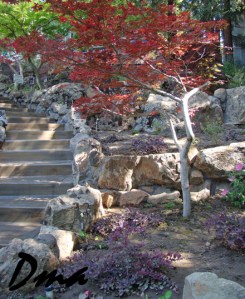 Shrubs with fall foliage are Burning Bush (Euonymus alatus), Oakleaf hydrangea (Hydrangea quercifolia), Barberry (Berberis), Blueberry (Vaccinium), Virginia Sweetspire (Itea virginica), and much more.
I don’t usually post special plugs for events, but I’m hoping you’ll check out the craft booth on the corner of Church and Oak Streets at the Lodi Street Faire this Sunday, October 2.
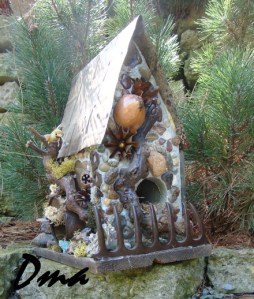
Craft artist Mary Ledbetter (featured in In and Around the Garden‘s e-newsletter prior to the blog conversion) will have her unique birdhouses for sale.

In addition to the birdhouses, Mary’s booth will be filled with a wide range of items, each handcrafted from re-purposed elements. No waste here, just skillful, high quality one-of-a-kind home and garden décor. From photo frames to cake plates. Candles, unique sash windows, quilts and much more including adorable hand-painted chairs that will make your heart swoon for a seat.
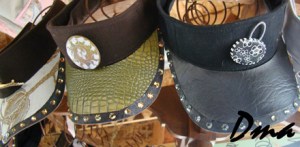
Bejeweled with lots of bling, these visors and caps are made from a variety of recycled material including jeans and leather boots.

While you’re there, check out the photography greeting cards. Mary is going to donate the card proceeds toward my computer fund.
Arrive early! The event runs from 8 a.m. to 4 p.m. Do your holiday shopping and remember to treat yourself as well. Admission and parking is FREE! You can’t beat that!


 | Aimee E on Slanted Light |
 | Anonymous on A Lesson in Forced Blub F… |
 | Corinne W on I have Argyranthemum Frut… |
 | Dianne Marie Andre on How to Deadhead Snapdrago… |
| Anonymous on How to Deadhead Snapdrago… |

 In and Around the Garden