h1

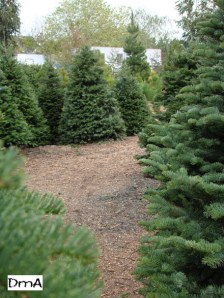
How to Choose a Living Christmas Tree

December 8, 2010

I wish every family could experience, at least once, the pleasures of having a living Christmas tree. It’s a wonderful way to honor a loved one or to mark a special milestone or occasion, first indoors adorned with ornaments, then outdoors where family and neighbors can enjoy it for years to come.

Every day I look through the windows at my living tree, a blue spruce. It anchors the perennial garden’s northeast corner. My husband surprised me with it one Christmas after learning that I had cancer. Eighteen years later, the blue spruce stands tall and bold, a thriving celebration of life.

If you don’t have outdoor space for a living Christmas tree, consider donating it after the holidays to your favorite park, community organization, school, or church. If you have outdoor space for a potted tree, choose a slow growing or dwarf variety.

Living trees do cost more than a cut tree, but it will give you years of pleasure. Here are some tips to help you choose the right tree:

  • Living Christmas trees include spruce, cedar, sequoia, fir, cypress, pine.
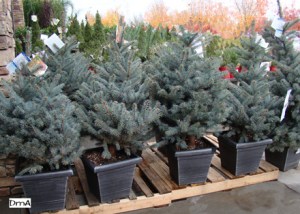
  • A good variety for keeping a living tree in an outdoor pot is blue spruce. These grow less than eight inches per year.
  • Take your time, and inspect the trees carefully before making a purchase.
  • Read the nursery tags. Determine if the tree’s mature size, light, soil, and drainage requirements match your planting site and zone.
  • Look for new growth and flexible branches.
  • Avoid trees that have yellow, brown, or shedding needles or other signs of damage.
  • Never buy a tree (or shrub) that is root bound. Lift the tree out of its nursery pot. If the roots wrap around the root ball/soil like a girdle, don’t buy it. Eventually, the tree will choke and die.
  • The root ball of a ball-and-burlap tree should be firm, not falling apart. Rock-hard soil is an indication of improper watering.

Tomorrow:  Tips on caring for your living Christmas tree.
h1

Christmas Tree Farms

December 7, 2010


To find choose-and-cut Christmas tree farms by county go to:

http://www.cachristmas.com/ChooseandCutFrame.html

In addition to general information (address, contact numbers, website, etc.), this site also provides a key showing services and fun activities for the whole family that is offered at each farm.

Note:  Before going to the tree farm of your choice, first visit their website or call to confirm services provided, days/times of special events like hayrides, and hours.

h1

Poinsettia Care Tips and Facts

December 6, 2010

Poinsettia Care Tips:

  • Keep your poinsettia in the container it came in throughout the blooming season.
  • Keep poinsettias from cold drafts or excessive heat such as portable or wall heaters, fireplaces, and ventilating ducts.
  • Place your plant in indirect sunlight for at least six hours per day.
  • Don’t expose poinsettias to temperatures below 50° F. Poinsettias are sensitive to cold, so avoid placing them outside during the winter months.
  • Room temperature between 68 – 70° F is best. If you keep your room warmer than 70° mist your poinsettia daily.
  • Don’t fertilize your plant while it’s blooming.
  • Avoid leaf shine products as they brown the edges of the leaves.
  • Pick off yellowing leaves that may develop.
  • Water when the soil feels dry to the touch.
  • Remove decorative foil before watering.
  • Don’t let your plant sit in water. Let water drain completely before replacing foil.

 Poinsettia Facts:

  • Poinsettias are not deadly. The American Association of Poison Control Centers says there haven’t been any deaths reported due to ingesting poinsettia plants. This is true for humans and animals. The plant can cause discomfort; perhaps a little vomiting, but no major effects reported.
  • The colorful petals are actually leaves called bracts.
  • The tiny yellow buds in the center of the bracts are the actual flowers.
  • Poinsettias are sensitive to Carbon Monoxide.
  • December 12 is National Poinsettia Day, designated by Congress to mark the death of Joel Roberts Poinsett, who introduced the native Mexican plant to the United States.
h1

Field Trip: Duarte Nursery, Inc.

December 3, 2010

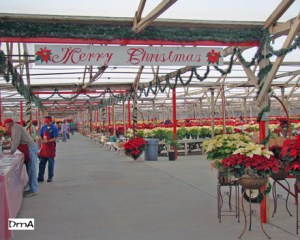
Each year Duarte Nursery, near Modesto, California, opens their Poinsettia greenhouse to the public the first Saturday after Thanksgiving Day. The Poinsettia greenhouse sits on a 180-acre complex where the Duarte family grows mostly fruit and nut trees, vines, and 60,000 Poinsettias. Because Duarte Nursery sells to commercial growers, opening their doors to the public each November provides an opportunity to share the Christmas spirit by interacting with the community.

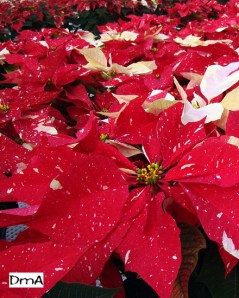
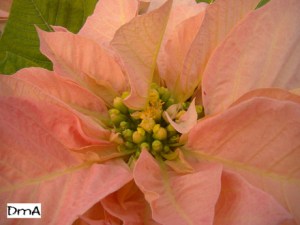
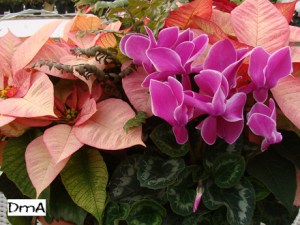
With over 30 Poinsettia varieties and colors, you can choose pinks, reds, burgundy, creamy white, yellow, marbled, mottled, wavy, Poinsettia trees, arrangements, pots, and vases. However, I should warn you, as you walk between the aisles, it’s impossible to choose the best and prettiest Poinsettia because each one is equally superb. The foliage is dark green, perky and plentiful. The bracts are vibrant, aesthetically balanced with dense, full growth from all angles. You won’t find one brown spot, yellow or wilting leaf. Duarte Nursery grows Poinsettias with perfection in mind.


Poinsettia hours are Monday-Saturday 8am-5pm & Sunday 10am-4pm. Poinsettias start at $8/ea.

Duarte Nursery is located at 1555 Baldwin Road, Hughson, California 95326

Phone:  209-531-0351 | Fax:  209-531-0352 | email:  sales@duartenursery.com

 Monday, look for Poinsettia Care Tips and Facts

h1

December Garden Tasks

December 2, 2010

MyFreeCopyright.com Registered & Protected

Please note:  What I write in this space are lessons learned through trial and error, research, and from other gardeners and professionals. I garden in zone 9, but share garden experiences that I believe are relevant to most zones within a reasonable time frame and planting conditions.

MaintenanceKeep faucets, pipes, and sprinkler valves protected from frost by wrapping them with old bath towels or rags. Double check tree stakes and support wire. Slip flexible pipes over the end of downspouts to redirect rainwater away from the house.

In the vegetable garden:  Most winter vegetables can handle frost and snow, however, a harsh wind can cripple or destroy them. Watch the weather report and be ready to protect your winter crops from wind.

In the soil, sow seeds of lettuce, carrots, fava beans, mustard, peas, radishes, bunching onions, onions, bok choy, broccoli, kale, collards, and spinach. 

Plant from cell packs of broccoli and cauliflower.

Plant barefoot berries, grapes, fruit trees, asparagus, artichokes, strawberries, rhubarb.

In the landscapeKeep covering frost-sensitive plants with frost cloth. Watch the soil in potted plants and don’t let it dry out.

In the ground or in pots, plant the following annuals:  Iceland poppies, pansies, violas, calendulas, flowering kale, flowering cabbage, sweet William, snapdragons, cyclamen, primroses.

At the nursery, select camellias while they are budding. This will allow you to see the flower colors first-hand.

If the ground isn’t frozen, you can still plant daffodil bulbs.

Prune rose bushes.

Copyright © 2010 Dianne Marie Andre

h1

Events

December 1, 2010

The December events has been posted. Now, go out and have some fun before the year is gone.

h1

Landline Update

December 1, 2010

After I got home from the library yesterday, my landline phone was working. Go figure. Still, the phone company came out today and tried to find the problem so it wouldn’t happen again for the third time, but my phones have to be down to locate the trouble.

The good news is that it is outside the house. The bad news is that it will probably happen again, and if I can’t get Verizon to come out while the phone is out-of-order (this only happens when it rains), I just have to wait for the “problem spot” to dry out.

The repairman told me that another couple with the same issue went 18 days without service. So, if you don’t hear from me for a while in the near future, most likely it’s because I can’t go on-line.

I sure do appreciate your patience with a country gal and her rural-living troubles.

PS:  If anyone has a laptop that you don’t use and would like to donate it to “In and Around the Garden” so that I can at least go to a coffee shop to communicate as often as possible when I’m offline, I’d be grateful for the gift.

h1

Where the Heck have I Been?

November 29, 2010

In a house that refuses to communicate with the world.

In case you’re wondering why I haven’t posted any material lately, my landline has been out-of-order since November 20, which means I can’t go online to post articles, do research, or email friends and family. Communication with the outside world has been at the lowest degree during these past nine days. I have a cheap, emergency cellphone that I rarely turn on, so rare that I never gave out the number after purchasing it, so inexpensive it’s slow to turn on and to find the satellite, so cheap it doesn’t work inside the house.

During this time, I also experienced  power failure, an empty propane tank (yes, my bill was paid), and a broken-down car. This has been a costly November. Well over $2,000. Ouch!

And get this, I am still coughing. I’ve been through two prescriptions, and I am still coughing.

Although a rebellious house, inefficient equipment, and a neglectful propane company is frustrating, things eventually work out. The power is restored, the propane tank filled and the house and water are now warm, and the car’s immediate repairs are complete. The engine does need pulling  fix a less-urgent problem, but that will have to wait.  Employment has ceased and funds have shrunk.

The phone company comes this week. I’ll be watching the driveway for a Verizon vehicle to come into sight, and crossing my fingers that the problem is on the outside of the house. Otherwise, the repair fee is on me. Meanwhile, I’m typing this at the library on a public computer with a one-hour limitation use. As soon as my house opens its pores and allows me to communicate with the world, you’ll hear from me. Meanwhile, happy belated Thanksgiving Day, and just in case . . . Merry Christmas.

h1

Chickens don’t like Brussels Sprouts

November 19, 2010

The first of September, I planted a dozen or more Brussels sprout seedlings. Although it would be 90 days before harvest, I made room in the freezer for a sizable yield that would compliment many meals, hopefully for a few months. Every week the stocks grew a little taller and the foliage grew bigger and wider. But as it sometimes happens with farmers, this week I had to take a loss and pull every plant out of the earth.

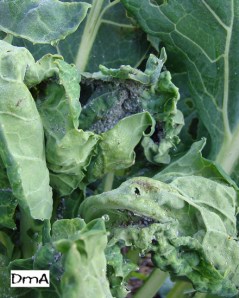
Unable to check on the vegetable garden during the three weeks that I was sick, hundreds of aphids attacked my beautiful Brussels sprout plants. The Brussels had just started to develop, but the number of aphids was so severe it would have taken a chemical pesticide to get rid of them. The idea of growing my own vegetables is to avoid harmful chemicals. If caught early, I could have washed the aphids off with the water hose, pruned off the infected parts, or used an insecticidal soap.

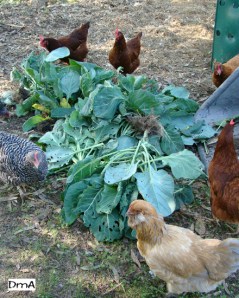
Thinking my hens would love the Brussels sprout foliage and the aphids I filled up the wheelbarrow and dumped the half-grown plants in the chicken pasture. Little did I know that chickens don’t like aphids or Brussels sprout plants, at least my hens don’t.

Usually, when I take raw vegetable scraps to the chickens, they attack the greens as if they haven’t eaten for days. But this time, they just looked at the foliage, the aphids, the turned-up wheelbarrow, and at me. Some of the hens didn’t even stick around to try a tiny bite.

“What?” I shouted at the chickens, throwing my arms in the air. “You don’t like Brussels sprout plants? Don’t you know they’re good for you?”

Yes, I know, there’s something wrong with a person who scolds chickens for not eating their greens.

When I returned that evening to put the chickens to bed, the pile of Brussels sprout plants, even the aphids, remained untouched. At that moment, as I looked down disgusted at the leafy greens, I decided to stick with winter vegetables that aren’t susceptible to aphids, to grow crops that the hens will eat if I ever have to take another loss. Copyright © 2010 Dianne Marie Andre

h1

Budding Garden Thoughts

November 18, 2010

MyFreeCopyright.com Registered & Protected


“Be mindful

of the underground.

It cares for your plants’ well-being.”

Copyright © 2010 Dianne Marie Andre