Archive for the ‘Dianne's Blog’ Category

h1

Thanksgiving Humor Week Begins Now

November 20, 2011

This has been a difficult year for many people. For some families, goals have taken a backseat to necessities. Survival is foremost for others. Disrupted lifestyles, losses, hardships, and uncertainties continue to weigh heavily. Gratitude is hard to grasp during challenging times. Still, there are thousands of things for which to be thankful. Trust me I’m not being preachy or judgmental. This rotten economy has also affected my household. What I’m doing is pumping myself up, something I once heard Joyce Meyer suggest on television.

Joyce is right. It’s my responsibility to ‘get excited.’ This doesn’t mean I will be happy-happy-happy every second of every day or night. That would be exhausting, insane, and downright irritating to others. To pump up one’s emotional state is to feel a happy internal posture while carrying a sincere external smile . . . to experience laughter in the simple things. Therefore, Thanksgiving Day I’m going to eat a turkey (not my pet turkey in the photo above, she’s too loved to be eaten), crank up the music, and dance in and around the garden then laugh at myself.

Until then, I’m starting “Thanksgiving Humor Week.” Join the fun and let’s see how many laughable thanks we can create. Here’s how it works.

Email your humorous thanksgiving thoughts to me at inthegarden@softcom.net or post them in the comment box. At the end of each day, I’ll add them to the list below. ‘Thanksgiving Humor Week’ will end November 23, midnight.

Feel free to copy and print the completed list. Cut into strips, fold in half, and place into a bowl to pass around the dinner table for each person to draw one then read aloud. Sit back; listen to the merriment of cohesive laughter among family and friends. What could be better?

Suggestions:  funny things your guests/kids have said, family jokes, old wise tales, dinner mishaps–you get the picture. Add to the list as often as you want and be sure to invite friends to join in on the fun.

What do you think? Can we reach 50, 100 humorous Thanksgiving thoughts? Let your imagination fly. I’ll start with five.

This Thanksgiving, I’m thankful . . . :

  1. For thong underwear: There’s plenty of room for expansion.
  2. Thanksgiving dinner is a win-lose situation:  I win some pounds and I lose the diet.
  3. I am not a turkey.
  4. For action words like EAT!
  5. For Prozac. My Thanksgiving dinner guests will also be grateful after they eat the gravy spiked with a dose or two.
  6. I have only gained back 15 pounds of the 17 that I lost. There is still two to go, oh, oh, Thanksgiving dinner.–Valerie
  7. Q:  What did the Turkey say to the turkey hunter? A:  “Quack, Quack, Quack”–Hannah
  8. As a newlywed, I inadvertently cooked the Thanksgiving turkey breast side down. When I opened the oven, I was amazed that my turkey didn’t have any legs! They were tucked underneath. All turned out well. The juices kept the breast meat tender and I have been cooking it that way ever since.–Bernadine
h1

Mood-Changer: vibrant flowers

November 9, 2011

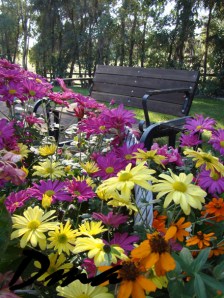
Flowers bring cheer to dull landscapes, gloomy rooms, and grey days like nothing else. A modest pot of vibrant blossoms is all it takes to make an impact. Set against an ordinary lawn and shrub in and around the garden, on a patio, front porch or indoors is an instant mood changer.

Even when the sun doesn’t shine, it’s difficult to be anything but cheery while looking at these brilliant flowers through my westerly windows. Except for the zinnias which I’ve enjoyed all summer, waiting for the mums and azaleas to bloom was well forth the anticipation.

—————————

It’s Country Folk Art Craft Show time, where one-stop shopping is made easy for holiday gift giving.

Sorry, the $1 off applies only if you have an original postcard.

h1

Breaking

November 2, 2011

It’s time for me to take a break, to mend an injured shoulder and arm. There’s no exotic travel in store or lifestyle change,  just a reprieve for physical healing.

Meanwhile, if you have the time during the busy holidays, there are archives to review or catch up on, monthly tasks for landscape and garden feats, and guest writer Bernadine Chapman-Cruz’s monthly contribution to read.

I’ll pop in on occasion to keep in touch and I hope you will do the same. I’m only an email away at inthegarden@softcom.net.

You can also leave comments here, on Facebook under In and Around the Garden, and twitter.com/dianneandre.

Wishing you a blessed season in and around your garden.

Dianne

h1

Soulful Plotting: Garden Term of the Week

October 28, 2011

Bolting: 

Premature formation of flower and seedstalk usually in biennial crops during the first year of growth and in crops during a heat wave.

h1

Butterfly-Attracting Plants

October 24, 2011

If you’re shopping for end-season bargains to attract butterflies next spring through fall, here are a few perennials to consider:

  • Aster/Michaelmas Daisy (Aster spp.)
  • Bee balm (Monarda didyma)
  • Black-eye Susan (Rudbeckia spp.)
  • Butterly bush (Buddleia spp.)
  • Butterfly weed (Asclepias tuberosa)
  • Cape Plumbago (Plumbago auriculata)
  • Catnip (Nepeta mussinii)
  • Ceanothus (Ceanothus spp.)
  • Chives (Allium schoenoprasum)
  • Coreposis (Coreopsis spp.)
  • Gaillardia/Blanket flower (Gaillardia grandifola)
  • Lavender (Lavandula angustifolia)
  • Liatris (Liatris spp.)
  • Phlox(Phlosx spp.)
  • Purple Coneflower (Echinacea purpurea)
  • Scabiosa (Scabiosa atropurpurea)
  • Yarrow (Achillea filipendulina)

Most of these nectar plants grow well in California. For more choices within your zone, check with a local nursery or master gardener office.

h1

Soulful Plotting: Garden Terms

October 21, 2011

Ped

A single natural soil aggregate such as crumb, prism, or granule.

h1

Slanted Light

October 19, 2011

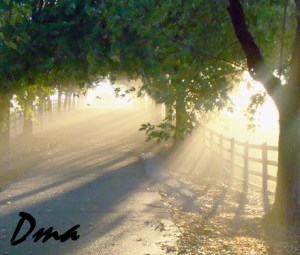
Where trees grow there are leaves to rake,

Limbs to trim, debris to compost,

And walks to take among slanted light.

Copyright © 2011 Dianne Marie Andre

… … …

Silver Maple Tree (in photo above) Facts:

  • Latin name: Acer saccharinum L.
  • Grows in zones 3 – 9, sun to partial shade.
  • Deciduous. Broad-leafed. Leaves are green on the top and silver underneath.
  • Fast growing with a long lifespan (130 years or more).
  • Thrive in poor soil conditions.
  • Invasive root that easily penetrate poor soil and can break sidewalks and house foundations.

Sun Ray Facts:

  • Sun rays are actually white.
  • As rays travel through the atmosphere, it removes the many blue hues thereby leaving reds, yellows, and oranges. By the time the rays reach human visibility they are processed as yellow. 
h1

Soulful Plotting: Garden Terms

October 14, 2011

Russeting: 

Brown, rough areas on the skins of fruits and tubers of potatoes that result from abnormal production of cork tissue. Caused by disease, insects, or injury, or may be a natural varietal characteristic.

h1

Plant Division: why, when and which perennials to divide

October 12, 2011

In addition to spring, fall is one of the best times to dig, divide, and replant crowded perennials. Signs of stress that a plant is in need of division include:

  • Decline in flower performance and size
  • Congested clump or overcrowded roots.
  • Dead center leaving a hole with growth around the outer edges

Dividing will rejuvenate the parent plant, deliver propagation, and eliminate crowding among plants. It’s best to divide after flowering. Before dividing perennials, decide when (see list below) and where to transplant the seedlings. Consider water output, soil type and drainage, light exposure, and compatibility with new or existing neighboring perennials. Water-loving plants won’t survive in a bed alongside drought plants with little irrigation. Prepare the bed by weeding and adding needed amendments.

If you don’t have room in the landscape for transplants, pot them up for holiday gifts in attractive containers with eye-catching labels detailing plant information.

Divide in fall:

Name Special Note
Arum (Arum italicum)
Canna (Canna spp.)  
Foxtail lilies (Eremurus spp.)  
Iris (Iris spp.)  
Moss pink (Phlox subulata)  
Peonies (Paeonia cvs.)  
Poppy (Papaver spp.) Use root cuttings or dormant plants.
Siberian iris (Iris sibirica)  
Sweet woodruff (Galium odoratum)  

Plants to divide in spring

Plant Name Special Note
Anemone (Anemone × hybrida)
Aster (Aster spp.) Discard old clump
Bleeding heart (Dicentra spp.) After flowering. Every four years sow seeds in fall.
Caladium (Caladium spp.)  
Calla lily (Zantedeschia aethiopica)  
Catmint (Nepeta × faassenii) Discard old clumps.
Dahlia (Dahlia spp.) Store clumps over winter.
Doll’s eyes (Actaea pachypoda)  
Delphinium (Delphinium ssp.)
Elephant ear (Alocasia spp.)  
Gayfeather (Liatris spicata)
Jacob’s ladder (Polemonium spp.) Spring or summer
Lily-of-the-valley (Convallaria majalis) Seedlings take several years to flower. Mulch in fall.
Primrose (Primula spp.)
Rhubarb (Rheum palmatum)  
Wild ginger (Asarum europaeum)  

Divide in spring or early fall:

Botanical Name Special Note
African lily (Agapanthus cvs.)
Amsonia (Amsonia spp.)
Astilbe (Astilbe spp.)
Bear’s breeches (Acanthus spinosus)
Bee balm (Monarda didyma)
Bellflower (Campanula spp.)
Bergenia (Bergenia cordifolia)
Big bluestem grass (Andropogon gerardii)
Black-eyed Susans (Rudbeckia spp.)
Blanket flower (Gaillardia spp.)
Blood grass (Imperata cylindrica)
Bugleweed (Ajuga reptans)
Cactus
Cardinal flower (Lobelia cardinalis)
Columbine (Aquilegia spp.)
Coneflower (Echinacea purpurea)
Coral bell (Heuchera spp.)
Corydalis (Corydalis lutea)
Cranesbill (Geranium spp.)
Creeping Jenny (Lysimachia nummularia)
Daisy (Leucanthemum × superbum)
Daylily (Hemerocallis spp.)
Deadnettle (Lamium maculatum)
Epimedium (Epimedium spp.)
Foam flower (Tiarella cordifolia)
Forget-me-not (Myosotis sylvatica)
Forest grass (Hakenochloa macra)
Fountain grass (Pennisetum alopecuroides)
Garden phlox (Phlox paniculata)
Gaura (Gaura lindheimeri)
Goatsbeard (Aruncus dioicus)
Goldenrod (Solidago spp.)
Gunnera (Gunnera manicata)
Hosta (Hosta spp.)
Japanese painted fern (Athyrium niponicum ‘Pictum’)
Jerusalem sage (Phlomis russeliana)
Joe Pye weed (Eupatorium maculatum)
Lady’s mantle (Alchemilla mollis)
Lamb’s ear (Stachys byzantina)
Lady fern (Athyrium filix-femina)
Lemon balm (Melissa officinalis)
Ligularia (Ligularia dentata)
Lilyturf (Liriope spicata)
Male fern (Dryopteris filix-mas)
Masterwort (Astrantia major)
Meadowsweets (Filipendula spp.)
Penstemon (Penstemon spp.)
Perennial sage (Salvia × superba)
Pinks (Dianthus plumarius)
Pulmonaria (Pulmonaria spp.)
Pussytoes (Antennaria dioica)
Red hot pokers (Knifophia spp.)
Rodgersia (Rodgersia pinnata)
Sea thrift (Armeria maritima)
Sedge (Carex morrowii)
Silver grasses (Miscanthus spp.)
Snakeroot (Cimicifuga racemosa)
Solomon’s seal (Polygonatum odoratum)
Speedwell (Veronica spicata)
Spurge (Euphorbia myrsinites)
Stonecrop (Sedum spectabile)
Switch grass (Panicum virgatum)
Tickseed (Coreopsis verticillata)
Turtlehead (Chelone glabra)
Violets, pansies (Viola spp.)
Wild indigo (Baptisia australis)
Wormwood (Artemisia ludoviciana)
Yarrow (Achillea millefolium)
h1

50 Plus: Flowering Fall Annuals for the Garden

October 10, 2011

It’s time for color. And lots of it. Grey skies and short days are oftentimes depressing. Color in the landscape  can change how one feels. Beauty, as scientists have proven, draws people to react with a smile. Hearts skip a beat and spirits rejuvenate.

Plant annual seedlings now, before the ground gets too cold and hard, in areas where color is most visible from inside the house, alongside paths and the driveway. Below is a list of colorful annuals to help rejuvenate landscapes, minds, and spirits.

Please note that availability of the following autumn annuals in local nurseries will vary. Depending on the zone and micoclimate, many of these will continue through winter.

ES – F:  Early summer to fall                 LS – F:  Late summer to fall

White flowering annuals:

Botanical Name Common Name Bloom Time Zone
Ageratum Houstonianum ‘Summer Snow’ Flossflower ES – Fall All
Antirrhinum Majus “White Sonnet’ Snapdragon ES – Fall All
Asclepias Fruticosa Milkweed LS – F 14-24
Cobaea Scandens ‘Alba’ Cup-and-saucer Vine ES – F All
Helianthus Annus ‘Italian White’ Sunflower LS – F All
Iberis Odorata Candytuft ES – F All
Nicotiana Sylvestris Flowering Tobacco ES – F All

Yellow flowering annuals:

Botanical Name Common Name Bloom Time Zone
Gazania Linearis Gazania LS – F 8-24
Mentzelia Decapetala Mentzelia LS – F All
Mentzelia Laevicaulis Mentzelia LS – F All
Oenothera Biennis Evening Primrose ES – F All
Oenothera Erythrosepala ‘Tina James’ Evening Primrose ES – F All
Sanvitalia Procumbens ‘Gold Braid’ Creeping Zinnia ES – F All
Tagetes Erecta ‘Primrose Lady’ Marigold ES – F All
Tropaeolum Peregrinum Nasturtium LS – F All

Orange flowering annuals:

Botanical Name Common Name Bloom Time  
Eschscholzia Californica ‘Aurantiaca’ California Poppy ES – F All
Ipomoea Quamoclit Cypress Vine, Star Glory LS – F All
Sanvitalia Procumbens ‘Mandarin Orange’ Creeping Zinnia ES – F All
Zinnia Angustifolia Narrow Leaf Zinnia ES – F All

Red flowering annuals:

Botanical Name Common Name Bloom Time  
Amaranthus Caudatus Amaranth LS – F All
Cleome Hasslerana ‘Cherry Queen’ Spider Flower ES – F All
Cuphea Ignea Cigar Plant ES – F 16-17, 21-24
Ipomoea Nil ‘Scarlet O’Hara’ Morning Glory LS – F All
Salvia Coccinea ‘Lady In Red’ Texas Sage ES – F 14-24
Zinnia Elegans ‘Big Red’ Common Zinnia ES – F All

Pink flowering annuals:

Botanical Name Common Name Bloom Time Zone
Catharanthus Roseus ‘Tropicana’ Periwinkle ES – F All
Celosia Cristata ‘Pink Tassles’ Cockscomb LS – F 8-14, 18-19
Cleome Hasslerana ‘Pink Queen’ Spider Flower ES – F All
Diascia Barberae ‘Pink Queen’ Twinspur ES – F All

Purple flowering annuals:

Botanical Name Common Name Bloom Time Zone
Antirrhinum Majus Snapdragon ES – F All
Cobaea Scandens Cup-and-saucer Vine ES – F All
Ocimum Basilicum ‘Dark Opal’ Sweet Basil LS – F All
Pennisetum Setaceum ‘Rubrum’ Purple Fountain Grass LS – F 8-24
Salvia Splendens ‘Laser Purple’ Scarlet Sage ES – F All
Verbena Bonariensis Vervain ES – F 8-24

Blue flowering annuals:

Botanical Name Common Name Bloom Time Zone
Ageratum Houstonianum ‘Blue Horizon’ Flossflower ES – F All
Cynoglossum Amabile Chinese Forget-me-not ES – F All
Salvia Farinacea ‘Victoria’ Mealycup Sage ES – F All

Mixed flowering annuals:

Botanical Name Common Name Bloom Time Zone
Alcea Rosea ‘Pinafore Mixed’ Hollyhock LS – F All
Centaurea Cyanus Bachelor’s Button, Cornflower ES – F All
Coreopsis Tinctoria Calliopsis, Tickseed ES – F All
Gomphrena Globosa Globe Amaranth ES – F All
Gypsophila Elegans Baby’s Breath ES – F All
Lobularia Maritima Sweet Allysum ES – F All
Mirabilis Jalapa Four-O-Clock ES – F 4-24
Nemesia Strumosa ‘Cardinal Mixed’ Nemesia ES – F 15-17, 21-24
Nicotiana Alata ‘Nikki’ Jasmine Tobacco ES – F All
Pelargonium Peltatum Ivy Geranium ES – F 8-9, 12-24
Salpiglossis Sinuata ‘Bolero’ Painted Tongue ES – F All
Xeranthemum Annuum Everlasting LS – F All