

Many of you have read about the ancient oak in the center of my perennial garden, and how every August through January, millions of leaves (and acorns every ten years) drop like confetti. GIANT trees do this. I’ve had compost piles in the past, but I’m not good at maintaining them, however, our landfill has a wonderful recycle section for greens. So, I would rake, bag, and haul off a large trailer load. Then two years ago, I started dumping the leaves along the backside of the perennial garden to repurpose as a weed blanket.

This winter, partly out of pure laziness, I have left the latter two months of leaves in the perennial garden. Normally, I can’t stand the messy appearance. I like a neat and tidy landscape. But the leaf blanket “in” the garden has functioned well as mulch, kept most weeds at bay, and sealed in moisture—especially important since we are rain poor this year. The leaves are dry, brittle, and light. Once it does rain, they will become heavy (for a leaf) and stick to the soil making the layer underneath nearly impossible to rake. Good for the soil, bad for landscape beautification.

So here’s where I am taking ballots. Vote for #1 or #2:
- Do I keep the “leaf blanket” inside the garden, and then come spring rake up what I can and work the rest into the soil? (Nearest neighbors are 40 acres away, so this won’t offend them.)
- Do I clean up the unsightly appearance now?
If you don’t want to leave your vote here, under comments, send an email to me, inthegarden@softcom.net.


 A Merry Christmas wish









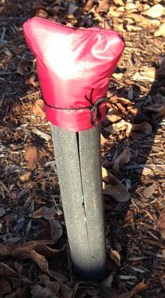 Winter is definitely on the way, and that can mean pipes broken from the frost. This morning I disconnected all my hoses and rolled most of them up for storage. The standpipes are all wrapped in the foam pipe insulation that you can get from the hardware store, but it has always been a challenge to figure out how to protect the faucet itself – wrap it with rags and string? Insulating tape? A scrap of wall insulation?
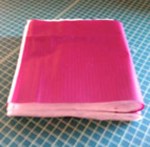 Fold each of the pieces in half, so that the fabric is on the outside and the insulation is on the inside. You should now have 2 8” squares with one finished edge (the fold), and 3 unfinished edges. Stack the squares on top of each other, making sure the folded edges are together.
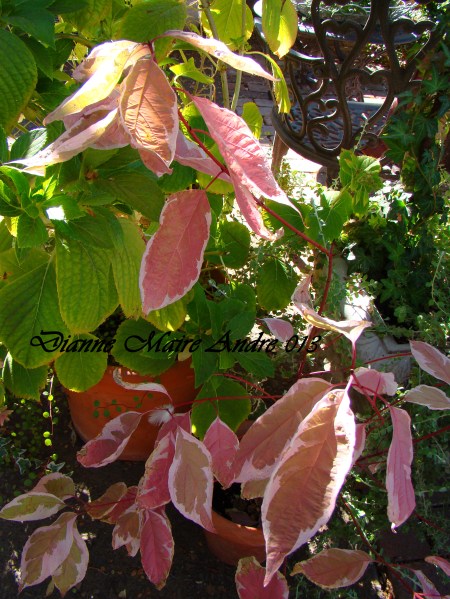 When it comes to selecting new plants, a great fervor burns in me for color and texture, and for the uncommon species. The vibrancy of bright blooms and variegated foliage is what brings a garden or patio—and one’s emotions—to life.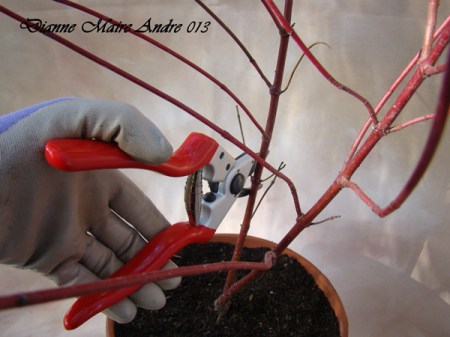


 In and Around the Garden