Archive for the ‘Dianne's Blog’ Category

h1

Give and Take Continues . . .

April 27, 2010

It’s official. My perennial garden is black. That’s right, black, thanks to Sue Chinchiolo’s excess mulch. 

Sue’s landscape will be one of six gardens featured in the San Joaquin County Master Gardeners’ Garden Tour, May 2. (Click on Events for details.) Although Sue keeps her yard exceptionally manicured, there are always last-minute details or incomplete projects to finish, so I offered to help. 

Sue emailed scheduled days to me from which to choose. When I read that three other friends (whom I haven’t seen in some time) would be helping on Friday, I immediately chose the same day. 

Julie, Sharon, and Nancy didn’t know I would be helping. After they arrived, we shared hugs, big smiles, and happy greetings. Then we dug in, literally, into four yards of black mulch. 

For three hours, we top-dressed Sue’s front and back beds. Stepping back to view our work, we were satisfied. Sue was especially pleased. The rich black carpet emphasized the swath of color and texture in her beautiful beds. However, we only used half of the mulch. The nurseryman over estimated! 

Left to right: Sharon McDonald, Sue Chinchiolo, Nancy Rubey, Julie Moorehouse


Eager to get the mulch out of her driveway, and soon, Sue offered it to us. Sharon made a couple of calls and was waiting to hear back when I went home. Then, a couple of days later Sue sent an email offering the mulch to me. I was thrilled to have it. That evening, Joe, and I scooped it up shovel-full-by-shovel-full into the back of his truck, and then unloaded it, shovel-full-by-shovel-full, at the base of the garden steps. 

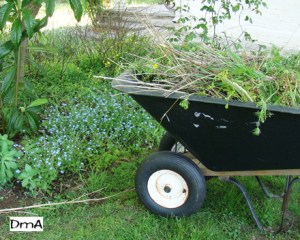
Yesterday morning, I removed the hay used in my perennial beds as mulch. The hay was molding in our barn and since buying mulch was out of the question this year, free hay was the next best material to retain moisture. Once I removed the hay, I hauled shovel-full-by-shovel-full into the garden. There was enough mulch to cover most of the main beds. 

Mulch was not on my wish list mentioned a few weeks back. I thought it too costly. So this unexpected gift is even more astounding. When I thought I was going to aid a friend, Sue ended up helping me. 

Suggestion:  Don’t use black mulch in vegetable beds. It’s chemically treated and spray painted. 
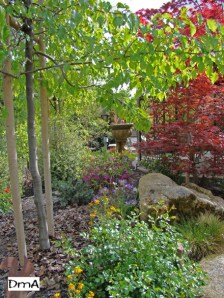
 

Above:  just one corner of  what you will see on the garden tour at Sue Chinchiolo’s home.  

Copyright © 2010 Dianne Marie Andre

h1

Queen of Quiche the Second

April 25, 2010

It’s asparagus season and my husband came home from work with a large bag. I decided to make Judy Crosby’s Asparagus Quiche (see Feature Writer) and purchased the ingredients the following day. This was my first quiche   baking attempt. Joe calls it sissy food, thus my reason for delay in making this wonderful dish. Nevertheless, I love quiche (and asparagus) and I wanted to make it at least once before I die.

Judy’s recipe was quick and easy to mix. (An A+ in my kitchen.) Once prepared, I put it into a preheated oven, closed the oven door, and then walked away without setting the timer. Eventually, I realized this and started peering through the glass door every five minutes. Time seemed to stretch into the next century. The egg mixture swelled in the slowest of slow motions, similar to a budding flower caught on film by a talented National Geographic photographer.

Finally done, out from the oven it came. After it had slightly cooled, I took a bite of my first homemade quiche. It was excellent.

ASPARAGUS TIDBITS:

  • Botanical nameAsparagus officinalis.
  • Harvest time:  February through April
  • Select:  Tight-closed tips with firm, straight green stalks. Dull green indicates an old asparagus. For even cooking time chose uniform stalk thickness.
  • Varieties:  Green, purple, violet, and wild.
  • Prep:  Refrigerate unwashed until you’re ready to cook, with ends trimmed and placed in an inch of water in a jar. Cover with plastic wrap or plastic bag. Before cooking, snap off ends and wash. Depending on your preference, some like to peel the lower stalks before cooking
  • Nutritional Value:  go to http://www.nutritiondata.com/  (This is a wonderful source.)

Copyright © 2010 Dianne Marie Andre

h1

Budding Garden Thoughts

April 23, 2010

MyFreeCopyright.com Registered & Protected


“Blunders in the garden

are similar to those in life . . .

both connect you to yourself.”

Copyright © 2010 Dianne Marie Andre 

h1

Changing Colors

April 22, 2010

I’ve heard that the Indians believed if acorns fell early—in July—it was a sure sign of a wet winter. Well, guess what? My oak tree started dropping acorns last July, and we’ve had a wet winter. What I can’t explain, after a recent rain, is how the light cast a lilac hue on brown dried-up leaves in the photo above. It looks as if I digitally colorized it, but I didn’t. Honest!  (I can explain why it’s out of focus–I’m an amateur photographer.)

Another mystery is the 80-degree weather we had last Sunday and rain two days later. In fact, it poured. Spring and the hope of summer had dissipated behind gray clouds. Still, I wasn’t about to wheel the firewood back up the hill to the house. I wasn’t about to run outside to cover the patio furniture. Lazy, I know.

Aware that summer would come, I did enjoy the changing light of day, the cast of hues on leaves, a cup of hot chocolate, and a chance to take a break to meet with friends in town (more on that later).

h1

Child’s Day

April 20, 2010

Editor-in-Chief Phyllis Hoffman Depiano of Victoria magazine wrote in the May/June issue about a fantastic holiday she and a friend created when their children were growing up, Child’s Day.

It all came about when Phyllis’ six-year-old twin sons noticed that the calendar prompts the world to celebrate moms and dads, and grandparents, but not children.

They were right!

We also honor teachers, secretaries, and bosses. So, why don’t we hold a yearly observance for the children in our lives?


Phyllis and her friend chose June 30. 

Every year these two Moms had set this date aside to mark their childrens’ importance. An outing, games, a bag full of goodies and trinkets was all it took. How special they must have felt on Child’s Day . . .  and for how Phyllis listened to her little boys and took action in a way that said I heard you. I love you. Now that’s worth celebrating.

h1

Budding Garden Thoughts

April 18, 2010

  MyFreeCopyright.com Registered & Protected

“Go meet the mountains.

They wait for you . . .

beside redwood trees,

riverside fishing,

campfire songs,

meadow flowers . . .

family fun.”

Copyright © 2010 Dianne Marie Andre

h1

Springtime Snow

April 17, 2010

Still in my PJs, every morning as I cross the great room and look through the front window, I think I’m in the high Sierra Mountains in midwinter. Since I would never live in snow land (hate the cold), this beautiful display of Snow in Summer (Cerastium) is my kind of make-believe white fluff beneath a deep blue sky.

Planted eleven years ago, Snow in Summer spreads across the outer northeast edge of my garden and blooms April through May. It’s an easy, no fuss perennial with silvery gray foliage year round that’s seldom troubled by insects or disease. I read somewhere that it is a native of Italy, also known as Mouse Ear, Chickweed, and Silver Carpet. You can start Snow in Summer from seed indoors, direct sow outdoors, or plant six packs. Mine is in full sun but it also grows in part shade. Because Snow in Summer is draught tolerant it does well in rock gardens.

Although Snow in Summer isn’t foot-traffic friendly and it looks like a field of dead oats for about a month after the blooms dry, the rest of the year this warm version of freezing-cold fluff is so pretty it’s worth keeping.

h1

Birthday Wish

April 15, 2010

Today is my first birthday.

This seems to be an important event to my owners.

Just look at the crazy hat I agreed to wear for a tiny stack of treats.

I hope being a year old doesn’t mean I’m too mature for toys.

The purple teddy next to my treats is one of my favorite toys . . . RUFF.

—Ralphie Andre

h1

Working Retreat

April 14, 2010

MyFreeCopyright.com Registered & Protected

 It’s Wednesday, and I am still thinking about the hot bubble bath in a clawfoot tub and the yummy meals prepared for me last weekend. Proprietor, Lani Eklund of The Inn at Locke House, offered a Weed, Feed, and Stay Retreat to anyone who would volunteer one workday in the gardens. In return, you’d receive three w-o-n-d-e-r-f-u-l homemade meals and one peaceful night at the Inn. Considering what a good cook Lani is, and how little opportunities I have to run away from home, it’s debatable who benefited most.

I arrived at 9:00 a.m. Friday morning. The Inn is only ten miles from home so I didn’t have far to travel. After taking my bag to a Victorian-style room named The Langdon, I pulled on my garden gloves, grubby yard shoes, and sunhat. Other volunteers chose a different workday for their retreat, so it was only Lani and me pushing our gloved fingertips into the soil to rip out pesky weeds and zealous mint.

As I worked, colorful blooms swaddled my turned-down head and bowed shoulders. Within the hour, I pulled up an acorn seedling that had rolled in from the Inn’s oak grove, southeast of the gardens. The acorn’s taproot is twenty-seven inches long, a record compared to my collection at home! (Read Acorn Blues under Country Buzz.)

We weeded around the stocks of rosebushes, at the base of iris blades, under shrubs and herbs, between plants I recognized but couldn’t name. Some of the irises are 100 years old, as are the roses on the west side of the Inn. As we worked, we talked about our garden dreams, family, Facebook, blogging, and subjects I no longer recall. With heirloom plants at our fingertips and a house built in the 1800s sitting in the background, the scene reminded me of my great-grandmothers’ days when women stayed home and gathered to quilt, sew their gardens, preserve the harvest, and birth their children. All Lani and I needed was long bustled dresses and lace-up shoes.

After lunch, I weeded in a cool, damp bed under bushes that poked me in the head, and just about everywhere else on my person. Yellow Oxalis (Oxalis stricta) dominated the soil between the floras. In the 1800s, people planted Yellow Oxalis in fields and landscape. Oxalis puts on a pretty show with its yellow flowers, but today we consider this invasive clover to be a weed, an unwelcome disfigurement in our beds and lush, green lawns. Oxalis grows from a bulb. To control it one must dig the bulbs out with a shovel or use a good weed killer. I wasn’t aware of this at the time, so the bulbs are still beneath the surface which means that whatever I pulled up will grow back. This is probably grounds for Volunteer Recall.

We pulled up our stiff bodies and put our tools away at 5:00 p.m. Lani, who worked alongside me all day, made a delicious seafood dish and cucumber salad. My room was warm and comfy, the bubble bath soothing. When I folded back the covers, and laid my head on a pink check pillowcase, I felt like a young girl. I haven’t slept in pink sheets for years. What a treat!

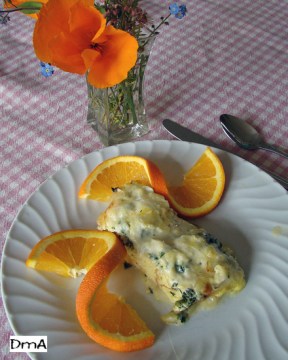
In the morning, Lani whipped up her own recipe of Egg Florentine Bake. I wanted to weed again so I could taste more flavors of this professional cook, something I’m not. Through the screen door, I watched a blue jay splash in a birdbath over a weed-free bed. Weed-free beds will satisfy the heart of any gardener, especially when his or her stomach is full after a restful night. Copyright © 2010 Dianne Marie Andre
 

h1

Budding Garden Thoughts

April 13, 2010

“An empty plot is nature’s

design studio. Dig in . . .

express yourself.”

Copyright © 2010 Dianne Marie Andre